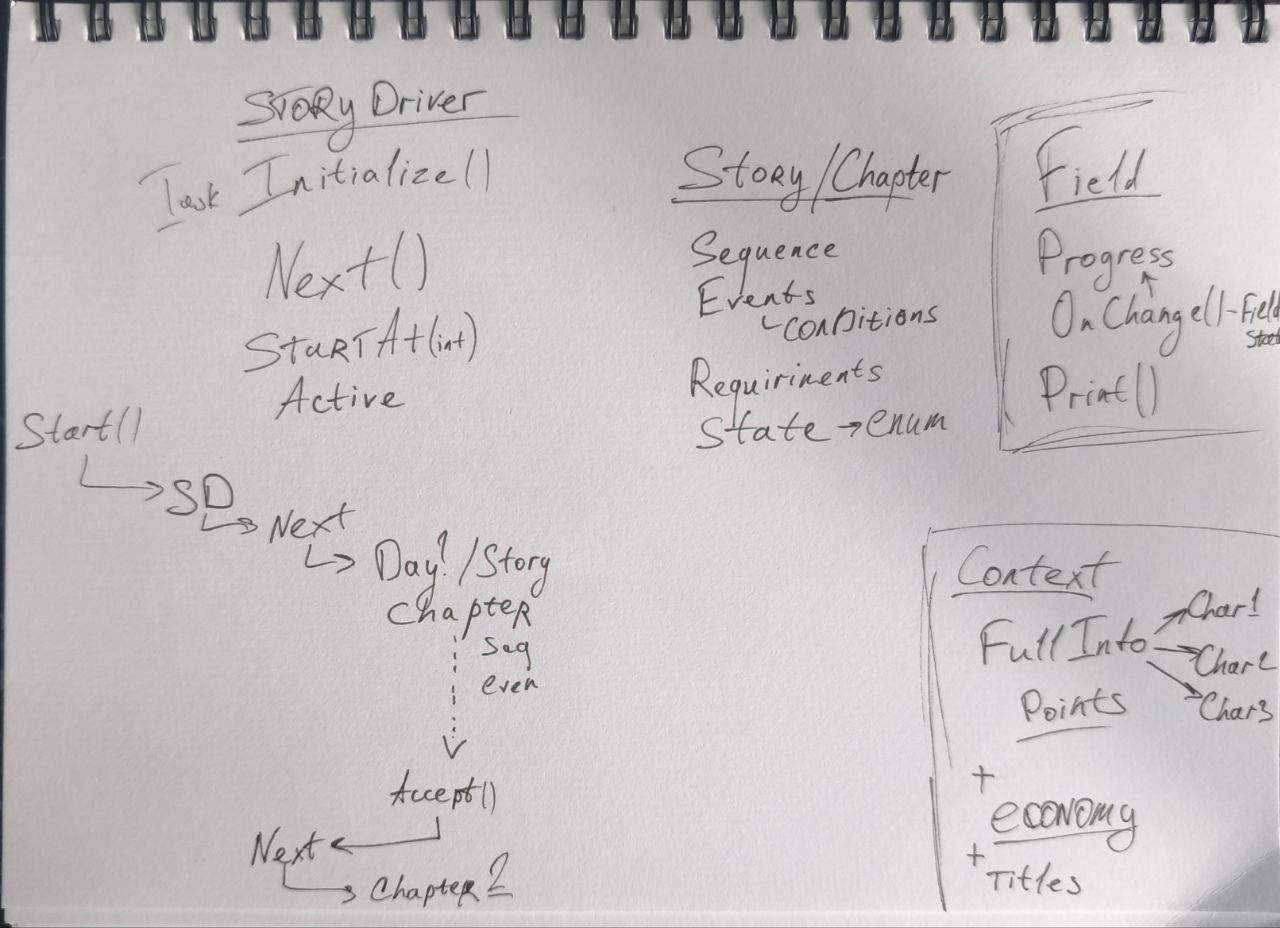
Invented a story driver!
We’ve never tackled narrative-driven games before, so traditional dialogue trees and Timeline-based cutscenes just didn't fit here. The shift at the print shop ticks on while you're actively working, and the story has to weave directly into the shift, rather than halting it. We had to build a custom driver from scratch.
A day is pure data. Events trigger organically from your workflow: a timer runs out, the front-page grid gets filled, or you slam down the final print stamp. Conditions check context parameters—like just how much we’ve already dialed up political tensions.
The driver orchestrates the whole shift. Come morning, the game saves. The shift wraps up, and the next day kicks off. But if the men in black show up for you on Day 4—even if there were supposed to be several days left—that day triggers a hard stop. It branches directly into its own unique bad ending: a custom sequence, shared credits, and back to the main menu. No further days trigger.
The scene itself is a sequence. The data layer only tracks the trigger moment (i.e., time to fire). From there, it's a top-to-bottom sequence of steps: an incident occurs, dialogue pops up, another event resolves.
This is just the high-level architecture; right now we're starting to drill down into the low-level implementation!