LD25 December 14–17, 2012

Three for the price of one!

Thanks to this month’s MiniLD, I may get to do awesome things for the price of one!

  1. Finish making a game for the first time in 13 years
  2. Complete my barely-started LD #25 entry for the theme ‘You Are the Bad Guy’
  3. Make my January entry for One Game A Month

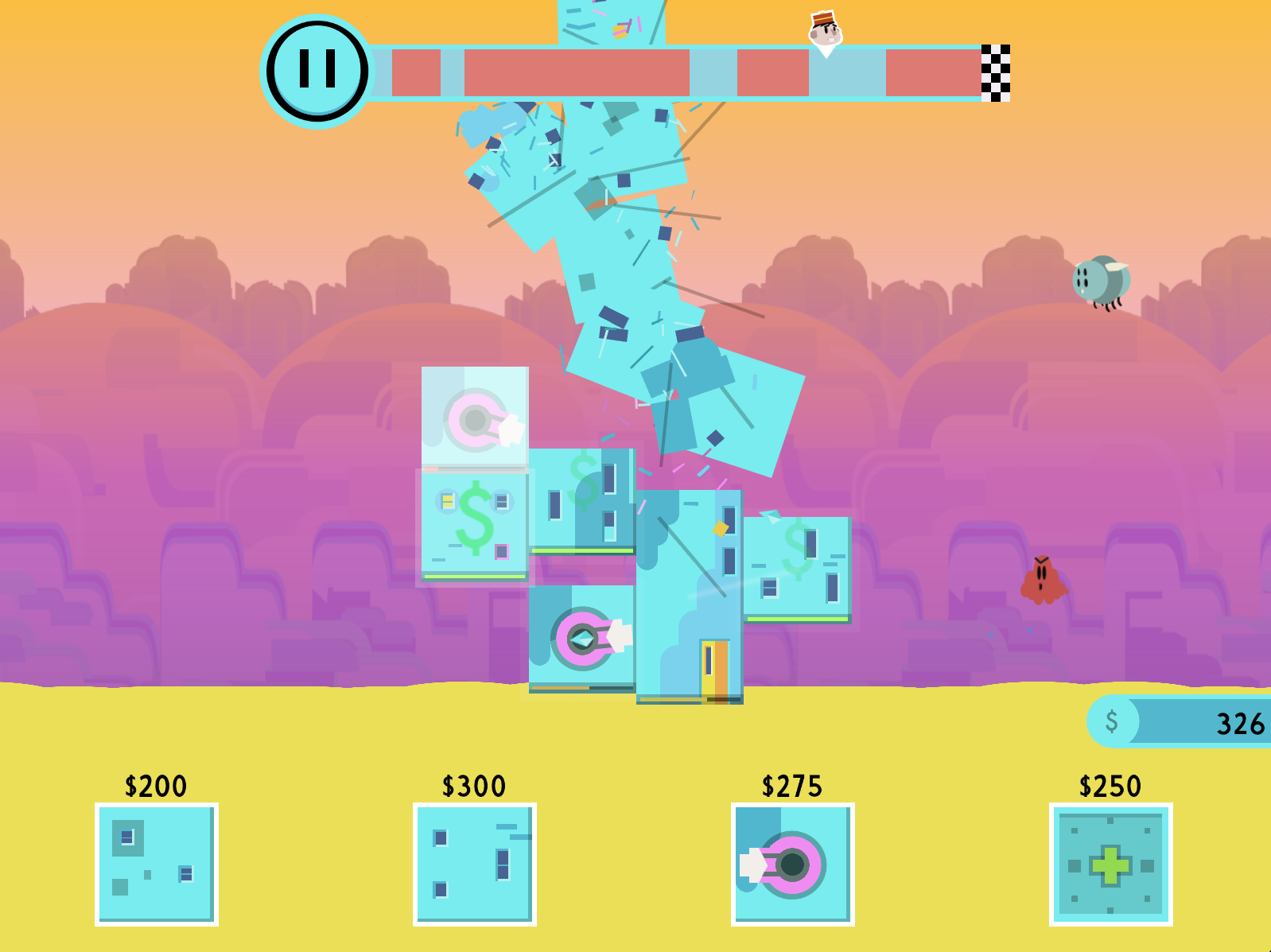
The game is still untitled. In it, you compete against other evil entities to swallow the most galaxies, thus ending the universe. In practice, it is just a re-theme of Hey! That’s My Fish, but I think it is turning out pretty cool :) It will definitely have hotseat support and really bad AI, but I will try to add the following by the end of the MiniLD:

  • Remote multiplayer support
  • Better AI
  • Cool graphics effects
  • An installer
  • SFXR-level sound effects
  • Music-generator-level music

In case you hadn’t noticed, I like lists. If you do too, consider using WorkFlowy!


Interns From Mars! – Postmortem

screen2


It looks like my bolstered confidence from this jam was indeed justified. I have submitted to 4 LDs including this one, but for this LD, I set a new personal best in every single category in which I got a rating (except Coolness). Not all of those new records are by a significant amount, though; the reason I’m so happy is not because of the improvements in my strongest categories, but the improvements in my weakest categories- the quality of my work is more consistent across categories without having lost any of my strengths. I still have to refine my methods a good deal, but the changes in my work habits I resolved to make for this LD paid off. This is my first solid evidence that I’m actually getting better at this.

So, why’d I do how I did in each category, and how do I improve?

#76. Innovation – 3.67 (previous best: 3.64, LD21)
I usually do well here, but I was still surprised at my performance this time, because I deliberately constrained my brainstorming.  As I mentioned in my “I’m In” post, I wrote “NO GAME GENRE REFERENCES ALLOWED” in large letters across the top of my brainstorming sheet.  However, I also made sure not to accept an idea unless it was low-scope enough to actually pull off well (I was SERIOUSLY tempted to go with a cooler but much higher-scope idea).  As a result, I adopted a rather generic arcade-style gameplay structure to maintain that low scope, but the primary gameplay mechanic isn’t quite like any game I know of, since it wasn’t designed with any existing game or genre in mind.  While almost certainly something new, it’s still nothing hugely out of the ordinary.  If I want to improve, I’ll have to find ideas in that small overlap between “low-scope” and “attention-grabbingly unique”- quite a difficult task.

#94. Theme – 3.83 (previous best: 3.80, LD21)
I’m also a bit surprised about how this was my highest-rated category. I thought it was a pretty standard implementation of the theme… perhaps people liked how I offered a sympathetic portrayal of the “villain”, but that was just in text outside of the game proper.  Improving here’s not my highest priority, but as long as I don’t keep my idea too much of  stretch from the theme, hopefully it’ll improve hand-in-hand with Innovation.

#174. Fun – 3.25 (previous best: 3.05, LD23)
This is always my highest priority, but also hard to complete satisfactorily within 48 hours. As per my game-design training, the gameplay has a solid “core” (the challenge of picking up humans without dropping them). However, I was aware going in that I would get a few marks down for some gameplay flaws that could easily be fixed given more time (i.e. humans staying out of reach, weird chain-of-humans physics). I intentionally saved these kinds of tweaks for later. In the past, I’ve fixed an emergent flaw as soon as I detected it, but this caused me to neglect other aspects of gameplay, as well as almost all of the graphics and audio, preventing me from working on a more “complete” experience.

#181. Overall – 3.33 (previous best: 3.00, LD23)
I like how this was my biggest non-audiovisual improvement. I think it reflects the fact that this is a more “complete” product than my past entries, as I mentioned previously.  This was the first time I feel like I properly scoped for 48 hours. I do still need to improve on “completeness”, though, and I think that’s the primary way I’ll be able to improve my Overall rating. The graphics and audio, while present to the degree they “need” to be, were still noticeably bare-minimum, and the gameplay still needs some more polish (see “Fun”).

#206. Audio – 2.92 (previous best: 2.18, LD23)
My most-improved category for obvious reasons (for the first time, I have music). I suspect this was brought down by a noob mistake I made and didn’t find out about until well into the rating period: after each round, the game started playing a new instance of the background music from the beginning, but kept playing the previous instance of the music at the same time. I’m going to be a bit more rigorous with my audio testing in the future to make sure nothing like this happens again.

#272. Graphics – 3.17 (previous best: 2.69, LD24)
I’m surprised that my programmer-art got me above the 3.00 threshold. I guess I just have to keep making sure that I don’t include any assets well beyond my drawing capabilities- though I was kind of proud of the way I disguised the collision boxes with the design of the mothership. I think, if I am to improve here, I have to go for a consistent, stylized aesthetic (ideally minimalistic), and find the time to do non-essential things like illustrated instructions, non-default UI graphics, background imagery, and “juicy” visual effects.

#1048. Coolness – 22% (current best: 32%, LD23)
As usual, I struggled to find time to rate other participants’ games, between holiday plans (including a trip to New York for New Year’s Eve), commitments with friends (as students at different colleges, winter break is the only chance we really have to catch up with each other), and various obligations.  I’m graduating in May- hopefully, come LD27, I’ll have more free time.

Humor – N/A (current best: 3.25, LD21)
I included a little humorous story on the game’s ratings page, but I didn’t really intend the game to be all that humorous… just cute/lighthearted fun.

Mood – N/A (current best: 2.53, LD23)
I know I find mood hard to rate for most games (and usually abstain), and I’m betting most other voters do too. Like I said, I was going for a cute/lighthearted aesthetic, but I’m not sure it’s really stylized enough to constitute a “mood”… I guess the voters agreed. Plus, I think some voters use the Mood category only for melancholy or artsy aesthetics… those are the only ones I find easy to rate myself.

AMD shows its quad-core tablet


Also demanding PC games with great graphics will soon run on tablets – at least that is the advantage with AMD wants to score in the market currently dominated by ARM flat computer. As evidence, the company was on the consumer electronics show CES in Las Vegas, one of the Taiwanese contract manufacturer Wistron tablet built on Windows 8(Sanei N10) with the game Dirt Showdown.This title is correct, as well as former Dirt Racing, well optimized on the Radeon GPUs from AMD and was not entirely liquid – yet provides the graphics with HDR effects and particle systems, most tablet games in the shade. Golem.de could even go with a wireless controller a few laps, which made quite fun. On the full HD display at usual viewing distance no individual pixels were to be seen.The idea of ​​having such a tablet that in the case of Wistron device with mechanical keyboard can also set up like a notebook, on a flight to play like on a PC or console is appealing. The only question is whether the battery and also to the way from Germany to Las Vegas goes where plan at least ten hours of flight time are. At run time, AMD was not specified, only that the quad-core SoC will need codenamed Temash under 5 watts, said AMD’s product manager Lisa Su.If one of Intel’s dual-core Atom Z2760 proceeds, which receives less than 3 (ampe a10)watts of power, and in tablets so far has between six and eight hours, should come Temash a similar configuration of the device at least five hours.

This is also the context in which move other portable consoles with much smaller screens and less added value.With Temash based on the Jaguar architecture, AMD will create a new device category, the “Performance Tablets”. AMD sees a gap between the devices, which are designed mainly for Internet applications and the use of media, and such devices, which can also serve as a full-fledged notebook. Performance Tablets should be lighter than convertible notebooks, still run the x86 version of Windows 8 and almost as long as notebooks endure. If it works, should be seen in the second quarter of 2013, when the first Temash devices come to market.Even before the Asus U38 is expected to one of AMD’s first new Ultrabook (freelander price)equivalent balances here – called Ultra Thin – for the shelter of Intel brand. Then also expect new processors, code-named “Richland”, which build on the Piledriver cores.This is clear from the information provided by Su roadmap containing as already expected except Richland no new major CPUs for desktops and laptops fast. 2013, AMD focused more so on mobile devices – and leaves with the fast Intel CPUs that will renew the company with Haswell, the field without a fight.

Tags: tablet pc

1

This entry was posted on Wednesday, January 16th, 2013 at 2:05 am and is filed under MiniLD #39. You can follow any responses to this entry through the RSS 2.0 feed. You can leave a response, or trackback from your own site.

The cherry on top of computer programming: THE API!

Hello people, the main plug of info on programming that I take (The reason I know all the programming languages I know) Codecademy, has released a new course on API’s teaching you all you need to know on API’s! Finally with an API I can get  more stable games, and do expect me to have Bells up quicker with that! With it, i’ll to all the API… thingy’s. But do expect more HTML games, more better content, and better websites, along with games done faster. TILL NEXT LUDUM. Mohammad. Bai.

In for MiniLD #39… and other things

This time I’ll be making an entry for MiniLD #39. But not just it! I’ll also submit it for “OneGameAMonth” and a local competition “Digital Wind”.

I’ll make a point-and-click game with scenes from my memories. Not something happened to me, but something I thought about but didn’t use. For example, a scene from a dream I saw several years ago. It’s great, isn’t it? I feel like all of myself are coming into one place.

Punks, Jams and Ira Glass

Last time I entered LD #25 giving MOAI a spin and being generally out of practice with game development. I was not able to complete my (surprisingly complicated) game idea in the time provided. I chose MOAI because I’d been exploring different game platforms and that was my first stop. Since then I’ve been looking at Haxe + NME + HaxePunk. For those who wonder:

Haxe is a programming language based on Actionscript. The compiler is multiplatform and can target C++, SWF, Neko VM, PHP, Javascript and to some extent C# and Java. This means you can use the same source code to compile multiple targets and produce native (read: fast) executables. NME simplifies this build process a good deal and adds project files, asset management, and a graphical API among other things. HaxePunk is a port of FlashPunk to work with NME. It’s a game library, providing a particle emitter, sprite maps, entity management, collision detection, and animation. An alternative to HaxePunk is Flixel, or you could roll your own game library on top of Haxe/NME.

One thing I like over MOAI is the greater variety of targets. I can compile and run my game in the Neko VM using nme test myproject.nmml neko, which builds pretty fast and launches the game. Then change neko to flash to build a SWF instead. Then change it mac or windows and it begins churning out C++ and creating a native build. Or change it to ios, android, html5, linux, etc. That’s pretty nice. Caveats include you can’t build some targets from some platforms (notably IOS from Windows), and there are some gotchas where some behaviors are slightly different between platforms, but overall I’m pleased with this set up.

Although I’m late to the party I thought I’d commit to producing a game for MiniLD 39, and use it for One Game a Month. I figure I come up with a game design that I think should be completable in 2 days … then with some luck I have a chance at just finishing it in 8 days.

Editor: Sublime Text 2
Language: Haxe/NME
Framework: HaxePunk, HaxePunk-AI
Visuals: Photoshop, FilterForge
Audio: Audacity, VLC, Bfxr, Autotracker-py
Version Control: Copy and paste

By the way if you missed the keynote video by McFunkypants at One Game a Month, he ends it with this great quote from Ira Glass:

Nobody tells this to people who are beginners, I wish someone told me. All
of us who do creative work, we get into it because we have good taste. But
there is this gap. For the first couple years you make stuff, it’s just not
that good. It’s trying to be good, it has potential, but it’s not. But your
taste, the thing that got you into the game, is still killer. And your
taste is why your work disappoints you. A lot of people never get past this
phase, they quit. Most people I know who do interesting, creative work went
through years of this. We know our work doesn’t have this special thing
that we want it to have. We all go through this. And if you are just
starting out or you are still in this phase, you gotta know its normal and
the most important thing you can do is do a lot of work. Put yourself on a
deadline so that every week you will finish one [thing]. It is only by going
through a volume of work that you will close that gap, and your work will
be as good as your ambitions. And I took longer to figure out how to do
this than anyone I’ve ever met. It’s gonna take awhile. It’s normal to take
awhile. You’ve just gotta fight your way through.

Tags: MiniLD #39, OneGameAMonth

My Mini-LD Game – Mini Ninja

My Mini-LD game is one that I started but never finished.

It was a one-button game titled “Foxy Ninja”, which I’m renaming to “Mini Ninja”.

In it, you play as a ninja who has to perform various tasks to infiltrate a castle and kill the samurai that killed your master.

The game will feature the following player actions:

  • Walking and jumping
  • Walking and sprinting
  • Walking and stopping
  • Charged-up jumping
  • Throwing shurikens (ninja throwing stars)
  • A final boss fight

It will feature the following obstacles:

  • Holes in the floor
  • Spike floors
  • Retracting blade traps
  • Laser traps
  • TNT boxes
  • Enemy ninjas
  • Final boss

I will post more about this as I go and will be uploading it as a demo (and eventually a finished game) on Flash Game License as I progress.

Animated pixel art?

Hello. I have seen beautiful pixel art in the games here. I have been doing pixel art myself for some time, but it was always static. Now I think I should learn animation. I usually used Gimp to create graphics, but Gimp has close to no support for animations. So… what program do you use to create animated pixel art?

Layers, filters, or anything fancy isn’t necessary. All I need is a pencil tool, preferably a color selector, and a dynamic preview to see the animation. It seems like not much, but I don’t know any program like that. Also, I would kind of like it to be free~~~

Thanks in advance.

Comments

Osgeld
18. Jan 2013 · 01:21 UTC
Gimp handles animations fine. Yes you can get sprite animators (google around those lines) but in the end its basically the same.
pythong
18. Jan 2013 · 04:30 UTC
i also recommend graphicsgale. it has a preview for animation, and for learning, there are also a lot of youtube videos
Zelen3d
19. Jan 2013 · 00:00 UTC
Thanks Jacic and pythong for mentioning graphicsgale. Its a great lightweight program. I even worked out of the box in ubuntu using wine!

MiniLD 39 Entry

My entry for MiniLD 39 has been posted http://www.ludumdare.com/compo/minild-39/?action=preview&uid=15656 The hindsight for this entry was what would I have done had a school shooting right before LD#25 had not happened and I went with my original idea for that theme instead of a non-violent game.

Zombie Forever level 1 game play

Zombie Forever level 1 game play

Tags: strategy, turn-based, zombies

Would this be the end of Game Jams in America (HR 287)?

http://thehill.com/images/stories/blogs/flooraction/jan2013/hr287.pdf


6 SEC. 2. RATING LABEL REQUIREMENT FOR VIDEO GAMES.
7 (a) CONDUCT PROHIBITED.—It shall be unlawful for
8 any person to ship or otherwise distribute in interstate
9 commerce, or to sell or rent, a video game that does not
10 contain a rating label, in a clear and conspicuous location

on the outside packaging of the video game, containing
2 an age-based content rating determined by the Entertain-
3 ment Software Ratings Board.

Comments

sorceress
18. Jan 2013 · 22:16 UTC
A similar law was created in england about 6 months ago, and afaik it applies only to physical media (dvd/cd/cartridge/etc).
19. Jan 2013 · 12:52 UTC
I don’t see how this bill is relevant to game jams… It makes a must to rate properly games being sold and prohibits the sale of M and AO games to underaged.
dekuashe
20. Jan 2013 · 18:36 UTC
It wouldn’t affect game jams, but it would have a potentially disastrous effect on the indie game scene in general. Half the Kickstarter projects I back offer thumb drives to send to people who opt for that. But that’s just in the wording in the bill stays the same (they never do). The NRA brought up some oddball Flash games found on the web, so you can be sure they’ll be eyeing any kind of distribution, otherwise Steam would be exempt, and they distribute all these types of games that they’re claiming are training the next serial killer.
22. Jan 2013 · 13:21 UTC
In America, laws like this that single out video games for treatment different to other forms of media have been found unconstitutional by the Supreme Court, time and again. This law, if it is passed, will therefore be stuck down before it is enforced.
JonRB
28. Jan 2013 · 19:51 UTC
We could all submit our games to the ESRB when we make games, including a quote of this bill.

I’m sure they’ll be delighted to rate 1000 short games.
28. Jan 2013 · 22:13 UTC
Lines 8 & 9 specify that it is illegal to “../ship or otherwise distribute in commerce…” which to untrained legal eye implies that it’s only if you sell it. Which actually could be crazy because you could offer a game as a free download and charge for in game content without it having to have a rating – only the content would need to rated – how would you rate a hat in TF2 for example?

My first animated pixel art!

Flame2

Humans were always fascinated by fire!. I made this now in a bit less than 3 hours and I’m proud of myself! This is my first animated pixel (actually second, my first was a shitty running person).

Graphicsgale is a great program for this kind of work and I found out it works fine in Ubuntu using Wine (something I had often problems with). The free version doesn’t export to gif, but you can export a series of images and convert them from command line with imagemagick (example here: http://ubuntuforums.org/showthread.php?t=1034104) .


15

This entry was posted on Friday, January 18th, 2013 at 9:53 pm and is filed under MiniLD #39. You can follow any responses to this entry through the RSS 2.0 feed. You can leave a response, or trackback from your own site.

Video interview: LD Montpellier (French)

We were interviewed on fight4game during Ludum Dare 25, and the footage has finally been edited and released: I’m afraid it’s all in French, but you get a decent look at the room were were in :)

I can’t seem to embed youtube videos, so here is a direct link.

I want to point out for those who do speak French that I was exhausted (this was taken Saturday morning: remember that in France we start at 3am) and that French isn’t my mother-tongue – sure, I repeat myself a lot, but considering the circumstances I think it went pretty well :)

Tags: fight4game, interview, montpellier, video

My first (near) submission to Ludum Dare

I had never participated to Ludum Dare. Sometimes because of lack of inspiration, very often because of lack of time, sometimes because when I noticed that the jam had began, it was already ended. For Ludum Dare 25 that was organized last month, I was aware of it just some hours after the launch. The theme was inspiring and I also had a funny (at least in my opinion) idea.

GoldKeeper

(this post is an english translation of my original post on my blog  here).

But as it’s often the case, I also had a week-end with very little time for this activity. Even in the Jam category, which is specifically organized for those on who the “real life” as un impact, which is a day longer and smoother rules, it felt like it was too short for me.

So I worked a bit the subject in my head, but after 24 hours without having the chance to really concentrate and produce something, I abandoned the idea to enter the jam.

Meanwhile, I was looking at what Ebene was doing after she announced her entry on a well known social network.

On Sunday evening, she announced that the developer she found for the project wouldn’t be able to finish it. So I’ve looked closely to what had already been done in terms of Game Design and Graphics. I liked it. On the programming side, it felt it was doable in a week-end of time for someone who can really concentrate. I thought I would be able to found the same number of hours in a week time.

So I told Ebene I’d do what I can. No guaranty. On my side, clean my Javascript and HTML skills on a real project is great for improving myself. So, let’s go.

After a week, the game implementation is at a correct level. Some added hours the next week have been added to smooth the rough edges.

In the post-mortem tradition, I’ll answer next two questions : what can I improve and what went well?

What can I improve?

Javascript

My former experiences had already given me the taste of it. This is not a surprise to me that language was considered badly before the creation of AJAX then HTML5. Iterations are quick (add a function, reload the page,…) but the number of traps in this language slowed me a lot at the beginning, while I was remembering them.

While developing, stupid mistakes went scarcer but never completely gone.

I was on the run without too much possibility of stopping to build myself a comfortable environment. But at the end of the development, I searched for static analysis programs like “jhlint”. This allowed me to improve a couple of things, but that would have been really interesting from the beginning of the development to avoid a test when a file has syntax error and is just not loaded into the browser.

My conclusion is that Javascript really needs a toolchain to continuously verify the obvious mistakes. Most of the tools I’ve tested are heavy to launch, which decrease the raw iteration time, while maybe improving the quality in the long run.

Another way of study would be to study languages build upon Javascript, like CoffeeScript or Dart.

Quality tools

Static analysis or test framework are tools I cannot program without in my daily professional environment. As I didn’t know them enough for this project to rely on them, I didn’t use any.

Before starting a new session of this kind, I must have found, tested and almost mastered such tools for the Javascript world. These are great time improver and time is a precious resource.

Deployment / Collaboration

We were two on the project. Ebene was producing the Game Design document, the graphic resources, the HTML integrations and the game data. All these data were available on a web server for me to fetch.

On my side, I was providing the zip archive extracted from a Mercurial depot, containing the working (most of the time) game.

The steps for me were:

– updating the new data with wget when an update was available
– data copy on my depot
– comparing the updates (mostly the HTML/CSS files) and manually update the in the final integration files.
– export of game data to the file format used by the program (OSD to JSON)
– verify / submit

Then, after a session of work on an improvement:

– archive creation
– send the archive by sftp to a HTTP served depot
– tell about the update

These are a lot of manual operation that should be automated. What I see for improvements:

– work on a commoin depot; not a must have, but really interesting
– for an HTML game, a better integration process by better thinking how to fetch the new page updates
– automated export of data
– continuous build system with static analysis and deployment.

What went well?

1. A pretty well detailed game design document and a function first version of the game data. Thanks to Ebene for that. Apart from some written questions on some points, I was able to go fast with a good idea of what would the game look like, even if I really discovered it while programming it.

2. Le platform choice. Even with what I just said on Javascript, using scripted HTML is good for this kind of game.

A test editor, a browser with developer tools (I’ve used Firefox + Firebug) are ok. The few data needed by the game allowed to start quickly and work by little iterations.

3. Development loop

The development loop I’ve globally followed was: choice for a missing feature, feature prototype, writting the complete feature, cleaning.

Regularly cleaning the code avoided too much technical debts, even while missing quality tools.

Even on small project, the technical debt can quickly rise and crush any speed in your programming. And what comes with it this decrease in speed is the rise of frustration because of bugs.

This also allowed me to separate the responsibilities in the code. Mainly the game logic from the HTML integration.

4. Developing Time

Because I wanted to know if it was really possible for a dedicated guy to achieve the same amount of work during a game jam, I’ve tracked the number of hours on the project for the programming part.

The “Beta” level for the game (working game with a few minor bugs) took my around 20 hours, 5 of them really dedicated and without distraction.

I guess that for someone with a good environment during the event would have spend 10 to 15 hours. Fair enough for a game jam.

After the beta version, little improvements and bug fixes took me something around 2 to 3 hours spread in a week long period.

Conclusion

This was a really interesting experience and the result is pleasing. I’ve improved my skills in Javascript + HTML on a real project with new ideas to improve the way I work. My personal objective is to improve on my productivity to get the most of those few little time period I can spend on hobby programming.

And the game? It’s here (for a better experience, switch to full screen with, probably, the F11 key)

You can also read: the post presenting the game, explanations, game design and much more or the previous post.

Tags: ld25, post-mortem

The Launch – Post Compo version on Kongregate

We have finalised a post-compo version of The Launch, fixing a few bugs and reducing the resolution to a more laptop friendly 1280×720.
The How to Play guide has also been improved.

Aside from that, the game is mostly unchanged but it should be alot more accessible now as its possible to read the instructions.

Please play and rate it here:
http://www.kongregate.com/games/tupperwarespoon/the-launch

Actors with multiple Textures

Hi all!

This is a shameless re-post of my Stack Exchange Game Development question of the same name.

In my 2D side-scroller game I have a bunch of actors being drawn, each of which has a single, non-animated Texture (a png image). These actors all inherit from a base GameActor class.

I want to add some more NPC’s (e.g. tanks or cannons) that have one texture that doesn’t move (the base) and another that rotates to shoot at things (the gun / barrel). How should I structure my Actor class hierarchy so as to allow for this? Should I refactor my base Actor class to allow for N textures? Or should I create a brand new sort of Actor for things that need > 1 texture (and then have to manage these actors separately from ‘regular’ actors)? Or is there a better approach I can’t see?

Thus far I’ve been opting to keep things as simple as possible (KISS, right?), but am not sure how to proceed.

Any pointers greatly appreciated.

Comments

24. Jan 2013 · 11:46 UTC
Why not make a ‘actors-group-with-position’?
deathray
25. Jan 2013 · 00:52 UTC
If you allow for N-textures, then your actor class becomes very versatile. Is there a downside? What are the pros and cons? And what language are you using?
28. Jan 2013 · 22:01 UTC
Posted a reply to your post on StackExchange. Basically I would be careful of making your Actor class too complicated, you’ll regret it down the road. I would suggest adding some kind of parenting or constraint system and represent the tank as two Actors that are parented or constrained together.

Mr Wizard VS The World 2.0

It’s here! After a lot of hard work, I’ve turned my Ludum Dare 25 entry into January’s One Game A Month, and released it for sale!

Check out the page on my blog here for more information, as well as a link to purchase it. Among other new features is an endless mode in which, quite fittingly, you must defeat heroes endlessly until you are defeated. Go for a new record!

I have two codes, each for 33% off!

TTHHRRDD and MRFREE screen3

Tags: #1GAM, mr wizard, SuccessStory