LD29 April 25–28, 2014

A game about words: RMBR

RMBR is probably my most important game since I started to bake some pixeled stuff 2 years ago.
RMBR_01


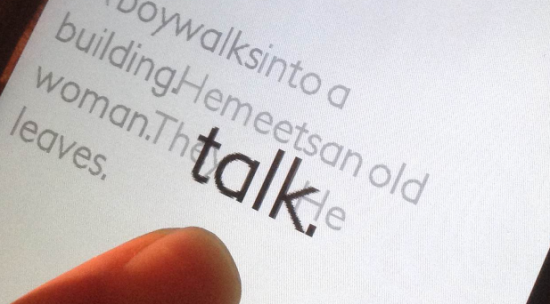
If you have trouble to understand the concept of the game you can watch this Vine. Or try to imagine a Twine game where you “drag” the words and not just “click” on them. That’s a bit synthetic but it’s the closest description I can write with my poor English skills.

There are two main ideas behind RMBR. The first one was, I wanted to make a game about Alzheimer. I actually have a grand-mother who suffers from it, and I wanted to try to explain feeling you can have when you speak with her, but also what I imagine (from what I see and what she tells me) being her mind. How words are losing their meanings, how memories are becoming blurry and fade away, and how some of them, the oldest ones, are in contrary back vividly.

To be honest I totally failed to do it correctly, mainly because I needed a lot more time to write and include some contents. Time I didn’t have during the jam. But more on that later.

The second idea came from my recent interest in french surrealists. I’m presently reading a lot of novels/poems by Breton, Leiris, Desnos or Queneau (about whom I already develop with a game called Milmiliar – only in french right now sorry about that – which was inspired by Hundred Thousand Billion Poems). And Leiris specially worked a lot on the words and their meanings, how each one of us have their own  personal dictionary. If we think that the meaning of a word is shared by everyone, that’s an illusion. Because we all have our own experiences of the word, our own memories, our own understanding of it. So he decided to write his own dictionary (Glossaire j’y serre mes gloses in french, I didn’t find any translation of it sorry about that).

And because he was a surrealist and a poet, Leiris decided to write only definitions with puns.

For example in RMBR you can find this definition of “game”: a gem. This is something very personal for me. It represents the way I feel about games – well some games at least – and at the same time is an anagram of “game”.

This is what RMBR is about. You start with a very simple little story, told in few words. And then you can explore it like you would do with a landscape or a building in an adventure game, by exploring the words and what they mean in context. Until you finally find a definition like the one above.

The exploration is mainly about two points of view: mine and my grandmother’s. Exploring her mind or mine produces different results. In the boy’s mind things gets accurate and are a lot in the moment. In her mind things are confusing, words fade away. Well that was the intention at first.

I had a lot in mind while doing RMBR. But because it was my first mobile game so I spent a lot of time struggling with basics mobile dev problems, and didn’t get enough time to include all the content I wanted or all the features I imagined. But the main concept is here and the feedbacks I got surely convince me that I had something.

I like this idea of navigating in a text like you would do in an adventure game. As a fan of Simogo’s Device 6 I sure want to explore news ways to build a bridge between literature and video games. And mobile phone or tablet are probably the best media to do so.

That’s why RMBR is my most important game. I think I finally got something that’s really merging these two objects. And now I want to push it further.

I’m currently working on a full version of the game which will not be only about exploring a text but also will integrate puzzles and enigmas. The structure of it is a bit uncertain at the moment while I’m mainly trying to improve the “engine” and testing some mechanisms. But I’m also rewriting all the content, in french this time. Because I can’t do something good in a language I can’t really master. Two people are going to help me.

David (Badabing): He did some SFX and music for the jam version (at the last moment, thanks to him) and will be in charge of the sound design.
Violette: She will work on the English translation of the game. We’ll work together, because a lot of the texts will not be directly translated but in fact entirely rewritten.

So I hope this little post-mortem gave you some interest in the game. If so, you can:

– try the jam version http://www.ludumdare.com/compo/ludum-dare-29/?action=preview&uid=7969 
– stay tuned via my twitter @Pitoum
– take a look at my unfinished website http://www.pitoum.net
– leave a comment if you have any question :)

Thanks for reading/playing!

Tags: interactive fiction, interactive novel, mobile, poetry, simogo, Twine, words

Ludum Dare to Believe Ep 6!

Hey everyone! We are the Button Masher Bros!

I think you’d believe by now.

Let’s continue the countdown to the end of judging with Ludum Dare to Believe! Ep. 6!

With 2497 submissions, there was no way we could play them all.

Luckily Reddit, twitter, and youtubers all stepped up to give us suggestions – and for that we thank you immensely!

If you like the games you see, be sure to check them out of Ludumdare.com and let the developers know what you think!

Today we will be highlighting:

Title: Bellhook
Category: Compo Entry (48 hr)
Creator: Colorvade
Link: http://www.ludumdare.com/compo/ludum-dare-29/?action=preview&uid=22146

Title: Bombcano
Category: Compo Entry (48 hr)
Creator: Bentog
Link: http://www.ludumdare.com/compo/ludum-dare-29/?action=preview&uid=17307

Title: Wormhunter
Category: Jam Entry
Creator: Small Gaming and Dick Poelen
Link: http://www.ludumdare.com/compo/ludum-dare-29/?action=preview&uid=14618

Finally, we’d love to hear what you think!
You can comment on the episode linked above, comment in this thread, or tweet your favorite submissions to us at: @ButtonMasherBro – Show, @MathBlasterRitz – Chris, or @jwowBMB – Josh.

Truth – A Post Mortem

Introduction

Another Ludum Dare!  Let’s take a moment and look beneath the surface of what made my game, Truth, possible.

I was apprehensive at first about doing a 3D game.  There’s always a lot to account for when making a 3D game and you don’t have a lot of time.  However I was really into the theme.  I started thinking about all of the usual cliches: underground, underwater, devils, etc… but then I started thinking about humanity, and ourselves.  Looking in to myself I was able to draw some metaphors that I really liked and thought translated well to this dungeon-esque adventure.

The goal I had in mind was quite lofty, but I WANTED to do it and see it through.

What Went Right

I’m comfortable working with Maya, Unity and Photoshop.  I think my familiarity with those tools was what ultimately helped me finish this game.  I just love working with that trifecta of tooling.

I also created a design document that I tried to stay true to and used it to help guide me along the way.

I used a modular approach to the level design which was very beneficial.  Unity was a big help in this regard with it’s use of prefabs (although that did cause me some trouble down the road).

ModularPieces-02

The number of pieces I had to model was very small.  It could probably be argued that I could have modeled less pieces!  These pieces were modeled VERY low poly, with very few triangles.  The door was probably the most complicated one.  Since the poly count was low I went ahead and used mesh colliders on them when I imported them into Unity.  For the wooden posts and lamps, I used box colliders.

I then combined these parts into bigger wholes and made prefabs for halls and sections.  Then I began piecing them together.  This workflow made it really quick for me to put together the level that I wanted.

GameShot01

I also used a single texture/material which was very low res allowing for quick and dirty pixel work.

What Went Wrong

When I posted my design document, I mentioned I was working on a technical design.  Well, that didn’t happen.  I really needed to invest the time there, to work through how I was going to try and accomplish certain things.  I think this would have benefited me more than anything.  Instead I had to figure things out and trouble shoot as I went along.  I at least should have had a list of assets that I needed to create.

The prefab thing was awesome, I love Unity for this.  However, if you have nested prefabs you run in to trouble if a component inside one of the lower, nested ones changes.  This caused me some difficulty when I realized I needed to go back and tweak my UVs.  It should be so simple right, re-import the model and it will get changed everywhere.  Well, that didn’t happen due to the depth of my nested prefabs.  My experience with this might make for a good blog post though!

Even though the texture was small, I saved it until the end.  I chose to focus on the Unity and 3D aspect of it and getting that working first, then go back in and paint the texture map.  This of course left me scrambling at the end trying to get the textures right, and me not being truly happy with them.

In Conclusion

I had a lot of fun.  I made something I am proud of, and I can’t wait to do it again!

I’m in the process of working on a post jam version of the game.  That prefab issue is seriously kicking my butt though.  However, I still love Unity, and believe you can make great games rapidly using it.

post_jam_screen

I really appreciate everyone who has taken the time to play my game.  All of your feedback is welcome and is being considered.

If you haven’t had a chance to play Truth yet, play it and rate it, I would love to hear what you think!

Vertico Postmortem

banner_small


Vertico is a  2D isometric “three degrees of freedom” shooter. Dive beneath the ice and fight creatures while moving in any direction, navigating a vertically-oriented coral reef.

Lately I’ve been trying to be more thoughtful about the way I work and how easy it is to get certain common things done in game development, as well as potential pitfalls and bottlenecks I may not be fully aware of.  And since commenters were surprised at how much I got done in 48 hours, I decided to do a different sort of postmortem for Vertico: I’m only going to look at how my time was spent.  I know it’s very self-centered (and also a bit OCD); this writeup is primarily introspective but I’m hoping others find it informative as well.

If you want to watch the goofily-narrated timelapse for yourself it is here.  Since I took the timelapse, I was able to go through frame by frame and (tediously) write up a record of how my time was spent over 48 hours.  Then I made several graphs to help visualize how time was spent.  Here is an overview of how much time I spent on each type of game development task:

piechart_time_analysis

Analysis:

That programming is the biggest slice of the pie is not surprising.  And from previous gamejams, I know that I cannot operate without sleep.  8 hours the first night and 4 hours the second night is my golden rule for 48-hour gamejams.

What’s clear to me from this overview graph is that I burned way too much time on music.  I need to work on improving the creation speed of my compositions.  I know of two reasons why it takes me so long:

1.) I need to improve the quality of my music.  When I make music and it sounds bad, I have to keep reworking, and reworking, and reworking until it sounds good.  I’m sure this is normal to an extent but if I could make better-sounding music on the first pass it would mean less passes overall and more time saved.

2.) I need a better computer.  I spend a lot of time pencilling in notes in the piano roll.  It would most likely be quicker to record notes from my MIDI keyboard.  However, I rarely do this, because on my computer the MIDI latency is so bad, it’s like trying to talk to someone on Skype while you’re hearing your own echo… except you never even hear your own voice in the first place.  It’s only echo and it’s so disorienting I can’t play in notes with any semblance of nuance or skill.

Most everything else was necessary except publicity.  I only took a few minutes here and there, but surprisingly it added up to over an hour.  You can argue it’s “only an hour,” but what could I have done with that hour?  37% more level design!  Or 35% more artwork!  Publicity is good to worry about as a game developer, but I think from now on, I’ll worry about it after the development period is over.  Hardly anyone watched my stream anyway.   😛

It also would have been nice if my tablet was working.  I may have saved a tiny bit of time on art over using the mouse.  However overall 3.15 hours certainly doesn’t sound that bad for art, especially since people have praised the artwork :]

I’m especially curious about bottlenecks in programming, so here is that slice of the pie, expanded:

20140514094721

Analysis:

Sadly this graph wasn’t really as useful as I thought it would be.  But I guess it’s not so bad because it confirms what I really felt strongly about after I finished the game: my programming has finally reached the point I had always hoped for.  When I look at the individual tasks there is almost nothing that took longer than it should have in my mind.

The one thing I do see, though, is that I spent almost an hour coding that stupid energy bar.  I detest coding HUDs for whatever reason, so I guess I let it get the best of me.  I should find a way to make HUD coding fun for me.

Looking through the timelapse, I realized that I almost went into a sort of adrenaline-induced trance on Sunday, and got certain things done perplexingly fast.  If you are motivated by hard deadlines, ride that wave of adrenaline!!  Drink some coffee and it might just be what you need to send you over the edge into “beast mode.”  You can pass out as soon as the game is done.

Finally, I somehow managed to make this color-coded timeline illustrating what type of tasks I was doing over time:


timeline

Analysis:

I’m glad I made this because it’s neat to see how I transitioned from one type of tasks to the next.  I have a couple thoughts about it.

The order of events worked out well for me.  It very well might be different for other people.  But this is what I did:
1.) Music.  Some might not think to start with this.  However I really liked this order because if you make the music first, it sets a sort of primal chromatic tone for the entire thing: art, gameplay, and sound.  I really think it’s good to start with how you want a game to feel and work backwards from there.  Just as most level designers will start with what they want a player to do and work backwards from there.

For some of the time I was making art, I honestly listened to the tracks I had made on loop.  I really think it helped, because I was able to constantly focus on making art to match that music.

2.)Sleep.  I had some issues with my music, and I went to bed thinking it sounded horrible, almost beyond salvaging.  After I’d slept, the pieces sort of fell into place and I tweaked a few things to make it sound good.  Granted, I wish I was able to do the music so fast that I’d be able to start programming before bed, but it didn’t work out that way.

3.) Programming. Of course it’s good to start this ASAP, but remember what I said about mood.  Even cold, logical programming has a mood.  You’re coding a videogame.  It may be ones and zeroes to you, but to the player, it’s magic.  So I still think doing the music first worked out well.

Notice the little slivers of purple though.  I took breaks from programming to draw final assets for the player, coral blocks, etc.  Why bother with placeholders during a solo gamejam?  It just adds another step to the process.

4) Sleep.  Time is of the essence but if you get four hours in it will improve your efficiency tremendously.

5.) Design.   In a gamejam, it’s really good if you can manage to rig up your game so you can design and playtest at the same time.  That’s what I did for Vertico — just hit F7 to go into design mode.  (note: you can even do this in the release version.  Though I think it was bugged by that time)  Taking little bits of time to program editor tweaks will save you loads of time in design, so don’t be afraid to hop back and forth between programming and design.  While they often get separated into two separate jobs in the game industry, programming and design are so closely related you can almost consider them as two sides of the same coin.

6.) Sound.  I left this to the last minute,  because you only know how many sounds you need once the game is finished.  And if you’re going to churn out a bunch of sounds in something like sfxr or LabChirp, I think it’s much quicker to go down a list of assets than it is to generate sounds as needed.

I would’ve liked to spend a little more time polishing the sounds, but I was running low on time so favored speed over quality to an extent.  I did wind up spending more time than I wanted on a “movement” sound effect for the player.  However not only was it buggy but it was also annoying, so I got rid of it in the end.

?.) Art.  I just drew art on-demand throughout the whole process as you can tell by the little purple slivers.  I’m curious as to whether this is faster or slower than doing them in a whole batch.  However, I’m inclined to think doing them in a whole batch would be slower — the reason being that, if you don’t create art as needed, you have to put something in as a placeholder anyway.  This adds an extra step to the process.  Art is a nice break from the other stuff anyway and I think it helped me keep my attention span.

One note about the “what went wrong” in this timeline.  There were certain distractions that could’ve been avoided.  They only took a small amount of time but I suspect they had an impact on my focus.  Such as hardware problems (having a computer that isn’t on its last leg would avoid this).  Or publicity (the stream kept having technical difficulties).  Or having to get a pizza because  me and my girlfriend accidentally bought a gross kind of fish (stick to frozen dinners for gamejams, I say).

Conclusion:

Making these graphs and this analysis gave me a lot of insight into the way I work and how I can improve.  I really need to get quicker with music; save publicity until after the gamejam; make sure I have dependable hardware; don’t drag my feet on HUD coding; make sure food is all set up before I start the gamejam.

Perhaps others can glean insight from these conclusions.  However I think the major takeaway is just that you can do this for yourself as well.  Make sure you take a timelapse of your work.  It’s incredibly tedious and you’ll feel silly spending hours analyzing something that only took you hours to make anyway.  However if you’re thorough enough you’re sure to find some good ways to improve your workflow as hopefully I have.

Comments

15. May 2014 · 12:14 UTC
This is one of the most detailed and helpful post-mortems I’ve read! Time tracking is definitely a great tool for improving your process and making better use of your time in later compos. I personally like to use Hamster for time tracking in Linux, since it just takes a second to click on it to change your current task. I used to use something similar in Windows, but I can’t for the life of me remember what it was 😛
15. May 2014 · 15:56 UTC
I’m glad you liked the article! I know RescueTime does automatic time tracking though I don’t remember how detailed. If I do this again in the future I’d probably prefer using software like that rather than tediously picking through the timelapse, although with my method at least I was able to pick apart individual programming tasks.

Light Eater – Post Mortem

Hi everyone,

this was my 2nd participation to the Ludum Dare. My first attempt turned out pretty well (77th overall), and it was an amazing experience, so I just had to participate again.

My game is Light Eater, and here is how it looks :

Tools used :

  • Language : CoffeeScript (compiles into JavaScript), target : HTML5/Canvas
  • IDE : WebStorm
  • Map editor : Tiled
  • Art : PhotoFiltre 6

The good

  • I’m quite happy with the result !
  • I learnt a lot of things ! Collision handling, math, OOP tricks…
     
  • The controls are better than my previous entry (but still not ideal)
  • I learnt how to deal with angles and basic pathfinding, how to give each monster a different approach to kill the player…
  • I made a fancy intro 😀
  • I made efficient art : quick to draw, not too ugly 😀

The bad

  • Bugs :( Monsters are dumb and get stuck in walls. The boss is either overly easy or impossible.

    I hate collision handling è_é

  •  I find the game idea not as good as my previous game. Nothing fancy with game design.
  • No audio. because of time constraints, I had to choose between including audio or making a final boss. I failed to create a proper boss (it’s either too hard or way too easy). I should have added some audio.
  • Everything random is broken. I found last time that using Math.random() was making the game slow. This time I decided not to use it, and use weird time-based functions instead — and it’s just an epic fail :/
  • I should have used a framework. 50% of my time was wasted by technical stuff.

For my next game, I will use a framework, I think Phaser.JS. This will allow me to focus on the game and less technical problems. I won’t have to worry about collision problems.

I enjoyed a lot playing your games.

If you want to rate my game, you can try it here :)

Hope you had fun too 😀
Thanks for reading and good luck for the results !

Villager Post-Compo version finished!

Procrastination got in the way, but it’s done!

mss4

Stuff that was changed:

  • Saving/loading added. Due to being a short game, I didn’t work on this much, and merely added it in case someone may need it. May be buggy.
  • Secret thing added.
  • Some of the obvious things you couldn’t examine/assist now can be examined/assisted.
  • If you already examined something, this no longer prevents you from examining it again.
  • Game lasts a bit longer, but you can now gather faster as well

If you haven’t already, you can play the entry at
http://www.ludumdare.com/compo/ludum-dare-29/?action=preview&uid=36267

Or, play the finished version  at http://games.nj-tv.net/villager/postcompo

This undiscovered gem needs your help to reach 20 ratings

Speed of Light – Made in an incredible 3 hours, it’s one of the first that I played and it would be a shame if it didn’t make it into the results.  Give it a try, it doesn’t take long – easily the best 30-second long game I’ve played this compo.

Ludum Dare to Believe Ep 7!

Hey everyone! We are the Button Masher Bros!

I think you’d believe by now.

Let’s continue the countdown to the end of judging with Ludum Dare to Believe! Ep. 7!

With 2497 submissions, there was no way we could play them all.

Luckily Reddit, twitter, and youtubers all stepped up to give us suggestions – and for that we thank you immensely!

If you like the games you see, be sure to check them out of Ludumdare.com and let the developers know what you think!

Today we will be highlighting:

Title: Colony 31
Category: Jam Entry
Creator: Justin Luong, Kahlil Angeles, Phoenix, and Justin Walker
Link: http://www.ludumdare.com/compo/ludum-dare-29/?action=preview&uid=20961

Title: Inferious
Category: Compo Entry (48 hr)
Creator: Dylanigan
Link: http://www.ludumdare.com/compo/ludum-dare-29/?action=preview&uid=24589

Title: Balancitos
Category: Compo Entry (48 hr)
Creator: Nick Zangus
Link: http://www.ludumdare.com/compo/ludum-dare-29/?action=preview&uid=25285

Finally, we’d love to hear what you think!
You can comment on the episode linked above, comment in this thread, or tweet your favorite submissions to us at: @ButtonMasherBro – Show, @MathBlasterRitz – Chris, or @jwowBMB – Josh.

Liverpool Jam

accessibility jam

accessibility jam

We’re hosting a free venue for #AccessibilityJam in Liverpool so drop by and show off what you’ve made.

The office isn’t open on weekends so I’ve booked a room for Friday 30th May.


If you can’t make a weekday we can still meet up over the weekend in some cafe in town.

Click the link for details:

http://www.mechabit.co.uk/blog/liverpool-jam/

Her Touch – Her Post-Mortem

A little late to the reflections party this time, even though it is my favorite kind of party. My game: http://www.ludumdare.com/compo/ludum-dare-29/?action=preview&uid=27032

Exclusive in-game footage!

Exclusive in-game footage!

A bunch of things went very well this time, and I made a both subjectively and objectively better game this time than last LD in August. People seem to generally like it, although commenters on this site are notoriously horrible at voicing critique. I’d wish more people actually told people what’s wrong with their games, but that’s for another post.

Right now, here’s one of them lists the kids dig.

Where I Rocked

  • Was stubborn at trying to find a good idea. I instantly discarded all ideas that included going under a surface of water or ground, since those were the most obvious ideas, and I was going for something unique. So I used at least an hour thinking about different ways to use the theme in a way that combines mechanics and story, and ended up with an idea that I was confident would work.
  • Time management! The only things I was not able to implement because of Not Enough Time were an end boss (which a lot of people wouldn’t have seen anyway) and another lover. The game did not suffer very much from lacking any of those two, and I managed to put in lots of other stuff: passable story, good sound, decent graphics, unique game-play.
  • Had all tools set up, and I knew the main tool (Game Maker: Studio) very well. This is a big one, since I wasted almost no time with trying to make them work.
  • Abundant-music.com! Seriously! USE THIS! I got a lot of compliments for having music in my game, and it only took me like one or two hours to get a fitting soundtrack. Just make sure to also look at how SynthFont works before the jam (it’s a bit complicated), because otherwise you’ll end up with boring midi files.
  • Tried my hand at things I had never tried before, like designing color palettes and making sound effects, which was a lot of fun and a great experience. It also went well, and I ended up getting a lot of compliments for sound and graphics, which are things that I’ve formerly jumped over lightly or completely ignored.

Where I Sucked

  • Although I had a good idea from the start, the story wasn’t fully worked out from the beginning, which just resulted in a very vague and not extremely tight story. The majority of my writing happened at 10 pm – 3 am (deadline) between Sunday and Monday, and it suffered accordingly.
  • Difficulty: I don’t actually think that the game is too hard, but it was definitely too hard for a LD game, because people play the games in a very cursory way, and if the game is too hard, people don’t see much of the game.
  • Communicating a crucial part of the mechanic (the fact that when your lover shoots enemies, they are stunned) was not good enough. This is something I always struggle with, because I often try to create new experimental mechanics.
  • I did not solve the problem of telling the story in a satisfying way. This is obviously a huge design problem to be solved in games, and I think I did it better than in many games, but it was definitely too hard to read, because it was told during action.

All in all, I am very satisfied with the game, even though some things could have been better. I cannot wait to see the results.

See you all next Ludum Dare!

-ZC

Tags: post-mortem, postmortem

Blunderer PostMortem

blunder_thumbnail


When I thought of the theme “Beneath the Surface” for Ludum Dare 29, I wanted a crazy mechanic that disorientated the player bur enabled them to delve deeper through the levels and visually by seeing them as they complete see the next mazes laid out before them as a parallaxing background. I chose a top-down view to a ball and decided it looks too plain; so Blund was born and put atop the ball to give a sense of comical relief snd direction. Blunderer’s main mechanic was born through a box collider error, I set up WASD and hit a wall without adjusting a few constraints on the rigid body and the player and camera would spin like crazy, this “glitchy-rigidbody-physics- spinning!” was quickly made from a bug into a feature because it reminded me if Sega’s Sonic 1’s bonus levels that made me cry and laugh as a child.

What went Wrong:
I focused too much on aesthetics that impacted the gameplay rather than the gameplay itself. I found a cool mechanic but modified the wrong things that were the main problem.. for example when the player hits a corner they spin extremely fast to the point where you may not even want to play anymore, instead of playing with drag and rotation properties I thought of ways that wouldn’t make the player dizzy from a graphical perspective. As a person who describes himself as an audio guy I did a terrible job on the in game audio; it was a blatant ripoff of Sonic 1’s bonus levels that I quickly made by ear in FL Studio. All my sfxr sounds wouldn’t play except for menu selection.

What went Right:
I finally figured out Unity’s new “Animator” when creating Blund (pixelated dude on top of ball); I usually use legacy when animating anything simple (door opening, one shot cinematics). I learned FL Studio!, after using Pro Tools at my college for audio classes my knowledge transferred over quite nicely. I showed my game outside the Internet realm and people actually enjoyed it!, of course others didn’t and some got sick but it’s all part of the process of getting better right. xD
This is my first Ludum Dare entry; was very insightful and fun, I’ll be attend another in the future.

Blundergif

Scanning the Blackwald Forest, Part 2

3D Scanned mesh to game ready asset in a few minutes :

Scanning the Blackwald Forest

 
This is part two of our 3D Scanning Postmortem.

Read part one here. ( or play our game )

What you get out of the 3D scan is a very high density triangulated mesh, that is uv mapped using a very large atlas texture.

What we want is a low poly object, 3k polys max, with a nice uv map, as well as a clean high poly we can use for the bake.

And we want that fast :)


Cleaning up the scan :

This is what it looks like when imported into zBrush. As you notice, there are some parts flying around, and the scan has a hole in the top.

We’re going to fix that now.

1

First we applied the bitmap texture and deleted the useless parts by splitting the mesh into subtools.

Then we subdivided the mesh a couple of times, for converting the bitmap texture into a polypaint(vertex map) texture.

2

Retopology and fixing texture errors :

We ran a zRemesh over the scan. This converts the scan into a mesh with better ( all quad ) topology.

It won’t conform entirely to the scan, and will also lose the vertex colors. But we can project that back from the original scan.

Before we do that, now is the time to close the holes in the mesh.

Remeshed with zRemesher :

3

Projected the polypaint from the scan to the new cleaner scan : 4

Converting the cleaned mesh into lowpoly :

We duplicated the cleaned mesh, and ran a decimation over it, and brought it down to roughly 1k polys.

After that, we did an automated unwrapping. This works very fine in zBrush. It won’t fill the uv space optimal, but it has little to no seams.

Reduced to 1k polys using decimationMaster :
6 UVs with zBrush uvMaster : 5
Baking the texture with Substance Designer :

Substance is amazing when you need to batch through a couple of similar objects. It’s like a node based photoshop that also has every texture baking option available you could think of :)

We did the node graph once, and then used that as a preset for all objects. It also takes care of downsizing the textures.
What we baked :

  • Bake vertex map from high poly onto the lowpoly as a diffuse texture.
  • Bake a normal map from the high poly to the lowpoly
  • Bake an ambient occlusion map

The rest is blending and color correcting the maps, with some further tweaking of the normal map


Baking and processing in Substance Designer :

7
Inside Unity we used the Marmoset Shaders on every object and lighted the scene with an very blurred hdr image.

In the end we used some post effects to finetune the look abit.

This is what it looked without post :

8


And like this after some grading, vignette, and blur :

9

What went right :

+ Confused village people staring at a bunch of nerd taking pictures of rocks and tree barks – priceless.

+ after we figured out what steps to make, the scanning was rather quickly

+ would have been impossible to get the same level of detail and texture work with traditional modeling/texturing in that short timeframe


What went wrong :

– as usual, could have used some more time to finetune the distribution of level objects

– if the pipeline would have been defined abit earlier, we could have used a lot of automatization.

– was not aware of that unity can actually use LUTs for color correction. We could have graded the scene in Photoshop instead of using Unity’s limited color correction post effect.


None of us had ever done 3D Scanning using Photogrammetry before. Although the result was not optimal in some parts, it’s interesting enough to pursue further, and the LD gave a good kickstart of how to do that and optimize the process even further :) In total, the entire experience was a blast.


Enjoy our game :)


Need help with Art

I am working on a game and I need some help with character design. I can make other textures but not people. If you can help me and send me your stuff I will credit you in my game. I need 16-bit characters for a little boy, his parents and some pirates. If you could help me please comment and if you need to send me stuff send it here: oobie99@gmail.com

Thanks for your help

Wriggle Worm – PostMortem


@gikdew | http://gikdew.com


My ludumdare 29 game started like 12 hours later, since in Spain the Jam started at 2:00AM and I couldn’t stay all night awake. I might have work on my game about 15 hours in total, including graphics, music and code, I spent more time trying to get a cool idea and mocking up things that finally didn’t work.

Game Idea

My game was going to be a rogue like game, with dungeons, monsters, lasers and cool pixel lighting since I had a little engine for those kind of games that I built some weeks ago. After trying to code the level generation I ended up by giving up that idea and trying something easier to code and with less maths.

I love taking screenshots while I’m developing something, so this post is full of it.

rogue like game ludumdare 29

After wasting 3 hours thinking a new game, I came up with the worm idea, at first it was going to be a dirt worm, exploring the world and avoiding enemies to survive but then I ended up making a water worm because I wanted the background to be blue (fits better with the overall design) and not dirt brown.

wriggle worm ludumdare

Making the game more Juicy

Since I watched this video on youtube, I’m obsessed of making “juicy” games, I mean, adding tweens, color changes and flashes to it because I think it makes the user experience better. In Wriggle Worm as you can see the HUD fades in and out when you change the game state (from menu to the main game) and also the background color changes once in a while making the game design more clean.

Lots of Maths

One of the mains problems I had while I was developing this ludumdare entry was that I was not fluid with the maths that I needed to develope my game, eventhough I’m studying a Engineering degree in Electronics and we use advance maths everyday. I didn’t have enough time to get a paper and start calculating things so I made the game more simple than I wanted to be.

Dev Screenshots

As I said earlier, I love making screenshot and tweeting about it, below there are some of those screenshots, you can see the progress in the game development.

Untitled35

wriggle worm game

wriggle worm html5

wriggle worm game

wriggle worm game

wriggle worm gif

wriggle worm ludumdare

wriggle worms ludumdare

wriggle worm html5 game


Hair Spirit Adventure – timelapses!

These are the time lapses for our submited game (Hair spirit adventure – PLAY IT!)


What the designers did – time lapse!

1. We created all character and level design, but only half of characters were added to game!
We hope to add every character we wanted and create additional levels for them.
This video shows our work with all of designing aspects from drawing to animation creation.
We will definetly continue our work to finish this game…!


And now our coders timelapse :)

We hope you will enjoy playing our game, thank you all for rating and commenting our submission,
and everyone who made a game for us to play.

Frack you, weekend update.

Its that time of the week again when i get time to update the post compo version of Frack you, the game about the dangers of hidraulic fracturing.

Updates:

  • Pipes can only be placed if they connect to other pipes.
  • Added CC0 sounds from opengameart.com, a full list of credits will be available on the site shortly.

Due to popular demand and a lot of people complaining that it is too easy i had restricted pipe placement to just connected pipes. I’m still not sure about this mechanic, so i would love to hear comments about it.

Please play and tell me if you’re pro or against the new pipes mechanic.

Also please tell me if you want gas to be a limited resource that depletes as its being extracted.

screenshot3 screenshot5


Post compo version: Has balanced gameplay, police bribing, etc.

http://games.duckygo.com/frackyou


Original version:
http://games.duckygo.com/frackyou/original


Rate and comment here:
http://www.ludumdare.com/compo/ludum-dare-29/?action=preview&uid=34443


Fracking is bad for you. M’kay