LD25 December 14–17, 2012

Superhero Defeated! – more progress!

Yup, I’ve just finished adding background with parallax scrolling made by my friend and added some simple SFXR sounds (music will be added tommorow). There are now more buildings in the background (they are different from each other).

ToDo:

  • Winning and losing the game
  • Menu
  • “Animal Hunter” game mode (if I’ll have time :P)
  • More obstacles
  • Powerups
  • More superheroes to defeat (I don’t know if I’ll be able to do something creative here, but we’ll see :))

Screenshot:

yes it is

Parallax scrolling!

Work in progress!

http://1337.pro/Shared/LudumDare/LairDefense_v0.7z

I’m using the half functional game engine code from my last entry/attempted entries, hopefully that won’t disqualify me (although since I’m making the game for Android, there’s basically no chance I’ll win anyway, since it’s kind of a hassle to try the game on your phone/tablet even if you have one)

Done so far:

– Menu

– Story

– Sprites

– Rendering code

– Input handling code

Not done yet:

– Gameplay

– Victory conditions

Chances of completing on time:

LOW

First LD game and post: Angry Angus From Outer Space!!!

Been up for almost 24 hours now, with 5 and a half hours left before the submission time of my first Ludum Dare.

Quite happy with my progress on the game inspired by the work experience kid that was at work last week.

I have to implement a few more good guys, and win/loss conditions, and then I’ll be at submission stage..!

The game in it’s current form can be found here: https://dl.dropbox.com/u/79467350/AngryAngus.swf

Instructions and a short background story are in the game…


This being my first post, I feel I should include a few extra bits and pieces…

I went with Flixel to make this game, as the whole dev environment was already set up on my work laptop.

I have used sfxr to make some sounds, and have plans to put together a small music track with

musagi, both found here: http://www.drpetter.se/projects.html


The End!

screen5Yea, made it to the end. phew…. Now i’ll try and make some sounds and then Submit!


/ C

POSTMORTEM: Pathos – a puzzle strategy game

I had so much fun this weekend – late nights, inspiration and community.

This also marks the 12th game I made in 2012 – thus successfully completing the 12-in-12 quest. Feels so great! I love my life.

Presenting: PATHOS – A tragic love story and pathfinding puzzle game. PLAY IT HERE!

Click to PLAY!

The brave Princess Pea is on a quest to rescue her one true love, Sir Mushroom.Torment them by building a labyrinth. Can you drive the lovers apart without making it impossible?

Art Credits: Johannes Sjolund, Luke Mehl, FantasyMapMaker, and Piotr Pawlowski. Grateful thanks to the artists above and everyone who participated in the LPC at opengameart.org as well as the Ludum Dare and #onegameamonth communities.

Click to PLAY!

I wrote this game using HTML5 (javascript) using canvas. I’m not using any game engines – this was so simple I just did it from scratch.

Levels were designed using TILED editor‘s export to JSON data. If you’re looking for a great open source level editor for your games, I highly recommend Tiled.

The maps are done in two layers, one for background tiles like grass and flowers, and a second that represents objects that can block pathfinding.

There are 5 levels that you can select from on an overworld fantasy map, with a bonus level that is randomly generated.

This is a turn based strategy game that uses the a-star pathfinding AI algorithm as the base mechanic. Two lovers are randomly placed in the terrain and your job is to spawn new walls in such as way that instead of walking closer to each other for a tender reunion, our intrepid lovers are driven farther and farther apart.

Click to PLAY!

The strategy here is that you can’t make it completely impossible for them to reach each other.

This means that it is GAME OVER if you create a labyrinth in which the two lovers are unable to eventually reach each other.

Why? A true villainous spirit (you) wants to have them never lose all hope – to never give up – but to experience the heartbreak of a love that is just out of reach.

The sound and music is handled bySoundManager2, which uses an invisible Flash sim for compatibility but could use HTML5 sound if it exists. Once browsers “just work” with mp3s I’ll enable this setting.

Click to PLAY!

You can choose to start from any of the six levels. There’s a sandy desert island, a twin rivers bridge level, a lava-filled underground volcano, a grassy lush island and a haunted crypt. Finally, I threw in a basic random level generator for a tiny bit of added replayability.

I hope you like it! I had so much fun making this. Thanks to the Ludum Dare community for being so awesome.

I’d like to flesh out this game engine to build more complex turn-based-strategy games in 2013.

I personally prefer a more cerebral, thoughtful, non-twitch game these days. As 2012 progressed and I found myself getting caught writing games that were technically easy to code (shooters and platformers) I started to come to the realization that I would never generally want to play these kinds of games. I grew out of them decades ago.

Click to PLAY!

Why make the kind of game you wouldn’t want to actually play? This is why I expect to focus on puzzle, strategy and RPG genres in 2013 as I embark on my second year ofmonthly game-making.

This kind of game also lends itself very well to mobile and cross-platform design. Though people have tried to make platformers and shooters on mobile, on-screen joysticks and touch controls on twitch games are frustrating and unsatisfying.

Low-end phones and tablets also struggle to keep up with rendering. I prefer to focus on the kinds of games where I don’t even care what the framerate is.

Turn-based strategy was made for mobile. It works on old computers. It is perfect for busy people who have a coffee in one hand while riding the bus. For relaxing after a long day. There’s enough stress and gunfire in the real world – I want me games to be relaxing, interesting and challenging – like a game of chess or a great novel.

Click to PLAY!

The next step in the development of this simple game engine is to port it to run on my phone using either phonegap or cocoonJS.

If I get enough response from playtesters (please rate and comment upon my game on the Ludum Dare website!) then I will flesh it out into something more complex; more levels, more balancing, additional mechanics. Perhaps even a level editor.

It all depends on whether “it sticks.” This rapid game development technique I’ve enjoyed this year lends itself very well to playtesting. You quickly prototype a game in a weekend, release it to gamedev friends, and see which ideas resonate with others.

This is a valuable technique since many devs find themselves spending an entire year (or more) on a game before letting others try it. Only then do they discover that perhaps their game isn’t going to sell well, or was in need of tweaks to the gameplay.

Click to PLAY!

Creating a dozen prototypes a year is a great way to “throw a whole slew of ideas on the wall” and then find out which ones stick.

Those that do are deserving of further development time and polish.

I think a great idea for my next year’s gamedev would be to work on bringing 1 game out of every 12 I make to fruition. To build it up to professional levels in the hopes of a public commercial launch.

The rest are “incubators” – brainstorms. Mental exercise. A way to hone my skills. To learn new things. And to have FUN! That one reason alone makes them worthwhile – the rest is icing on the cake.

If you’d like to try your hand at rapid game development and prototyping, I warmly encourage you to check out the initial I’ve started called ONE GAME A MONTH. I pitched the idea to a few people on twitter last week and the thing exploded.

The response was more than enthusiastic – it literally went viral. We’ve had over a thousand people sign up.

Your new year’s resolution: join www.onegameamonth.com in 2013! Earn XP (experience points) and achievement awards for doing what you love: making games.

Tags: McFunkypants, postmortem, screenshot

Earth Destroyer is finished

Here it is:

http://www.ludumdare.com/compo/ludum-dare-25/?action=preview&uid=14551

The real funny thing is that I just found out there’s another game called “Earth Destroyer” in the Compo. lol 😀

My personal objective now is to have my own Earth Destroyer ranked better than the other Earth Destroyer ( j/k, we are all in this for the fun, not for the competition :D)

Looks like I am out…

Sadly, it took me way too long to develop my game, and its current state is quite unfinished; it doesn’t even have enemies yet.

I might be able to finish it if it wasn’t for the fact that I have school tomorrow and a test… :(

And on another note, I think i’ve caught a cold.

Perhaps I will be able to finish it tomorrow, or some other time.

It has been great fun though, and I will definitely compete in the next LD and perhaps some mini-LDs.

43 hours later

I just submitted my entry. It was the first Ludum Dare I participated but I’m very satisfied with my result. The game lacks some final polishing and balancing but I’m too tired to do any more productive work. The saddest things: I didn’t manage to include sound and also my goat is missing :(

So what did I learn from this? Well most important I need better graphics skills. And I noticed that I lost too much time randomly surfing the web so I guess for the next LD I’ll just shut down my internet connection. And finally I learned that I need better preperation. So for the next LD I’ll try to get the friday and monday off of work to compensate the sleep.

Throwing in the towel!

I’ve thrown in the towel, too much stress and misery working on my game and that’s not really what LD is all about for me. I’ve still submitted what I’ve done in all its unfinished glory, click to play.

screen


I thought I’d reflect on the experience as a whole and write a post-mortem on what I managed to complete. I’ve learnt a lot, which is always a bonus, as a result I don’t really consider it a failure. The game wasn’t complete for a number of reasons: I bit off more that I could chew (simple mechanics != simple programming), was using unfamiliar software and an unfamiliar engine (due to reasons out of my control) and, amongst other things, I’ve not been very happy with my working environment.


What went wrong?

Working environment : I’ve been working on a laptop with a fairly low resolution screen, without a desk and therefore without second monitor, mouse or graphics tablet… first world problems. It is surprising how less efficient I’ve been working with much less screen space and trying to produce art assets using the touchpad of my laptop. I knew it would be a problem but I didn’t realise how much time it would take up. Other environment-related issues included not getting enough decent food in the house, I’ve been living off what little I could scrounge from the cupboards (cue takeaway). Being comfortable and having the right set up is important when trying to churn out a game in 48 hours.

 Art pipeline : Getting artwork from GIMP through to FlashPunk is a smooth process but not an immediate one, as it was when drawing directly into Flash. I’m also not familiar with GIMP, add that with trying to draw with the trackpad and the additional steps involved in getting an image (most with multiple frames) into the game, and it became quite a time sink. I did actually enjoy working with the GIMP (at least it installed… I’m looking at you Photoshop), I think there is a potentially good pipeline there but I need to make sure I’ve got the right tools for the job and just practice to become familiar with the software.

No level edtior and an unfamiliar engine : FlashPunk seems pretty great to be honest, it works well and is smooth. However, I spent a not insignificant amount of time looking stuff up yesterday. As I mentioned above and in a previous post, Flash CS5 (my tool of choice for making games… because I’ve used it to make games before) and Photoshop CS5 wouldn’t install on my laptop. I’d used FlashPunk and FlashDevelop to make a snake clone a few months back and they were both free, so I went for those as I didn’t really have a choice if I wanted to take part. Coupled with that I made the board and positioned all of the game entities using code, I hadn’t had the time to get a level editor sorted nor develop the code to parse a level file.


What went right?

FlashDevelop and FlashPunk : Although I mentioned being unfamiliar with FlashPunk as an issue, the engine itself performed admirably. I initially thought about writing the game from scratch with just FlashDevelop but in spite of the problems I believe that using FlashPunk was a good idea and I achieved more than I would have otherwise (if I had just coded an engine from scratch in FlashDevelop). FlashDevelop is a considerably superior IDE than I’m used to as well. Overall, thanks to this combination, coding was much faster than usual. The main thing holding me back in this area was a lack of experience and a sloppy attitude towards structuring the code towards the end, both of which can be rectified.

Deriving mechanics from setting, story and theme : By far one of my weakest areas in designing games is working out the mechanics, what exactly the player is going to be doing. Pretty essential for creating a compelling experience. I’ve found that I have a hard time working from gameplay-to-setting and a much easier time when working from setting-to-gameplay. So in this case, once I knew who the player was inhabiting, where they were, what genre I wanted to work within etc… then it was much easier to start developing the gameplay. My biggest weakness this time around was not being specific enough and pinning down the core mechanics that I wanted, I left it all in my head and it was inevitably too vague and I floundered after getting tired and stressed.

Working on the interface as a whole : To develop the artwork for the game I (eventually) set up a new file in GIMP that was the same resolution as the game and began to work on drawing the interface as a whole (on different layers, grouping into layer folders etc…). I’d then cut out and extract the individual elements into their own files. Although hindered by the issues noted above I enjoyed the process, it helped to get the artwork done and resembles the way that I’d work in Flash (although that is much more immediate).

What would I do differently?

In an ideal world I’d try to implement the following suggestions but, of course, I didn’t implement the suggestions that I made last time…

  • Design : I’d drill down from character and setting to game mechanics and be more specific about the gameplay that I want to implement. Once I have a list of the key gameplay features then I could use that as a to-do list and try to get something playable up much more quickly. In LD 24 I had a crude but playable game by the end of the first day which I could then refine, this time by 17:00 on Sunday I still didn’t have a game which could be won or even lost. A very simple example would be as follows: I know the player will be an out of luck goblin (setting), they want to control their local dungeon (goal), how will they control it? By hiring minions to fight for them (mechanic). From there I can get more specific, how will they hire minions? A trading system, giving gold and resources for creatures, where will they find minions? Collecting cards from dungeon lairs, traders or finding them scattered throughout the dungeon and so on. Although, this time I did have the setting and genre which helped, I left the gameplay too vague.
  • Programming : The programming went well this time, it was messy in places but nothing compared to LD 24. Thinking in states right from the beginning helped immensely to structure the code (although breaking states down into sub-states would have helped as things became more complex). Creating display classes that managed numerous entities and just presented a simple interface outside of the class was also an effective technique. As was nagging myself about DRY. Two major issues were: ignoring feedback and transitions, and not separating the UI code out into a separate class (I just fudged it all into the main game class). If there is a next time then I’d like to: warm-up with the tools, get some base code (preloading, buttons, sounds, template classes for the main elements, level loading etc…), a config class (key variables were scattered in different classes making playtesting and refinement hard work) and base code to simplify adding in different transitions (pop-ups fading in and out or sliding around, delays and tweens) and more elegantly handling player feedback (buttons pressed, disabled interface elements, damage taken, stats changed etc..).
  • Environment : Making sure I’ve got decent tools for the job, if I’m using a laptop again then an extra monitor is a boon, as are a proper mouse and my trusty graphics tablet. Being comfortable and prepared can only help, right?

Okay, so this wasn’t my best game development experience but I’ve learnt from it and that’s the most important thing. I hope the rest of you get on better and get your games completed, good luck! All the best.

Tags: post-mortem, postmortem

Micro Mob is finished

Just finished up my crime simulator, Micro Mob, and submitted it to the competition.

I wrote a more detailed liveblog as I developed it on my blog -> http://www.bytesizeadventures.com/blog/ludum-dare-25-my-liveblog/

You can view, and more importantly play, my entry here -> http://www.ludumdare.com/compo/ludum-dare-25/?action=preview&uid=17895

I also recorded a timelapse which I hope to share soon :)

Mini Mob

Great success

 already_dead

I did it! My first LD entry has been submitted. It is a game in which you try to win, but not by too much. As an Evil Overlord, you don’t want the Hero to ruin your plans, but you don’t want him to die either, because that would spoil the fun! More on the submission page.

That was most intense coding I remember ever having done. Towards the end I had to start heavily cutting corners. There are so many global variables and redundant checks, and so much duplicated code that I don’t ever want to look at the code again 😀

I had some time to spare but was too exhausted to start implementing anything – testing my game is pretty tedious. So there’s no sound, no starting screen, and most placeholder art is better than what you see in the game. Still, I completed what I set out to do – to create a game with many AI controlled agents and player only having global control over their behavior.

I feel I was very lucky with the theme, planning the game took only about 15 minutes. And I even managed to include a goat!

If he didn’t have a cute (but deadly) pet goat, he wouldn’t be an Evil Overlord. On the left, you can see Igor and Dmitri, trusted associates of the Evil Overlord.

more_men

The game is controlled by giving orders to your minions by choosing one of three available random choices. There are three levels, at the end of each level there are special choices.

orders

See you in next LD!

Tags: goat, pygame, python, SuccessStory

Whoops!

Forgot the goat! (also an anarchist)

Still time to upload an updated version. :)

goat


(I know it looks like a dog… 😐 )

1goat (1)

5 Hours Left

Yay! After tearing my hair out for an age I managed to get particles working.

5 hours left


Now that I know how to do it, it should be nice and easy to slip in the rest. Or at least I hope!

ToDo List:

  • Add particles
    • Dead plants
    • Dying troll
    • Sun lighting up
    • Links from flowers to suns
    • Blooming particles
  • Fading in and out screens
  • Redo Sky
  • Redo Sun
  • Potentially add the weed-whacker power-up
  • Add animated flower roots

I got a goat…

a big goat… 

screenshot


I’m finished!

So hi guys!

1goat (1)

I finally finished my first ever LudumDare main event!

Even tho I didn’t really like the theme in the beginning goats helped me a lot and I came up with an idea pretty fast.


So, what went wrong?

1. Framework – even tho I knew monogame still doesn’t have all feature that XNA has, I found some really limiting in my development.

2. Second day – I awarded myself with 3 hours brake to play football with friends and I broke my toe! NEVER stop coding during LD!

What went right?

1. Time – I was even quite surprised how fast I managed to get things done! My game is far away from being something complex, but yeah, I’m satisfied with that!

2. General idea – Said it before, I got an idea pretty easily and it was a part I was the most afraid of.

3. Food

4. Sleep


MY ENTRY


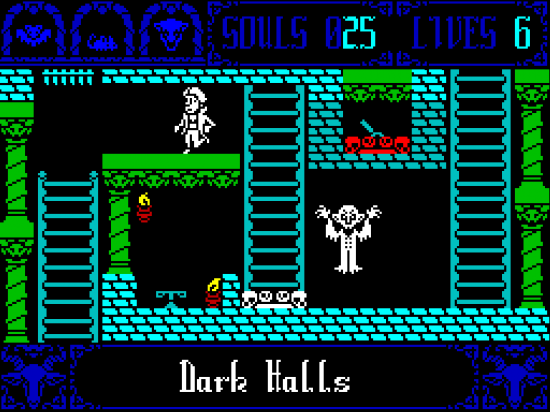
Nosferatu demo

Nosferatu

Well, another Compo fail… but another Jam entry… tomorrow!
Right now, a demo with 5 levels, some collision bugs, no sounds.
With 24 more hours, I think I will add 5-10 more levels (in a carpathian forest and a foggy London), some sounds and a decent final screen.
Download link== https://www.box.com/s/9n9bbd56c4i7apqa28vt

2.30 AM in France, so time to sleep!

PS. some infos about how to play:
– arrows to move
– X to start the game
You have to open gates pushing levees.
You can change your character (you’are Nosferatu, a vampire but also a bat, a rat or a wolf), walking on the red skulls.

Sammich-Napper: Soon

I’ve begun final mapping for my game (which is now pretty much a puzzle/rush game), and should be done with hopefully an hour to spare. Here’s a video

And miles to go before I sleep.

5 hours to go and a big TODO list.

uh oh

Comments

16. Dec 2012 · 20:12 UTC
Keep up! I’m already done :). Thank god.