atmospherium

LD27

Another First Timer

Hey guys.  This will be my first game jam and will (hopefully) result in my first completed game project.  Looking forward to seeing everyone’s entries, completing my own, and learning a bunch along the way.

Using:
–Unity (C#)
–Blender
–Photoshop
–Reason

A message of peace

Muffler

This evening, on my way home from work, my muffler and car decided they were through with each other and should separate.  The muffler stayed mostly silent through the ordeal, but my car threw an absolute fit – screaming and yelling for the rest of our trip home.  The turmoil was unbearable, and it was embarrassing to see their argument become so public while I could only sit and watch.

With what I experienced tonight, I believe conflict is in very poor taste, and I wished to spread a message of reconciliation to the Ludum community.  For people of all towers (whether offence, defense, or potato), can we set aside out petty differences for one weekend and instead focusing on something greater?  Something lasting?  Something that builds up instead of tears down?  I propose we focus on reuniting cars with their beloved mufflers.

————

Now that that’s out of the way, I have no intention of letting car troubles prevent my first Ludum Dare from being a success.  Good luck to all.

Darkness

Screenshot - Afraid


I’m making progress on my game.  It took me several hours to get things rolling, but things are moving forward pretty steadily at this point.  I’ve got a level editor and a lot of the core functionality in order.  I should be able to finish this thing before the deadline.  Here’s some music for my game as well: http://snd.sc/19EXeEE

Richard Was Afraid of the Dark – Postmortem


Richard Was Afraid of the Dark


This was my first attempt at completing a game, and I’m pretty happy with the results.  I came into the challenge with a very limited skill set, but found myself learning a lot over the course of the weekend and finding creative ways to implement the things I learned.  “Richard Was Afraid of the Dark” is definitely something I’m proud of being able to create, and that I’m planning on developing further over time.


What went well:

Graphics – I am definitely not the most artistic person, visually, so I was dreading coming up with graphics for the game.  For all of the world elements I kept the design simple, mostly black with simple bump-maps to enhance the lighting, and very little color (green for the door, red for fire).  Allowing the light/dark contrast to be the primary focus really seemed to work out well.  The game ended up looking way more polished than someone with my artistic ability should have the ability to create.

Level Creator – I spent time early on making a way to instantiate objects based off of a bitmap file.  I wasn’t sure how necessary it would be, but as I neared the deadline, it was my saving grace.  As I got within an hour of the deadline I realized that I only had a couple playable levels.  In spite of the time constraint, I was able to pull together the rest (i.e. most) of the levels within that final hour.  I was able to do basic playtesting and iteration fairly quickly, although a few bugs did rise to the surface in the later levels.

Music – I am definitely more experienced with music creation than game creation, so this was far more comfortable territory for me.  I came up with the core music idea and then split up the layers so that the music could progress alongside the player.  I had several ideas that I didn’t have time to implement, but I think the basic result was pretty effective.

Story integration – I’m really happy with the mechanic I implemented for storytelling (not necessarily the story itself).  I wanted to make the story feel present and relevant but never force a player to pay attention.  I think I found a decent balance between giving the player freedom to stop and read the text or to just run straight through.  As I was developing the game, this was the element that really made me feel like I could add something unique to the compo.


What went poorly:

Time Management/Theme – I had come up with the idea for this game in response to the 10 second theme.  I had gameplay ideas in mind as I started the process, but I got bogged down by all of the other stages of development.  I ended up not having time to develop any of the theme-relevant elements and was unable to do anything other than a brief allusion to the theme in the story text.  That’s a pretty significant failure.

Gameplay – The core ideas for the gameplay worked (running, jumping, getting to the exit) but all of the larger gameplay ideas (obstacles, the ten-second gameplay mechanic, control refinement, etc) went completely unrealized.  I had created the fire blocks with the intent to use them as obstacles, but ended up only using them for aesthetic purposes.  In the future, I’ll definitely need to prioritize the necessary gameplay elements earlier on.

Animation – As with the graphics, I dreaded the animation process.  Unlike the graphics, this didn’t work out quite so well.  I spent quite a while working on getting the animation together, but eventually decided to scrap most of the ideas I had worked on.  As the visuals developed, it seemed most suitable to allow the character to only be a silhouette, which glossed over how bad the animation really is (although if you stop right before a door, it still looks like the character is doing Gangnam Style).  This is my least favorite part of the game.


What’s next:

Overall, this was a great experience for me.  I learned a lot and gained have a much better idea of my strengths and weaknesses as a game designer.  I’m definitely planning on continuing work on this game, add the elements that I didn’t have time for, and see if I can release it during the October Challenge.

Thanks everyone for all your feedback and for making so many awesome games.


-John

Unity Exporting – Being nice to Linux users

A lot of the entries for Ludum Dare #27 have been created using Unity (including my entry), and I wanted to pass along some information that might be helpful for Unity developers to make their games as accessible as possible for all players.  Users on Windows and Mac don’t need dedicated builds as frequently, given that the Unity webplayer is readily available to them.  For people using Linux systems, however, they must download and play the game directly on their system.  Here’s a few steps to improve the experience for Linux users.  The instructions that follow are for Windows, but I’m sure there will be similar solutions for Mac

1: Download 7-zip.  This will allow you to create archives in Linux-supported formats (.tar and .gz).

2: Export for Linux in Unity:
I’m not going to post a tutorial for doing this, as Unity’s interface is fairly self-explanatory.  But you should end up with a folder that looks like this.

Screen1

3: Put both files together in one folder and name it something that makes it easily identifiable.  LD27-YourTitleHere should be adequate

4: Right-click on this folder, select 7-Zip>Add to archive…

Screen2

5: This will bring up a prompt that allows you to package the directory in a variety of ways.  For archive format, select “tar”.  Leave everything else with the default settings and click OK.  This should give you a new file called LD27-YourTitleHere.tar

6: Repeat step 4 on this new file (Add to archive), but in the prompt, select the Archive format of “gzip”.  Leave everything else default and click OK.  You should now have a file called LD27-YourTitleHere.tar.gz

7: Upload your new Linux-friendly game to your hosting site and link it on your page.

This may look like a bit of work, but keep in mind that the few extra minutes this takes can really improve people’s impression of your game and open the door to a broader audience.

Thanks LD Community (plus free music)

Hey guys,

I wanted to say thanks to everyone in the Ludum Dare community. This is my first time doing anything like this, and everyone has been really supportive and welcoming for all of the first-timers, and I really appreciate all the support that has been shown. I put together a different mix of the music I created for my LD27 entry and figured I’d share it with the community.  Check out the track on my SoundCloud page and let me know what you think. Thanks again, everyone!

Richard Was Afraid of the Dark – Audio on SoundCloud
Richard Was Afraid of the Dark – Ludum Dare entry page

Richard might fear the dark, but he does not fear October

RichardTeaser

I’m working on expanding and polishing my entry from LD27 (Richard Was Afraid of the Dark) as part of the October Challenge.  LD27 pushed me farther in development than I’ve ever gone before (first time finishing anything), and I’m going to take advantage of the October Challenge to get it all the way to a releasable form. My plan is to get it up on Kongregate by the end of the month. Here’s a rough outline of my to-do list for the coming weeks:

Revamped controls – Instead of using Unity’s built-in character controller and collision detection, I’ve been working on developing a controller with more precise movement and much more stable raycast collision detection (no more falling through floors).  I’ve added variable jump height and speed modifiers so that you feel much more in control and I’m taking time to tune the player’s movement to the environment.  It’s already feeling significantly better than the compo entry, and I’m sure that it will improve even more as the month wears on.

Better gameplay – If you’ve played my entry (or read my Postmortem) you probably recognized the significant shortcomings in my level design.  For the compo, I designed most of the levels in the final hour before submission, which left absolutely no time for testing.  As a result, the levels felt purposeless and never gave the player any sense of payoff for their time with the game. One level required a lot of tedious jumping, but there was no other challenge to be found. I’m developing some puzzle mechanics that make use of manipulating the environment as well as some platforming that requires precise movements from the player.

Varied aesthetics – This goes for the visuals as well as for the audio.  There was one texture set for the entire game and one piece of music (although the music expanded as you beat each level).  Music is going to be a much more relevant component to the game and I’m working on redeveloping the level art and the animation and design for the character.  Art is not my strong point, so this will be one of the hardest areas for me, but I’m determined to have a strong showing.

Stronger story – Mood was my highest rating in the compo (getting #72), and I think that a lot of this is due to the way in which the story played out.  It wasn’t particularly compelling or revolutionary, but it seemed to connect with the players. I’m trying out a few story concepts, but I can guarantee that this element will make a return in some form.

As I’ve said before, I’m completely new to game development (and particularly this stage of it), so any words of advice from the community would be greatly appreciated. Feel free to give my game a play and leave the harshest reviews possible. 😉

Looking forward to working through October alongside the rest of the community.  Good luck, all!

LD28

I’m In (plus some free Christmas music)

Hey guys, I’ll be joining the fun again. LD27 was my first real attempt at making a game and it went far better than I expected, so I’m back for more. Looking forward to seeing everyone’s entries. I’ll be using Unity, PyxelEdit, Photoshop, and Reason.

On a different note, some friends and I just put out a Christmas album. Everything is in Spanish (via online translation) and all the vocals are text-to-speech, because that’s what Christmas should sound like. It will make all your dreams come true and solve most of the world’s problems. Check it out.

Cover


Makin’ all them progresses

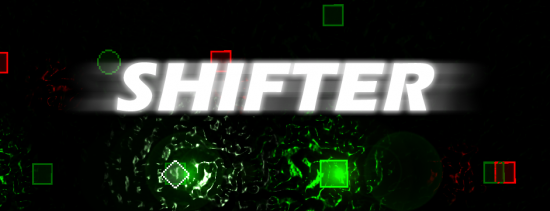
Shifter

Last LD was my attempt at building a mood, but this time around I’m focusing on making fun gameplay. Look for rhythmic puzzles, minimalist art, and unusual player controls (you’ll only get once chance to move, after all). 

I’m making pretty strong progress so far, and I’m excited to see what happens over the course of the weekend


SHIFTER – Postmortem

ShifterSHIFTER

For the second time in a row (and ever), I finished my game for Ludum Dare. I’m incredibly pleased with the results this time around, and I hope that people enjoy playing it as much as I enjoyed making it (except for those painful times where it was completely broken). Ludum Dare 27 marked the first time I created a game (Richard Was Afraid of the Dark) but, while I am proud of the results, it never really felt like a game. This time around my target was simple: Make something that catches the eye and feels fun to play. I definitely think I succeeded here (at least more than I expected to). Granted, it feels similar to Richard in many ways, but I think it’s definitely a strong step in the right direction. Ok, on to the nuts and bolts…

What went well

Graphics

I’m not the most talented person in the visual arts, so I aim for simple. I love contrast, so I made that the focus. I love light flares, so I put those in. I love screen shake, so I made the world quake under Shifter’s speeding frame. On their own, none of these things was that big of an improvement, but it all added up. Here’s the final product as well as a capture of the game as it looked 4 hours before the deadline. One of these looks like a game, the other looks like a programming experiment gone boring:

Shifter - Current
Shifter - Old

On top of the game graphics, I actually made a title screen. That works. And that dynamically responds to the background music. Definitely not necessary, definitely not important enough to give it the amount of focus I did during the last few hours, but definitely satisfying. And the moment the title screen reopens at the close is so incredibly satisfying. I’ve seriously played through the last level multiple times just to watch the screen appear right as the drums kick in.

Audio

I had told myself leading into LD that I was going to either make a rhythm game or a physics game, and that I’d decide once the theme was announced. I eventually settled on the idea of simple shapes moving in rhythm and knew I needed some music to fit. I wanted simple, engaging music that could exist in various forms throughout the game and that could relentlessly drive the game forward while not getting irritating to the player. And my target was to do all this while keeping the game’s filesize down (2MB for webplayer). Which is no small task.

The primary way in which I kept the audio fresh without bloating the game was by constructing the audio from samples at the beginning of each level. I created samples for seven different notes that I could then manipulate to fit the rhythmic requirements of the level. I was able to toggle specific samples on or off in Unity’s inspector and adjust the sound to meet my expectations pretty quickly. This also allowed me to more precisely control the timing between the audio and the platforms. All while keeping the filesize for my music-centric game at 2.05MB. That’s close enough to my target to call it a victory.

Story

I had planned on keeping Shifter completely gameplay-oriented and not incorporating any story whatsoever, and for most of the development time that was the case. It wasn’t until 4 (or so) hours before the deadline that I put any story in. And that actually was a result of people wanting clarity on what was happening in the game. It started off with the first level giving instructions and turned into a stream-of-consciousness rambling about squares, cupcakes, and ice sculptures. I literally wrote the story as I placed the blocks on the screen and didn’t pay attention to where it was going. It ended up being a lot better than I expected, so with a few slight adjustments, I left it in and called it a feature. I know it makes it feel a lot like my previous LD entry (“SHIFTER, or: Richard Glows In The Dark… And Is A Square!”), but I don’t care. You can deal with it.

Camaraderie

For most of the weekend, I had DColgan’s stream playing as I worked (check out his entry: Squirrel Hunter 5000), which was actually incredibly helpful. It provided a good diversion when I needed, but wasn’t an intrusion on my work. And most of Sunday afternoon turned into a time of everyone in the stream playtesting everyone else’s game. Which REALLY went a long way in helping me get this thing polished. Thanks to all who helped.

What went poorly

Planning/Execution

As you may have noticed, just about everything I’m happy about accomplishing with this game happened in the last 4-5 hours of development. Cause, you know, why would I want to accomplish very much during the first 44 hours? I prepped myself for not working on the game until I had a specific plan in mind, made sure I had food, and I even bought graph paper and fresh pens. I used precisely one sheet of graph paper (partially), threw out any plans I made early on, and I wasted time several times during the stretch cooking different food (“I don’t care that I have food already, I want eggs! And more eggs!”).

Yeah, those early hours were important and I built the base of my code and a lot of the core functionality during that time period, but it feels less like I made progress and more like I accidentally did things. I won’t beat myself up over it to much, but this is something I definitely need to be very aware of for the future.

Puzzle creation

I had really hoped to make this a puzzle game, but it ended up not being about solutions and more about following a preset path with no real chance to fail. I think that the game ended up better as it is now, but I really with that I could have built that gameplay. I’m hoping to take some time and figure out how to accomplish the puzzler that I had initially envisioned.

What’s next?

Well, first of all you’re going to check out Shifter. I’ve already worked on the post-compo version (bug fixes, implementing the Kongregate API), and have it playable on Kongregate. So check that out (and rate?). I’m toying around with the idea of creating a few challenge levels and adding that to the Kongregate version, but that won’t happen until at least early 2014.

Shifter – Free Music and News!

ShifterSHIFTER

Hey guys! I wanted to thank everyone who’s played my game so far and left their feedback. The reaction has been far more positive than I’d expected and I really appreciate all the suggestions that people have given. I’m hoping to take some time next year to improve and expand the game, so I’ll keep you updated. A couple things that I wanted to pass along:

1) I put the music for my game up on Soundcloud (free downloads are enabled). It’s not a long track, but I really enjoy how it turned out. Check it out: https://soundcloud.com/john-pennington/shifter-theme.

2) A post-compo version of my game is available on Kongregate. It’s mostly the same as my compo entry, but I made a few small tweaks and enabled stat tracking. I’d appreciate it if anyone could check it out on their site and give a rating (preferably positive). As I develop the game further next year, this is the version that will get all the updates. Check it out: http://www.kongregate.com/games/atmospherium/shifter

I’ll be out of town for most of the voting period (who knew Christmas was in December?), but I’m trying to play as many games as possible in the mean time. If you don’t see a comment from me on your game, it means that your game was the very best and I couldn’t think of any constructive criticism. 😉

Unity Export for Linux

I just saw that caranha posted a reminder for Unity users that they should consider exporting standalone versions of their game for each major operating system. The process inside Unity is extremely simple and goes a long way to help other people play your game. At the very least, export a Linux version for your game – Unity’s webplayer isn’t functional on most Linux distros. It is definitely worth the minimal effort that it takes.

The following is a guide I wrote up for LD27 to outline how best to package your Linux export. This process puts the package in a format preferred by most Linux users, shrinks file size, and properly configures file permissions all in one fairly straightforward process.


1: Download 7-zip.  This will allow you to create archives in Linux-supported formats (.tar and .gz).

2: Export for Linux in Unity:
I’m not going to post a tutorial for doing this, as Unity’s interface is fairly self-explanatory.  But you should end up with a folder that looks like this.

Screen1

3: Put both files together in one folder and name it something that makes it easily identifiable.  LD27-YourTitleHere should be adequate

4: Right-click on this folder, select 7-Zip>Add to archive…

Screen2

5: This will bring up a prompt that allows you to package the directory in a variety of ways.  For archive format, select “tar”.  Leave everything else with the default settings and click OK.  This should give you a new file called LD27-YourTitleHere.tar

6: Repeat step 4 on this new file (Add to archive), but in the prompt, select the Archive format of “gzip”.  Leave everything else default and click OK.  You should now have a file called LD27-YourTitleHere.tar.gz

7: Upload your new Linux-friendly game to your hosting site and link it on your page.

This may look like a bit of work, but keep in mind that the few extra minutes this takes can really improve people’s impression of your game and open the door to a broader audience.

Schönen Dank

ThanksSecret Link To My Game

First of all, congratulations to all my fellow LD participants. I’ve played a ton of awesome games from the compo and, now that the results are out, I’m finding a bunch of the cool games that I missed out on during the voting period. It’s a lot of fun to see how much people are capable of creating within such a limited period of time. Impressive work all around.

Now on to the self promotion…

Back during the August Ludum Dare, I made my first video game ever. It was alright. I was (and still am) incredibly proud of what I was able to accomplish my first time out, but it wasn’t an incredibly strong game. I cracked the top 100 in mood and received generally positive feedback/ratings, but it had a ton of flaws. It wass a strong start but I wanted to make sure I improved for LD28. As I was preparing for LD28 I had set my sights on a particular target – to reach the top 100 in four categories. I knew that I was aiming high and that I likely wouldn’t hit the target, but that’s what I told myself that I was aiming for. Sadly, I didn’t get four categories within the top 100.

I got five. Four of which were in the top 25. On top of that, I somehow ended up with 1st place in Audio. Which was WAY more than I expected. If I’m reading this graph correctly, I believe that I’ve improved:

AtmospheriumPerformance

And it seems that my ranking has given my game a SLIGHT boost in plays over the last 24 hours. My game has been played more in the last 24 hours than the previous 3 weeks combined. A significant majority are from Germany for some reason. (Danke für die Unterstützung!)

Clicks

As you may have guessed, I’m really excited by my results this time around. I’m working on developing the post-compo version of my game further and, for the time being, all updated versions will be available on Kongregate. Look for new levels (including new music) in the coming weeks. And I’m on Twitter, Soundcloud, and them Facebooks if you feel like pursuing our online friendship further. You know you want to.

Comments

johnfn
08. Jan 2014 · 04:53 UTC
Dude congrats! With your help we got 3 people from OHC in the top 5 audio categories 😉 OHC TAKEOVER

Procedural Audio Generator for Unity3D

procAudio
I’ve been working on a project for the past few weeks to allow for quicker procedural audio generation within the Unity engine. I wanted to share my current progress with the LD community to get feedback and hear any suggestions guys might have. Check out a video demo of where the project stands if you’re interested in giving me whatever feedback you might have. Or here’s a link to the current build in the video description if you want to check it out for yourself.

Looking forward to hearing what you guys think!

LD 38

First successful LD in 2 years. Woot!

LD38_DroneScreenshot.png You guys want a procedural audio generator/controller that has a bunch of flashing lights? Something that doesn't at all qualify as a "game"? Well I got you covered.

https://ldjam.com/events/ludum-dare/38/$15482

Quick video of my procedural audio entry

Probably won't do a post-mortem for my entry, but wanted to at least give some level of explanation of what's going on. Cause I think it's awesome, even if it's not incredibly intuitive.

https://www.youtube.com/watch?v=OHOBLlNJTVI

Playing people's games for a bit

I'll be playing through submitted games for bit on https://www.twitch.tv/atmospherium

Submit your games here: https://drive.google.com/open?id=1a2F29QXt9ZcZpm-Nvp3lAGaoBPZnAisqIMOHZj6p9i4

LD 41

LD 42

I'mma do a thing.

Twine Tone.js A lack of artistic ability That's it

LD 44

Ephemera Postmortem

You must turn back now_480.png I went into the weekend knowing that I wanted to try out some of Unity's new functionality and ended up targeting the new Visual Effect Graph. I decided I’d do a lyric-video approach to free me up from worrying about game mechanics and letting me focus solely on the bits I wanted to learn. Feel free to check out my final result (https://ldjam.com/events/ludum-dare/44/ephemera) as well as another game I created music for (https://ldjam.com/events/ludum-dare/44/rude-bear-reassembled).

What went well:

Music

I wanted to have something that built in intensity towards a large climax and I think I achieved the target I was aiming for. I think I found a good balance of electronic and atmospheric sounds before hitting the guitars-and-screaming bit at the end. I’m not the strongest vocalist, but I think I got a passable performance. A few things I’d do differently in hindsight, but I’m happy with the result.

Learning

I had no knowledge of how the VFXGraph worked before going into the weekend and I spent a good 6 hours or so just reading articles and looking at how others have used it. I’m by no means an expert in it now, but I think if I started with a clear target I had in mind I could probably approximate it fairly well. It really is an awesome tool. They brand it as something for non-programmers to be able to get results that usually require programming, but I had the opposite experience - I have no business doing anything with visual arts and I was able to walk away with something cool looking.

Modularity

One of the great things about VFX graph is that you can expose parameters to be code-controlled very easily. Each element had (among other things) a spawn rate and an intensity parameter that combined to control everything from particle size, spawn rate, deformation speed, and color. This could all be controlled in Unity’s Timeline editor, through specific triggers I set up, or in response to the audio’s RMS levels. Sometimes all three. Super flexible. Intensity-Spawn-min-02.gif

Timeline

I had never used Unity’s Timeline editor before either, but I was able to use their Signal Receivers to lock specific actions to specific timestamps on the DSP level. I created a function to add or remove each text block and then could just go through the song and add triggers as needed. I don’t know how much I would use this in a game context, but it’s far more useful than I had expected.

What didn’t go well:

Setting up the Particle Systems

It could just be my lack of knowledge, but I had to do a LOT of duplication of VFX Components. I had hoped to be able to create a parameter that would let me swap out the text images as needed, but instead I had to recreate each VFX Component and update the Cache reference inside the Graph itself for every single chunk of text. This meant that I had 30+ separate VFX Graph objects. Once I started implementing text I was unable to make any real changes to how any of those systems worked or else it would be inconsistent with the rest of the project. Not to mention spending way too much time trying to solve this issue that could have been better spent elsewhere.

No interactivity

I had hoped to, at a minimum, let the player move the mouse around and affect the particles in the system. It definitely would have made things seem a bit more tangible. It’s definitely possible, but I ran out of time to get it implemented.

Conclusion

On the whole it was a very successful experience. I learned a TON and I’m really happy with the result. While I didn’t accomplish everything I would have wanted, I think I got a lot closer to that target than I usually do for Ludum Dare.