LD24 August 24–27, 2012

My Top 1 – Gene Jumble

Mh, building up a Top 5 list is hard. Especially when I barely saw 3% of all the games yet.

But I do have one game I definitely liked most. Gene Jumble boy I liked that game.

I sure want this to be finished and polished. I loved the concept it was hugely fun. Go play that game.

Comments

ae12687
09. Sep 2012 · 09:24 UTC
Wow, thank you a lot.

It’s a wonderful surprise for me, that someone liked my game that much.

I will continue to work on this and try to make it polished.
joekinley
09. Sep 2012 · 13:19 UTC
Yay

401 games down – here are my picks

So I just played 401 of the 1406 games this LD (How? I’m a wizard). Here are some that stood out in one or more categories / are particularly interesting / are horribly underrated and deserve more plays.

(links to the LD-entries are in the headers/titles)


Cuboid Sandbox – cominu

I have no idea what’s going on. Some kind of cube-simulation, I fathom. But it is quite pretty.


One Day To Breed – Hazel

You are a cat. Find a partner, breed, and continue as the offspring until you have reached the peak of cat-dom. Quite cute. Also, the second game to feature boxcats :)


Happy Vegan Birthday – Huitre

Ridiculously good-looking point+click full of nice little gags.


EvoRide – inakrinat

It’s essentially Rainbow Road, but with a self-creating dna-path.


Species – mappum

I’m stil amazed by how this game manages to pull off what it does in 2d. More information would spoil the experience :)


FOR THE darWIN – TravisChen

You are Darwin. Dig out fossils to prove evolution, all whilst avoiding the church! Also, this game has the most sensible use of the NumPad ever. Top that!


Where am I? – AgentParsec

Play this game blind. Do not read the description. Do not read the comments. Every bit of information will cloud your playthrough. Just do it.


My Time – GamesByZed

1-day-extra-game by Zed, which is quite focussed. You are the Ludum-Dare-Theme “Evolution”. Show the other themes who’s boss!


-Matthew


Tags: picks

Evolution of a monster: The post mortem

Evolution of a monster

http://www.ludumdare.com/compo/ludum-dare-24/?action=preview&uid=3145

The things that went right

Using Unity
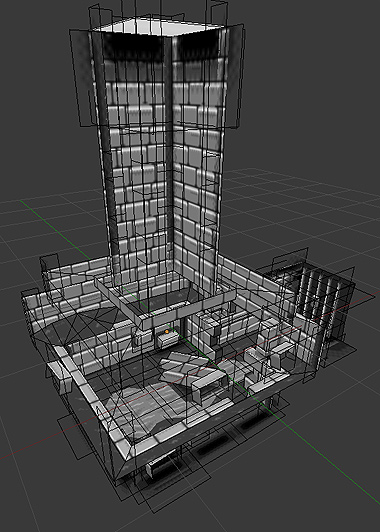
was one of those things that helped out this time around as well, it made it possible to get the basics going and have the results be playable in the browser, it meshes well together with blender and assets were easily made with that kind of pipeline in place.

A simple artstyle
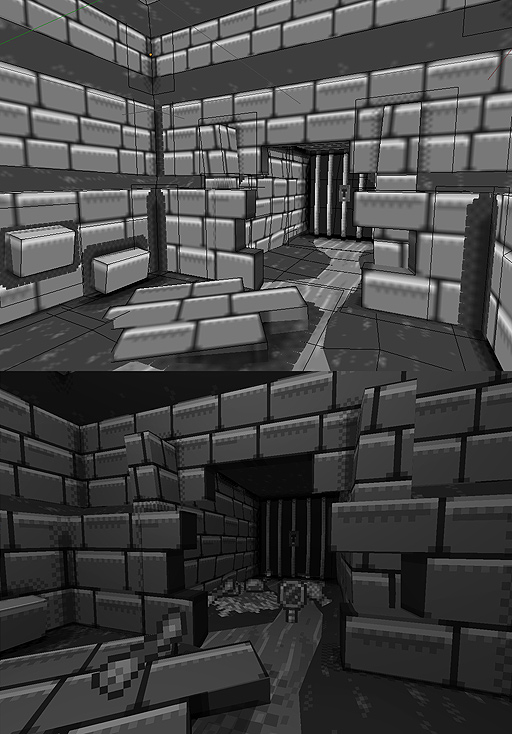
was put in place once again as is typical with how I usually go about my ld48 entries, it makes it possible to make high-end looking looking visuals without actually not putting in any more time than I would’ve with a 2d game, the textures are all simple and reused, the ambient occlusion and detailing is just overlays, the objects in the world are pixeled sprites that always faces the camera and made it possible and easy to make new items without having to push for 3d objects, which would’ve been devastating for the time-budget.

Sfxr and Musagi!
easy effects and environmental ambience as well as an ending song I made in the last two hours of the compo. drpetter is awesome!

Hanging in there
The worst enemy is usually the moment where you realize that the theme is the worst theme, (They’re all the worst theme, every time!) and that moment the second day when you wake up and realize that you’re never going to be able to finish the entry, these moments happen every time, and working through them to the end and really pushing for having something done for the deadline.


And the things that went wrong

“I think I’ll do this instead!”
I had a completely different story planned out for the thing to begin with but as I progressed I stopped following my notes I had written on my idea, and went far too much into “do it as I go”-land, this is most likely something I should handle better in the future.

Joining in one day late
ended up slicing what I wanted to do in half, and made the game itself very short, I already had much of the gameplay elements I needed in place, but those extra ~24h would’ve given me that time to actually add game-extending content.

The technical side
of the game was put together fairly quickly, but chosing to leave some things less than stellar ended up hurting quite a lot in the end, the carrying-physics being one example, it works quite well but ended up with one big downside: people can carry items out of the geometry, which turned out happening more often than not.

No playtesting.
All of the playtesting was pretty much being done by myself, and that was bad. One of the things I noticed in the end was that people took a scenario as being given a key and a closed gate as being given one obvious outcome, combine this with people then ending up trying to use the key on the gate that it doesn’t work on and they’ll end up pushing the key outside the world and breaking the game progress completely, having them miss out on the short bit that is most of the game, and the ending!


For the future


I really enjoyed the aesthetics of something like ultima undeworld and that ended up affecting how the project ended up looking like, the physics were also something that I took from UW, I really love those cobbly old dungeons with water and small monsters nests and the things they’ve gathered, with junk just cluttering corners and the player scavenging to find something that is useful.

My plan is to create a bunch of stuff inside unity to make it easy to make puzzles and connect things like levers and doors, a weighted plate to a trap, or a keyhole usable with any defined key. This with a bunch of new art-assets and a longer worked-through game could end up being a fun and less buggy adventure to go through, something in the length of an hour or two and then release that as an extended version.

Thanks everyone for yet another fun competition!, now I need to take the time to play some entries!

practice makes perfect?

So after my first experience in a LD and looking at all the amazing entries, I realised I needed more practice.

I still had an idea left for when ‘Abandoned’ was still the nr 1 voted theme, so this weekend I made another game.
It’s called Abandoned (as you can see below).

you can try it here:
http://www.goerp.nl/flash/ld/abandoned.swf

the development proces was smoother, and the games looks better than my LD entry (http://www.ludumdare.com/compo/ludum-dare-24/?action=preview&uid=14225), but the graphics still take too much time. Maybe the next game will be with pixels or hand drawn pictures (those I do fast).
And next time I will invest some time to work on more interesting gameplay.

This idea was meant for a device with an accelerometer, but for now you have to use the mouse (maybe I’ll port it to Android later).

And now back to trying those other games!


Death Death Evolution Postmortem, Timelapses & Soundtrack

For this LD, team RADMARS attempted to make a puzzle platformer where you have to die in order to progress. It was a big challenge, but I think we managed to make something pretty awesome. Check it out here: http://www.ludumdare.com/compo/ludum-dare-24/?action=preview&uid=7860

We have postmortems for 3 out of the 4 members of RADMARS for you today (and timelapse videos for two of those). Up first is roushey, who decided to write a very lot for some reason:

This Ludum Dare went surprisingly smooth. We started off Friday night cooking up a bunch of good ideas and finally settled on the concept that every time you die, you gain a new ability based on how you died. We then spent the rest of the night fleshing out all the abilities you would have, flagging them as necessary, nice to have, and eventually cutting some. After that we had a pretty solid plan to always tab back into and check where we were at. We also put TODOs for art, programming, levels, etc on the doc as well so we could quickly see what the other team members were doing without pestering them.


What went well:

First and foremost we bumped up team RADMARS to four people, by adding brendo. This helped quite a bit, as he spent basically all of his time on level design. The biggest thing we learned from Escape from Minimars is that the level design needed much more love this time around. The biggest complaint (from us, as well as the comments) was that the game felt stale by the end. I really liked the way we created and ‘painted’ the levels for DDE as well. (as opposed to minimars) Brendo designed all the levels just using colored squares for all the different elements. ( red bricks for solid ground, green for platforms etc)  This way, we had all of the levels designed and playable before we even did the art for what the environments would be like. The only real direction we had was that we wanted to have 3 areas. ( as adhesion was going to make 3 music tracks ) I wish we’d spent a bit more time thinking about it, but we settled on: forrest, caves, and ‘nature-punk’ future-ish kinda thing. It was really nice to have the levels built before I pixeled the map-tiles as I had a much better idea of what kinds of tiles to make. Minimars was the complete opposite, where I panted a buncha tiles and just had people make random shit out of those. Both work, but I like the former much better. Working with MelonJS was also pretty awesome. The creator, Olivier Biot, has been really active about updating it. We had some feature/bugfix requests after minimars pretty much all of which were fixed in the next version. So awesome! :D Tiled ( http://www.mapeditor.org/ ) is fucking boss. I can’t recommend it enough for working with a tiled maps. Version control! We used Git (still not quite used to it… I’ve always used SVN) and its pretty much invaluable when it comes to working in a team. Voice chat & live streaming! All weekend long we had all 4 of us in voice chat (mumble) so we could quickly ask for things and get status updates (as well as dick around and make bad jokes, and complain about… well everything really. complaining is fun) I had a stream up on twitch.tv which makes it very easy to show what I’m working on with the team. I can demo animations, brendo got to see people play testing his levels, etc. really awesome. I highly recommend it.
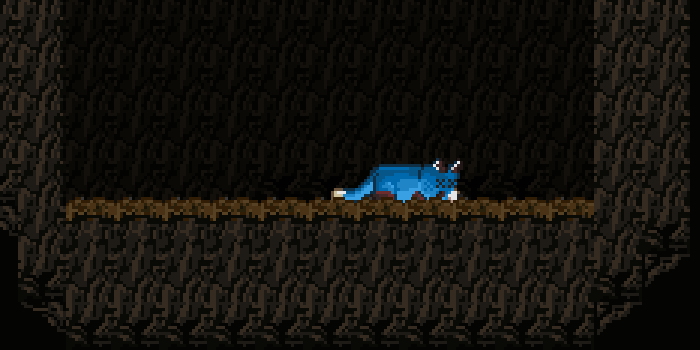
 

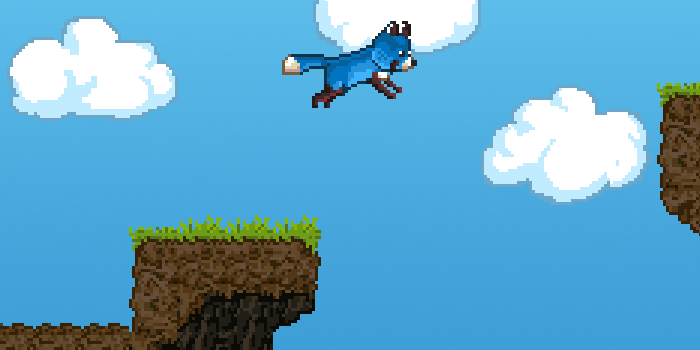
What went not so well:  The major thing that went wrong was scoping. There was a lot of detail and polish that (i think) is pretty important that we just didn’t have time to do. The biggest of which would be the main character’s sprite never changes. We wanted to have the character change for every different ability. The changes would only be minor, like a stripes, boots, a spiked hat but the fox squirrel red-panda thing had quite a few frames of animation. :( this makes creating overlay elements that much more of a pain in the ass. I’m gonna rant for a bit here so sorry ahead of time. Perhaps I’ve just not found the right tools, but the process for making animated pixel-art characters is not so fun. Photoshop is probably the best tool to use for pixel art (that I’ve worked with) its just got so many features, and they’re all highly tuned and polished to make it as painless as possible to actually make stuff. The biggest problem with this of course being… animation. Photoshop’s animation features are basically garbage, but that’s not what Photoshop is for so thats completely OK. The biggest problem though is exporting the animations to a sprite sheet. Doing it manually is obviously… terrible. I’ve tried using pretty much everything from scripts to Photoshop actions to try to make the process as painless as possible, but none of the solutions really fit well. I do realize that at the end of the day, its actually not *that* big of a deal, but I see it quite a bit like an IDE having re-factoring tools. If its a hassle or a pain in the ass to make changes, (at least for me) the ‘fuck it’ impulse flares up and the changes never get made. This is of course made worse by the fact that the drawing tools in most other pixel drawing apps I’ve used just feel very immature compared to PS’s :( ) And the more complex your animations get, the level of pain-in-the-assery rises exponentially. I used Graphics Gale for all of the particles (explosions, splashes, smoke poofs, etc) because in terms of making simple pixel-art animations, it’s really awesome. Its fast, you can go back and forth between frames easily, constant playback preview, and it can (at least reasonably well) export to sprite-sheets. The problem with Graphics gale is that the way it handles layers is really clunky. If it wasn’t for that, id be using graphics gale… pretty much all the time. Selection, copy & paste, are also really clunky and can be a bit weird. :( I’ve tried to use gimp, and Paint.NET as well. They’re pretty good Photoshop alternatives, but if  you’re already using Photoshop they really don’t bring much to the table as far as animation is concerned. /rant  Phew. sorry about that *_*; Process:  Map Tiles & Parallax backgrounds: All pixeled in photoshop, grid, guides, selection, cloning, painting tools all make my life so much easier. Maps: Painted (tiled) using Tiled map editor. Characters: sketched and painted in photoshop, pixeled in photoshop, exported to sprite sheet using a photoshop action.
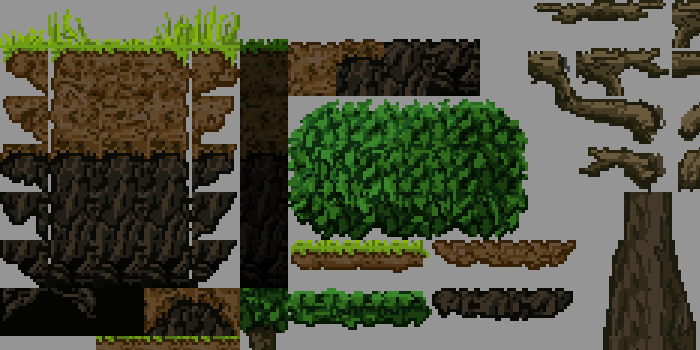
Particles, explosions, and effects: Directly pixeled in graphics-gale, no real sketches or anything like that.

‘At the end of the day’ Now that I’ve had some time to sit back and rest, I’m really proud of this game. There’s a lot of stuff I would like to go back and change like the shameless pallet swap of the background in the third area, and the additional states of the avatar. I’ll get to em uh… eventually! for now, Go Team RADMARS! (Also, all of the other LD submissions keep getting better and better each time.) Can’t wait to do LD25 :D And his timelapse:

Up next is emarcotte, for whom brevity is the soul of wit:

“Yeahh same as usual I need more fcking time. Knowing the tools helps. Having a person per area helps.”

Indeed. Last is me, who falls somewhere inbetween:

What went right

-Well-defined roles: It was great to have brendo as the designated level designer, which freed the rest of us to work on our respective tasks. On the coding side, even though there were two of us we were able to switch off on what we were working on so there weren’t any weird merge issues that might take up time.

-Time to polish code: I was lucky to have all of Monday free to pretty much only do playtesting and fix small bugs, which was great. I also had some time to do some subtle sound tweaks (like the running sound) which I think really helped as well.

-melonJS: a very good game framework which has even had some specific bugfixes related to issues we found when doing our previous game. Not quite perfect yet, but the few issues I had this time were not showstoppers by any means and I was able to work around them relatively easily.

What went wrong

-Feature creep: Our concept, awesome as it is, lent itself to a sprawling amount of features. A good number of deaths->abilities got cut as we realized we would have no time to actually implement them. Cutting these was difficult but we decided we’d rather have something polished and more focused rather than something very ambitious that fell short.

-Time management (to an extent, again): I felt like I ended up spending more time on music & sound as I did last time, but came out with about the same amount/level of quality. Majorly subjective though. Also, again it was a bit hard to get going on Friday/early Saturday but once we got the core features set in stone and some art assets done my coding gained a lot of steam.

Overall this Ludum Dare was hugely satisfying, and we made an even better game than last time. Look out LD25!

And my timelapse:

And of course the soundtrack, which I’m very proud of: http://adhesion.mu/sic/Adhesion-DDEOST.zip Whew! Hope you liked all this stuff – we’d love more feedback, so drop by our game page and leave a comment!

Tags: post-mortem, postmortem, timelapse

4

This entry was posted on Sunday, September 9th, 2012 at 9:27 pm and is filed under LD #24. You can follow any responses to this entry through the RSS 2.0 feed. You can leave a response, or trackback from your own site.

R/evolution post-mortom

What went right:

Overall I am really happy with how my 48 hours went, and with how my final game turned out. It was a great experience, which I will definitely be doing again next time.

Got off to a calm start. Ludum Dare start at 1pm Saturday my local time (New Zealand), and I think that worked out really well. I spent the first 3 hours having a nice casual lunch, and just started thinking, letting the theme absorb into my brain. I think this is the way to do it. Food helps me think, and since I went out, there was no way of rushing to the computer and starting before my idea was set in my own head.

Using Haxe, NME and the awe6 game framework. I am really happy with my technology choices. I have been using Haxe and NME for a while now for random things, never really use awe6 for anything other that simple hello world style games. I know everyone warns against it, and I knew it was a bit of a risk, but I made the decision to run awe6 anyway, as it seemed like the kind of framework that would not get in my way. I was lucky that I actually picked it up quite quickly, and was able to draw on the strengths of the framework to help me out.

XML based levels. Spent a little bit of time making a way to load levels as XML. This made making the levels really fast during the middle of the final night.

Simple game concept. Choosing a simple concept, and mechanic was a great decision. This meant I could concentration on making the game fun, and actually getting it finished.


What went average:

Needed more play testing. I really should have got a few more people to play the game. A lot of the things that did not turn out so well, could have easily been fixed it I got more people to play the game earlier on. That being said, I was tweaking the mechanics right up until the last minute, so not sure when I would have had the time to implement any feedback.

Maybe made it a bit too hard. I wanted to make a challenging game that would take full advantage of the mechanics. Unfortunately I think the difficulty curve was quite steep. There were a few levels that I probably should have made easier, or removed all together, but a number of people were actually able to play all the way through, so I think it is really up to if you “get” the mechanics or not.

Unusual jump mechanic. The jump mechanic that I was playing with, relied to much on knowing how it worked under the hood. I can now ace almost every level on the first try, but others seem to struggle. This was the main issue that the people who commented on my game post had. I should have worked a little more on making the jumping more intuitive. I have even started to tweak this for a post-compo build. A few people wanted to be able to move in mid-air. I purposely did not want to include this, as I thought it would change the game-play too much, and make it too easy.

Sound. Sound was average, as this is one aspect I am inexperienced in. I will definitely be trying to improve these skills for next time.

Not enough content. I thought I did quite a good job of keeping a reasonable scope, but the one thing that got away from me was the amount of levels/episodes I planned to create. My interpretation on the theme was that each level you would advance through the ages. Following the evolution of the wheel. You would start out jumping over prehistoric style stone wheels, then up to roman wooden wheels, then wagon wheels, and eventually to the future where everyone knows they use wheels made out of lasers. I only managed to get three different wheel types by the end, but I was not actually too worried about this. I think the point still came across. I will also add more wheel types and more levels in the post-compo builds.

Tags: post-mortem, postmortem

My Top Eight Under 50 Ratings

Now that I’ve rated over 100 entries, I wanted to compile a list of some of my favorite underplayed (under 50 ratings) games from that list. Here they are, in no particular order (click the titles or images to go to the entry page) …

Influenza – Miltage – Jam Entry

A flu virus tries to take over an office building, and must contend with managers, doctors .. and the dreaded janitor.

Eggplant farm – mokujin – 48 Hour Compo Entry

Brother amoebas fight for control of their inheritance, an eggplant farm.

Quantum Seed – motionbit – Jam Entry

A thoroughly appealing game both visually and aurally.

FronSkratx – muh_h – 48 Hour Compo Entry

A game I wish I was much better at so I could experience the later parts. See if you can get farther than me (you probably can).

@#$% Life! I’m the god damn SUN. – Phobos001 – 48 Hour Compo Entry

It may have little to do with the theme, but it’s fun to play and has a great title.

FLOWERBOT – Zccc – 48 Hour Compo Entry

A robot befriends a flower and has to protect it from danger.

Psychiatric Evaluation – ConflictiveLabs – Jam Entry

A mental patient has to keep his sanity up in order to escape.

The Evolution of Flight – AaronYip – 48 Hour Compo Entry

The Wright Brothers take on aliens as they perfect their aerial technology.

That’s all for now; I hope you enjoy playing these games as much as I did!

Tags: LD #24, picks

Comments

Miltage
10. Sep 2012 · 17:44 UTC
Scrolling down the homepage, I was very surprised to see a screenie of my game grace the homepage on a stranger’s blog post. Thanks for featuring my game, you’ve made my day!
Zccc
10. Sep 2012 · 18:38 UTC
I saw this list and I was thinking to myself: “I would really love to see someone put my game in a list of favorites”.

When I saw the picture I felt really really happy, thank you very much 😀
muh_h
11. Sep 2012 · 22:04 UTC
Thank you very much never thought someone would post my game in a fav list

7th time’s the charm…

I’ve now published my 7th enhancement revision to Karyote.

A lot of bugs have been squashed, not much in the way of new features, but the game is starting to take the shape that I had wanted it to have all along.  Now that I have the code I’ve written so far more or less bug-free, I am getting close to being ready to add the final features that I wanted the game to have.  This makes me happy, because it’ll mean I can put down this project and work on some other ideas that I’ve been wanting to play with.  It’s been interesting toying around with different mathematical models controling the game mechanics and figuring out what works best.  I’m not entirely sure that I’d call my game successful, it feels like it needs something more, still.  But I do feel like it’s been a worthwhile experiment at this point.

Cuboid Sandbox – Postmortem

Original post is here.


I’m back with some (good?) news!

This time I’m going to talk about a little experimental game made for the 24th Ludum Dare. The game is called Cuboid Sandbox and the description in the contest page is something like this:

Half game and half simulation, this sandbox let you discover the beauty and wilderness of the different Cuboid species fighting for food and territory control in a constantly evolving environment.

Wait. Whaaat?

Well…this 3 days long experiment ended up being more like a simulation than a game. But, what is really a game? When I was a child I always found entertaining to watch ants movements and this game probably have been influenced by that experience :)

Cuboid Sandbox

So, what happened during the development? Here’s a video timelapse (3 development days compressed to 3 minutes) and little postmortem:

Cuboid Sandbox Timelapse video (youtube)

What went right

  • Familiarity with the tools
  • No time-consuming graphics and 3d models. Almost everything was made with a combination of cubes and simple texturing
  • Everything is procedural, no time wasted on making levels or story
  • Side effects are good: the “heatmap” can be used to create abstract paintings 😀
  • Making a very small warmup game the days before the competition helped me to focus more on tangible things and less on “under the hood” geeky stuff :)
  • The unity integrated profiler rulez: sometimes you have to optimize and it’s better if you know what part of the code is really slow. I can’t live without it…
  • Coroutines! I used extensively coroutines to spread the workload across different frames avoiding cpu load spikes.
  • The still-in-beta Linux exporter of unity4 worked without a single problem.

What went wrong

  • Too many hours of work. For the next Ludum Dare I’ll try making something smaller or reusing code libraries from other projects.
  • Unfortunately Marco had some problems and I worked almost solo for the 2nd and 3rd day :(
  • We didn’t really like the theme and we wasted 8 precious hours deciding what kind of game to do.
  • Handling a large numbers of dynamic objects is hard and need time to optimize the code.
  • Too many hours wasted tweaking values to balance the simulation.
  • Lack of interaction with the simulated world.

Conclusion

This was the first time I entered a similar competition and I learned a lot about the time needed to complete something playable and the disastrous side-effect of sleep deprivation.

I really had a good time stepping out of my comfort zone for a while and making something completely different from Blackreef Pirates and I think this little experiment will receive some extra work in the future with more emergent behaviours spawning from different cuboid AI rules and more ways to influence the simulation.


Still awake? What are you waiting? Go play and rate the game! 😀


Tags: post-mortem, postmortem, timelapse

Free composing for LD entries

No strings attached.

I want more practice writing music for video games. And having just enjoyed entering LD#24  myself, I could think of no community I would rather help in my great and mighty quest to get some more practice!

Yay!

So if any of you want me to compose a piece of music for your LD entry, or ask a question or something, just email me at:

[email protected] /* */

(Just make sure you let me know a bit about what you want for your game. What style of music and whatnot)

If you want an idea of my level at composing, and what you can expect from me, check out the music I wrote for my LD entry HERE.

A good day for an adventure!

Fend off waves of zombies with your evolving gun DELUXE – Postmortem

I guess it’s not too late for writing a postmortem of my game with seriously too long title.

What went right:

Finishing a game. It speaks for itself. It was a lot of fun, too!

Shooting mechanics. It’s an entirely complete, ray-based weapon system. Weapons shoot with random deviation (0.1° step), and there’s support for multiple bullets shot at once.

“Art” style. I guess calling this stuff “art” is an exaggeration, but i really like how it turned out. Two-color menus look really nice in my opinion.

What went wrong:

Idea. My game doesn’t really follow the theme closely, people left some ideas in the comments. Why i haven’t thought of them earlier? 😉

Sounds. Not really wrong, but there’s exactly one gunshot sound for all of weapons in game.

Laziness. I should’ve added more species of zombies. This would make the game really more diverse.

Lack of polish. People complained about too long delay between waves and crappy controls.


Check out my game here: http://www.ludumdare.com/compo/ludum-dare-24/?action=preview&uid=11033

Tags: postmortem

Growth – spcmnspf – Jam Entry


I had a lot of fun doing the jam entry for this years LD. It always seems that I can nail down a good technical demo of my concept. But, I am usually missing gameplay elements. Also my link to the theme would have been much greater having a few final mechanics. I think my games “achievements”  is something I’m still trying to find as a designer. Or maybe how to integrate them in properly, but I’m working on developing that skill.

I have been rating games like crazy and love seeing everyone’s entries. Also refreshing my game page to check for new comments.

I have been continuing the development for Growth, and would like to link to a post-compo version. I think this revision is much cleaner and has better controls as well. I hope you all enjoy, and think it will be one I continue to work on in the future.


Web 

Comments

10. Sep 2012 · 23:17 UTC
I like the atmosphere of this. Do you have a link to the competition version?
spcmnspf
11. Sep 2012 · 00:52 UTC
Here is the Jam version.

Rate your own game

In lieu of a postmortem, I’m going to try an experiment.

You’ve played and rated a bunch of other games by this point.  You’re probably curious how you’re going to do in the final tallies, even if your game didn’t turn out to be what you wanted.  You like making and playing games, and you like competition — you’re here, after all.  Well, here’s a bonus competition.  Rate your own game, post your scores, and see how close you get to the final ratings you receive.

Try to forget everything you know about your game.  It’s completely impossible (given you’re the only one who knows all of it), but do it anyway.  Now, go back and play it.  If you’ve done any work on it since, play the original.  Give it the same chance you gave any other game you played.  Ignore any insider information you might have, put aside your biases, and write down your scores in that comment field down there.  You know the one.

Be honest.  I’m usually very sparing with 5’s, to save them for really spectacular entries…  and I’m judging myself on the same scale I used for everyone else.  Keep the same criteria you’ve used in the past in mind when you’re rating your own game.  Remember, this isn’t your game anymore, you’ve never seen it before today.  If you cheat and write all 5’s, you’re only cheating yourself.

Just as important as all the other skills needed to create a game is the ability to judge your own work with a critical eye, and be able to picture how others are going to see it.  Playtesting, as often as possible, is awesome for this (we did one last weekend), but you can’t playtest all the time, and getting stuck on a bad idea can kill you.  It’s too easy to come up with an idea that doesn’t work but convince yourself that it’s fun, and ignore what others have to say.  If you always try to put aside your own preconceptions when looking at your own work, it’s easier to stay focused on creating a good game.  This experiment will help us all see how capable we are of doing this.

If enough people are interested and post their scores, I’ll throw them all in a spreadsheet with the actual scores once they’re out, and figure out how close everyone came to their real scores.  If this idea sounds interesting to you, rate your game, and like this post so more people see it.

I’ll go first, but I’ll save it for a comment.

Streaming random ludum dare 24 games

Hey everyone,

Some friends and I are streaming random ludum dare 24 playthroughs.  Join the channel and link your game if you want it played!

http://www.twitch.tv/minism


Comments

Adhesion
11. Sep 2012 · 01:57 UTC
Noooo I suggested my team’s game and the stream immediately went offline. Hope I didn’t curse you somehow :<

The House, Post Competition edition!

Hey!
We have made a post competition entry of our LD#24 game The House which you can rate and play here!
http://www.ludumdare.com/compo/ludum-dare-24/?action=preview&uid=8389

We have fixed a lots of bugs but it still needs more levels and gameplay elements!

Feel free to try it out here :

http://dalsgames.dalsit.se/games/thehouse/post <—APPLET (Tested on W7 and MAC OSX 10.6.8)
http://dalsgames.dalsit.se/games/thehouse/post/TheHousePost.jar <- DOWNLOAD the .jar (not tested but should work!)

See you all next LD 😀

Ludum Dare 24 Postmortem: Golden Eggs

It was a hetic weekend, but I managed to wrap something up for the Ludum Dare 24. And the result? Golden Eggs.

When the theme of Evolution was announced, I wasn’t exactly sure of what to do. Truth be told, Evolution was one of the themes I had voted down. I just didn’t have that many ideas to go along with it. But I was bent on carrying it through. Doing something you like while within a theme you aren’t especially lukewarm about is a challenge, but you can learn to like it all the same. At least I did!

At first, I didn’t know what to do. The only things that went trough my head were the immediate, overdone things: dinosaurs, DNA manipulation, all that jazz. But then, it hit me! The most prominent game I’ve played around the subject was the chocobo breeding mini game in Final Fantasy VII. Normal chocobo could breed and, using foods and other items, breed higher tiers of chocobos that could then be used in several tasks. I remember it being so complex that I looked up a guide online and was absolutely dismayed by how big and detailed it was back in the day.

With that little thought in place, I wanted to root the player in a more mundane setting (and also not incur in copyright infringement). Since the original mini game takes place in a farm, I decided to use it as a base for my game. And instead of chocobos, chickens and roosters took their place! And of course, everyone knows that the chicken who lays golden eggs is the best! After that, I needed to have a growth mechanism, some way to make them progressively better, and so the idea of feeding them better crops was born!

At the time I didn’t even realize how similar it could be to other games out there. People pointed out Farmville and Harvest Moon in the comments after I submitted the game, but since I never played any of them, I wouldn’t know. Thing is, I was so excited with the idea at the time I didn’t even look back and started creating the game!

Since I’ve been using Unity3D, I decided to try my hand at it in a different context than I’m used to: pixel art. The game took a while to make not because it was incredibly complex but, as I came to realize, it’s tricky to do pixel art in Unity. But when you know what to do and what to avoid, it gets simpler to do it, and that was the main reason for doing this blog post.

So, what went well?

1. I managed to nail a decent art style fairly quickly.

I never did pixel art for a game before, and wasn’t sure of how it would turn out. After two tries, I finally got a simple style I could create art quickly. Lowering the number of pixels from my initial try also helped in this regard. Considering the comments I got for the game, the art was the best thing about my entry (not that I had much else going for it, truth be told), and people really liked it.

 ->       -> 

2. The core of the game was done by the first day.

By the end of the first day, I already had the systems for animating the characters and other props already done. The animals wandered around and the player could be controlled. The second day was to be used to get the gameplay flowing.

And what didn’t go so well?

1. I used sprite sheets.

From the get go, I wanted to use sprite sheets to increase the game’s performance and to learn how to do it, since I’m making another game that could use the technology. I have never used sprite sheets in Unity3D before and, little did I know, turns out that they’re not the best things to use, according to its developers. Even worse, the slight errors in calculation during the texture mapping ended up being even more glaring due to the size of the textures (16 x 16 pixels). This wasn’t a big problem for full blocks, but became very visible in partially or almost completely transparent blocks, such as the fences and the grass:

But the change to single textures for every sprite and animation frame ended up being too complex to do in time, since the code was already done for sprite sheets. I’ve fixed the problem since then, but in the end, I ended up having to submit the game with the glitches because of this.

Even worse, I couldn’t get over this glitch and tried many things to fix it without changing the system I had coded to no avail. I lost precious time and ended up not finishing the core gameplay, which I might have finished if I had given up after the first or second try to fix it in the first place. Thing is, it was really hard to stop trying to fix it, even tough I knew I was loosing precious time. Human nature, I guess.

2. I didn’t prepare enough.

Despite the fact I thought of the game idea right at the beginning, I could have saved some time by thinking of some ideas for each theme and gameplay to go along with them. I had some ideas for the themes I liked, and didn’t think too hard on the ones I disliked, which ended up being a problem since it was one of the themes I disliked that ended up winning.

Also, I was very reluctant on choosing a tool to make the game. I knew I wanted it to be pixel friendly, but ultimately decided to use Unity3D over Gamemaker in order to test its capabilities. Also, according to the many tips on the Ludum Dare site, the web is a preferred platform and Unity3D, having web publishing available in the free version (unlike GameMaker), ended up pushing me towards it even more.

I also could have probably saved a lot of time by creating the animation system before hand, but I wanted to see what I could get done from scratch.

In the end

Being my first go at a gamejam, and a Ludum Dare, I really enjoyed the experience. Most importantly, I learned quite a lot of what to do and avoid when using pixel art in Unity3D. Despite everything, I liked my entry enough to continue working on it until I get it to the state I wanted it to have from the beginning. After that, I’ll continue with my usual game development woes. But, before that, time to reply to the comments on my game and rate some other games!

Tags: compo, ld24, post-mortem, postmortem, unity, unity3d

On The Rating System

I think I’m having more fun rating and playing games in this contest than I did making mine – and I have to admit, it was pretty fun to make! There are a lot of very talented developers out there, I was quite surprised by the number of high quality entries into this contest. It has made me start thinking of the rating system though, and how it could be improved. As it stands, I think that the rating system is in need of some work – although I’m by no means claiming to be an authority about “the way things should be”.

First off, I think that there are too many categories. My thoughts on each one:

Overall: This rating is of course important. I think that it is the most important rating, and it should be visibly separated from the others. I also think that it should be described on the page as not being an average, rather being representative of the overall opinion of the game. When I’m rating games, I rate games on this based on my experience playing them, trying to separate the other parts.

Innovation: I also like this category – it rewards outside of the box thinkers. I’m not sure that innovation is the correct word, I think that uniqueness or something might better serve the purpose.

Fun: I think that this fits in with overall, although I do like this category, I found it hard to consistently rate games with it.

Theme: This one is really important for the spirit of the contest. I think that it should be listed beside Overall, as the two core ratings for a game.

Graphics: I don’t like this rating as it stands, since it seems to reward visual complexity rather than aesthetics, which I think is a mistake. One of my favorite games in terms of aesthetics is Collect by Amidos. Graphically it’s simple – most people in the contest have the skill to implement graphics as Amidos did – but aesthetically it’s incredibly well put together I think, subtle and tasteful. Yet this category seems that it would not reward that. Perhaps “visual style” would be a better name for it than aesthetics, although maybe we can come up with something better.

Audio: Another staple, I found this category the easiest to rate. More on this later.

Humor: I’m not sure about this category. I only gave a few games a rating within this category. I think that the problem with it is that it covers too few games – of the 70 games I’ve rated, I’ve given a humor score to maybe 5 of them. The other problem that I see with it is that it’s too exclusive to one style of game. While funny games get their own category, serious ones don’t. Scary ones don’t. I think that this category might be worth dropping altogether.

Mood: I didn’t rate any games in this category. I don’t know what its purpose is, and I don’t see how it captures something different than innovation, fun and overall. In this case, it seems too vague in its intent. Looking back at Ludum Dare 23 winners, it seems to be about some emotional response – which would be too specialized (and perhaps better labelled as “Emotion” than “Mood”).


So those are my thoughts on the rating system – nix Humor and Mood, rename Graphics to something that encompasses style instead of just graphics, and rearrange the order and emphasis on the page.


The other issue that I see is that there’s no guideline for ratings. I came up with my own system beforehand so I could be more consistent across games, but it might be nice to have a guideline beforehand to normalize things, so that people are more consistent with their ratings, but more to guide them. My system (not saying that this is the correct way, but just how I tried to stay fair in rating other peoples games). Going below three stars usually meant something wasn’t implemented:

Overall: Usually three stars. Four stars if an interesting twist, or good implementation. Five stars if particularly clever. Independent of other ratings.

Innovation: Three stars for a well implemented take on an old game. Four if there’s a twist – lots of that in this contest, with people taking interesting views on evolution. Five if it’s something I hadn’t seen before.

Fun: General feeling – I couldn’t really find a way to objectify “fun” (thankfully!), so if I enjoyed the game, I gave it a three. If I found myself hoping that it got developed post compo, 4. If I played it again, 5.

Graphics: I treated this in two ways – artistic skill – if you made something that obviously took a lot of technical skill, but also if you made something that was well put together, even if not graphically complex.

Audio: I think I had the best system for this. Baseline is 1 (N/A if no sound). +1 if you have sound effects. +1 if you have music. +1 if your sound is complete – most actions have an associated sound effect with them. +1 if the sound was really clever in some way. -1 if sound was abrasive for some

Humor/Mood: N/A if I liked your game. N/A otherwise.


Now, I’m not saying that my system is the correct one, but I think that it accomplishes my goal pretty well – namely to be as consistent as possible across rating games. Newgrounds has a system similar to this, if you hover over a rating, you get a guide:

0: Blam this piece of crap!

1:  This makes poop look good.

2: Nothing too new or interesting.

3: Not bad. In fact… I like it!

4: This Flash is crunk, fo shizzle!

5: Woot!!! All my 5 R belong to this!


Which seems pretty good, if maybe a bit immature – it encourages a score of 2-3 as the baseline, 4’s should be reasonably common while 5’s should be rare, which I think is healthy. I think that a similar guide to this could work well for the contest in keeping ratings consistent, per reviewer, across multiple games.


Alright, essay over! Agree? Disagree? What are your thoughts on the matter?

Comments

johnfn
12. Sep 2012 · 03:59 UTC
“While funny games get their own category, serious ones don’t. Scary ones don’t.” Yes they do. The Mood category is exactly what you want here. (Mood is to rate how scary, serious, or well-told a game was.) You might want to go back and re-rate games that you thought were serious or scary. :)
12. Sep 2012 · 04:31 UTC
Fun, humor, and mood represent different ways a game can engage you. Besides I think Ludum Dare needs more categories, so there can be more winners, and more feedback
12. Sep 2012 · 05:04 UTC
We can’t really have guidelines as different people value different things in games, so it would be telling them the “right way” to think and I really don’t think we want to have such a closed minded approach.
12. Sep 2012 · 07:59 UTC
Ambition doesn’t really sound like a good category to me, because, for example, how do you think someone would rate a failed MMORPG? Doesn’t that deserve 5 stars? I think if there would be such a category, it can’t be called “Ambition”, or, it would need to be clear what it means (perhaps questions should actually be given alongside the category as you are rating them, so that everyone is on the same page?).
sorceress
12. Sep 2012 · 08:19 UTC
KISS!
12. Sep 2012 · 09:13 UTC
I like the idea of “overall” and “theme” standing out against the others. Overall, because it determines the final rank, and theme, because that is a major part of this competition, often gets overlooked/outright ignored.
12. Sep 2012 · 12:55 UTC
I don’t like the idea of making many rating categories. The key is to have as few as needed, and no fewer. I think the existing ratings categories should be tweaked as follows:
sfernald
12. Sep 2012 · 14:45 UTC
The ratings system is totally flawed and that’s just fine by me. That way, we don’t feel so bad when we lose 😉
quill18
13. Sep 2012 · 12:00 UTC
Humor DEFINITELY needs to go as a category. Does something like “mood” not cover humor, if the game is meant to be funny?

Rating Categories

This is actually a response to mdkess, but I felt that it should be it’s own post. You may want to read mdkess’ post which can be found here: http://www.ludumdare.com/compo/2012/09/11/on-the-rating-system/

> The other issue that I see is that there’s no guideline for ratings.
There is indeed a guideline. It can be found here: http://www.ludumdare.com/compo/rules/ (scroll down to “Judging”)

When I’m rating, I don’t think too much. Players don’t think too much when they are playing a game. They either enjoy certain aspects, or not, so I try to reflect this in the way I rate games, in the hopes that the ratings are more authentic. I don’t think too hard about the categories or try to split it up too much in my mind. What you will now read, is merely me trying to analyse the way I think about categories, but when I actually rate them, it’s pretty much by impulse.

Here is how I think/feel about the different categories:

-Theme-
I agree with Codexus on the “Theme” category being weak. The only person really able to know how well they did in Theme, is the person who made the game. In the Judging guidelines, for Theme, it says “How well an entry suits the theme. Do they perhaps do something creative or unexpected with the theme?”. The problem is, if a game is creative and unexpected in it’s use of the theme, people rate it low because it doesn’t seem to follow the theme, or it seems to have used the developer’s warped (when actually potentially creative) view of the theme as an excuse for their implementation of it. In other words, it’s impossible to know if a theme is creative or used as an excuse unless you are the developer, and as a player you can only rate the Theme category with how unoriginal and close to the literal theme as possible, so this is what people do. I personally have a lot of trouble rating Theme, because if it isn’t creative, then I should rate it low according to the Judging guidelines, and if it is creative, I don’t know weather it actually is, or if the theme is just used as an excuse for their game. Perhaps Theme should be rated according to how genuinely it feels like it follows the theme, while on the surface seeming completely unrelated to the theme. Otherwise I just can’t see someone’s Theme rating being helpful to them at all.

So I know I’m talking a lot about the theme category… Here, have some more:
I think themes are a big part of what makes Ludum Dare, so I don’t think the theme category should be taken away necessarily, but maybe something to just keep in mind, is that I don’t think Ludum Dare is here to get people to make sure their game follows the theme. Ludum Dare is here to get people excited about making games, and to actually make one. For some, the theme can be very off-putting because they can’t think of something to make under it. I know people who had an idea for another theme in the voting period, and were excited for it, but just didn’t participate because the winning theme discouraged their idea. While I like there being a focused theme, I think something needs to happen to compensate for people like that. I don’t know what… Perhaps it only needs to be as simple as a small message in the post that announces the theme. I dunno.

-Innovation-
I think this is fine, and too unlike theme to be merged. “Have you experienced this before? No? That’s what I thought.”

-Mood and Humour-
I don’t think these should be taken out or merged. A serious or emotion-provoking game can have funny parts or well placed humour. Furthermore, I think Mood is more like “How well did the game make you feel (negative or positive) the way that the game was trying to make you feel?” I think this is completely different to Humour. To me, Mood is a game-long thing, whereas Humour isn’t necessarily so. Humour to me is more like “The parts that were trying (or perhaps not necessarily trying) to be funny, were they funny?”

-Fun-
Fun is… Well, I’ve been rating “Fun” the way that I would rate “Addictive” (but still sort of keeping “Fun” in mind, the same way that with “Audio” you think of music and sound effects separately), if it existed, because in the Judging guidelines it says something like “Did you look up at the clock and realise it was hours later?”. I think addictive, and fun, are two different things. You can be playing a game that is hard to put down (maybe you want to see the ending, so you trudge on), but it isn’t very fun to play. I’ve played many games like this. I think “Fun” is how great it feels to play. Sort of like the mood category, but not directed at how well the feeling of the game manifests within you, instead, how fun the mechanics are. With these thoughts, I believe an “Addictive” category should be added, which is how engaging the game was, and “Fun”, being how good the mechanics felt to play with. Surely Fun can affect Addictive, but a game can be addictive without being fun.

-Graphics and Audio-
I think these are fine as is. I don’t think these should be elaborated on or split up or anything.

————————————————-

-Conclusion-
So I think I would have the categories presented something like this (perhaps questions should actually be given alongside the category as you are rating them, so that everyone is on the same page?):
-Overall: Generally, how much did you like the experience?
-Theme: How creative, and authentic did the creativeness of, the theme implementation feel?
-Fun: How fun were the gameplay mechanics?
-Addictive: How compelled were you to continue playing?
-Mood: How close did you feel to the way the game was intending (or not so intending) to make you feel?
-Humour: How humourous were the intended (or not so intended) parts or aspects of the game?
-Graphics: How well did you feel the graphics enhanced your experience?
-Audio: How well did you feel the audio enhanced your experience?

Comments

12. Sep 2012 · 09:33 UTC
When you say there needs to be some kind of way for people to participate even when they can’t think of something to match the theme… isn’t that kinda what the Theme category is for? So that you can still make a game that doesn’t have much to do with the theme, knowing it’ll be voted down in that category but be given fair treatment in the others?
12. Sep 2012 · 15:26 UTC
Yes, it has been my experience that Theme is rewarded when done in a pretty literal way. When I invented original gameplay based on the theme but failed to add it as obvious cosmetics to my game I got very low results. When I made graphics that fit the theme but ignored it completely for the idea I had good results. This is why I think it should be merged with innovation as one big idea category that would reward using the theme as part of the concept.

LD 24: Creating procedural critters

How do you create theses insect/plant like critters

Critters

from these basic shapes?

Base

That was the question I posed myself for the Ludum Dare 24 compo. The theme was evolution and I wanted to create some little critters which could change there appearance smoothly.

The basic shapes you see above can be easily described using polar coordinates.

Polar coordinates express a 2D curve in the form r(t). For each angle t the function r(t) gives the radius at this angle. Here are the definitions of the simple shapes above:

  • Sphere: r(t) = 1 (a circle has constant radius)
  • Star: r(t) = r0 + (1-r0)*(1-abs((n*t mod 2 pi)/pi-1))^p. This is a bit complicated – I could not find an easier definition. n is the number of star corners and r0 and p are additinal parameters.
  • Rose: r(t) = cos(n*t), where n is the number of rose petals.
  • Cardioid: r(t) = 1 + cos(t + pi). This is a funny mathematical object.

Now how do we get the complex shapes? Easy: they are formed buy just using a linear combination of the simple shapes.

For example we use the two simple shape functions r_star(t) and r_cardioid(t) and form the linear combination r(t) = a*r_star(t) + b*r_cardioid(t). Using a and b equal to 0.5 yields the third shape you can see above.

You can use my critter generator to create your own critters.

Also, play and rate my compo entry!

Tags: compo, post-mortem, postmortem, techniques, unity3d

9

This entry was posted on Wednesday, September 12th, 2012 at 9:00 am and is filed under LD #24. You can follow any responses to this entry through the RSS 2.0 feed. You can leave a response, or trackback from your own site.

A change to the theme voting process I think needs to take place.

In order for there to be a genuine winning theme, agree or not, I don’t think the previous round’s winners should be public.

Comments

12. Sep 2012 · 11:40 UTC
Why?
12. Sep 2012 · 11:48 UTC
Infact I think we dont need voting process at all.
samooja
12. Sep 2012 · 13:03 UTC
hmm
12. Sep 2012 · 13:51 UTC
I agree with Ben that the more unexpected a theme is the more innovation you get out of the participants. Still I like the current theme selection process. It fosters community discussion and imagination in the lead up to the contest.