Hello World
I’ve never post anything in here. So I’m doing my first post. 😀
I’ve never post anything in here. So I’m doing my first post. 😀
I made it!
This was my first Compo submittion! I had worked with my brother at the last Ludum Dare on the Jam (we made http://ben-severs.itch.io/souls-of-the-fallen )

Post Mortem:
Good:

Bad:
 planned for some roads!
While I’m proud I completed this Compo entry, next Ludum Dare I’ll probably do the Jam with my brother again. It was nice to spend more time focusing on the art, getting 72 hours, and end with a more complete and polished game. But I still had lots of fun! 😀
my entry: http://ludumdare.com/compo/ludum-dare-33/?action=preview&uid=45313
Posted by: @Bsevers18
Second Ludum Dare and first postmortem, let’s do this!
This Ludum Dare was one hell of a blast, can’t wait for LD34! 😀
If you haven’t got the chance to play our game, feel free to check it out HERE!
Last LD I set myself a goal that was to focus on player inputs and replayability (and feedbacks a bit), so feel free to tell me if I suceeded or not.
For the next LD, my goal will probably be to focus on a little bit more complex mechanics and level design.
So here you go, overall I think this game is of a way better quality than my last entry (at least to me) and it sure does encourage me to keep on entering game jams. 
Cheers jammers (if you’ve got the guts to read this whole thing)!
Tselmek out!
Tags: jam, LD33, postmortem
Hey, is there a way anyone knows of to view your list of previously rated games? For previous ludum dares? It would be a great way to show people game ideas you found during the compo.
Hi, just posting about my entry. It’s top-down bullet-hellish shooter.
As for how it was supposed to fit the theme: I intended to implement a feature where you could swap body parts with the enemies, so you would “Become the monsters” in a way. There was also going to be some plot that fit the theme as well, but it was a bit too ambitious so I didn’t finish it in time.
I am a bit disappointed I couldn’t make what I wanted in the time limit, but I’ll probably continue working on the game later.

I’ve come to revere Ludum Dare as a tri-annual marathon of determination, time management and polymathy. Even so I was not prepared for the turbulence this particular jam would bring. Having just come off work on various side projects I’d entered the weekend brimming with a great sense of energy and ability. How soon those two allies deserted me!

Were I to invent a time machine before I die, I would want to waste no time planning what to do with the technology. So here’s what I’d say to my pre-LD33 self.
I’d say…
‘Know the Three Knows!’
Design is fun. Especially the bit without the design. Just saying stuff in a stream of ‘What If’-ism; one’s creativity taking flight and pirouetting across the warm canvas of possibility. Down below is cool reality, a series of etched hills and smudgy troughs. Mountains of design so well detailed they seem to implement themselves, but the troughs…
Oh the troughs are all too easy to overlook. In the troughs are shadows, those areas of design the free flight of creativity is blind to. They seem so innocent now, but come the 12th hour, perhaps the 24th, or maybe even 36th and they’ll prove to be your undoing.
‘Beware the design shadows, my son!
The work unseen, the flaws that forsake!’
Here, courtesy of Robin D. Laws, is a shadow we’d all do well to avoid.

So simple, yet it was only on Day II I realised I hadn’t done this, having allowed myself to be transfixed by the procedural features of my game. Now you wouldn’t know it, but there is a conceptually infinite number of planets in The Last Little Monster. Most people who play only see two or three of these. That leaves infinity minus three planets unexplored.
Like a window into another world
Did I need to spend the majority of the first day working on this? And if I did, the question of how to integrate it better into the core gameplay loop should have out-prioritised the implementation of it.

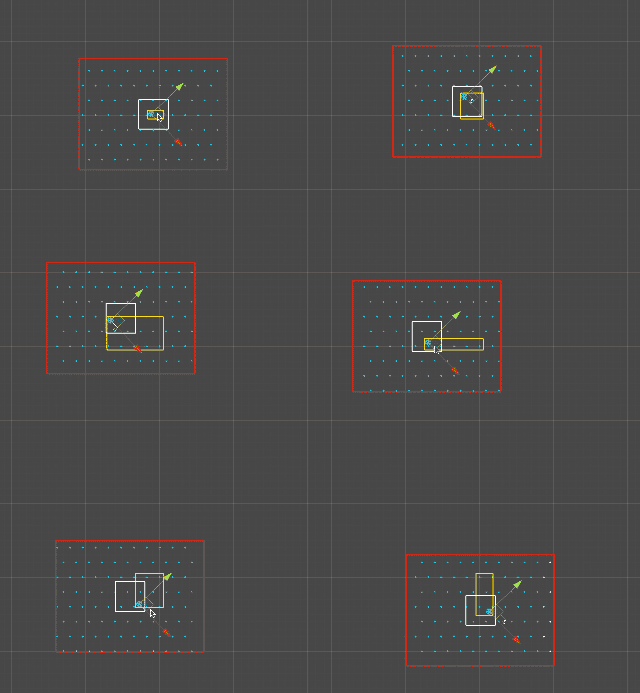
As a Unity developer of a few years I often assume capability in systems I have little working knowledge of. Complex systems such as the PhysX engine may be conceptually simple, but then so is cooking and I still get food poisoned on a monthly basis. I had a humbling half hour near the deadline with the Unity UI system; where was the box that took CSS?
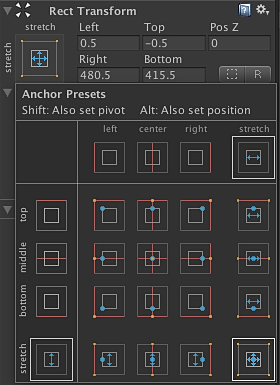
Er… this one. No wait, that one.
Music and art are notorious time sinks, and one should assume that anything one makes will end up in the final game. Had I truly grokked that notion earlier, perhaps I would have spend five more minutes on this guy.

As a test of polymathy, LD jammers wear many hats over the course of a weekend, and knowing which hat you’re wearing is crucial to fulfilling the related subtasks.
Careful now, I’m going to get all De Bono on you.
This is the hat that can get you in trouble, but can also light a fire that will keep you motivated through the weekend. This is the mindset that makes you want this feature, and that one, and how about this? And what if this does this, like in that game and that movie?
This hat really doesn’t care about what any of the other hats think. It’s the T-Rex of the park; it pulls in the punters but can also eat them.
The design hat is the electric fence to the T-Rex. It is measured and analytical. It is cool and conservative. It is not what is popularly thought of as ‘game design’. It is about reducing complexity, not increasing it. Gawd it sounds like a drag doesn’t it? Well it’s the ying to the Blue Sky’s yang, and without it you end up working on a procedural planet generation system for a day. So heed it well!
The Design Hat may be a downer, but at least it talks to you. The Implementation Hat doesn’t want to be interrupted so no thank-you I wouldn’t like to see whatever thing you were just laughing at. It’s the hat that gives Software Engineers a bad name. It’s the hat the reveals all and every flaw, and is the hat that bears the brunt of that disappointment. It is also the hat that requires the most concentration to wear, and will start to disintegrate as your brain gets tired.
You may have noticed using all of these hats yourself, but perhaps without consciously thinking about it. They are used at both high and low levels; each subtask will contain their own cycle of the hats. Due to the short time limit of Ludum Dare it’ll be difficult to get more than a couple of iterations in for any subtask, but making sure they happen in the correct order can save you from, well, this:
Due to the repeating nature of this process, the implementation of any design needs to be flexible enough so that it can support as many iterations as possible. This could include, or example, exposing your variables so that they’re modifiable in game, or encapsulating your behaviour in such a way so that it can be switched out without having to rewrite any other code.
My greatest error in LD33 was not realising this, which gave birth to a monster. It’s a monster which I’ve heard mentioned and even praised in rapid game development. It is The Prototyping Mindset.
The Prototyping Mindset says that there is no need to even try writing clean, maintainable code, because Hey this is just a prototype and we’re going to throw it away anyway. It is an attempt to avoid ever wearing the Implementation Hat, instead just running with whatever the Design Hat wrote on a napkin.
But design is an iterative process, no matter so irrelevant or hastily made the product. The Implementation Hat already has a rough deal; it doesn’t need The Prototyping Mindset undermining it further. The symptoms of this will slap you when you’re at your lowest. It must have been 2am when I found myself writing this piece of code, possible the worst I’ve ever written.

NSFW
Remember this is the symptom of a poor implementation, a symptom of The Prototyping Mindset. A greater reverence for the Implementation Hat creates a platform for iteration allowing the hats to be greater than the sum of their parts. It also paves the way for code reuse; no more fear of a repository stopping you from turning that Kitten Meow-generator into its own library.
One last note- it’s OK to go crazy. It’s just one weekend. Better to go full throttle and reflect than to phone it in, or even worse quit, and have nothing to learn. It’s a weekend to disregard your emotions and give it your all.
After all, it’s not like you have a time machine to do it again.
If you’d like to play the game that inspired this write-up, click here!
This article has been cross-posted on DevPact.
first game I played for this LD and it didn’t disappoint.
This is my first ever entry to the Ludum Dare compo: Being a Kraken. So firstly, a big thank you to everyone that has reviewed it.
In this game you play as the Kraken and battle with Ironclads using the mass and kinetic energy of your body. A quick post mortem follows.
What went right

Anyway, please let me know what you think of Being A Kraken (edited posted competition) and have a look at the shared files for more info and its dev log.
Updates coming and looking at a new Oculus 0.7 version (0.44 should be supported in DX11 version).

Participating to this event has been quite a challenge for Arthur and me. We decided to use our own game engine, and it was a lot of fun! The jam turned into a great learning experience.
Instead of a postmortem, I decided to work on a video to share my take on how to approach a jam. Beyond finishing a game and getting a good rank in the competition, jams are one of the best occasion to become better designers. They also are great to find new partner.
I think it wouldn’t be useful for you to read a postmortem about our entry, as it is very straightforward: the game has some potential, but it feels very repetitive as it lacks content. It was our first time making a game together with my teammate. It took us a day to find our marks, and we weren’t left with enough time to implement everything we wanted to.
Instead, I’d like to share a trick I used to gain a lot of time with asset export during the event. When you use an automatic export tool like Photoshop’s or shoebox’s split PSD function, your pictures are trimmed. In a jam, as you want to place assets really fast in game. Sometimes, you need whole batches of assets to have a fixed size. That way, you can give multiple assets the same pivot position, and have them line up easily in game.
It’s actually pretty simple to achieve: you just have to draw one black pixel in each corner of your desired bounding box, and set it to 1% opacity. It won’t be visible to the player, but it will force your exporter to preserve the image size you want. As we don’t have an editor yet in our engine, this was a real timesaver, for animations in particular.
I set every pixel back to 100% opacity in the exported image below to reveal those black pixels:

In Photoshop, I am putting them into a smart object, which is duplicated to each group that needs this export constraint. It is something I use for animations, but not only. It’s really helpful with life bars and other UI elements that need to stack as well.

Do you want to get in touch? You can find me on twitter @NathanLovatoArt.

Too many aliens? Break a window.
This was my 3rd LD jam, and it felt far more ambitious than my previous entries, Doomba and VIP. I had fun with this one, perhaps because I am more confident as a game developer than in the past.
WHAT WORKED
WHAT DIDN’T QUITE WORK

Broke a window? Plug it up.
Overall, I’m happy with the result. I may or may not work on a post-jam version. If you have any questions/thoughts, hit me up on twitter: I’m @unept.
Hello there!
As somebody who has been Ludum Daring for over two years now, I can safely say the worst part of my games has always been the graphics. They were mentioned as passable, but due to my complete lack of skill in that area, It really takes away that charm good looking games have. I know how to program (I guess!) but how to make games look good is like learning how to make Greek Fire with me.
Anybody have advice on how to learn to animate and draw and stuff? I used to have an acquaintance who used to draw stuff for me, but he disappeared so I was left to fend for myself in the realms of spritework.
Thanks!
You seem to use quite high resolution sprites and the higher the resolution the more raw art talent you actually need.Nowadays the entire world heralds at the simple click of a button. cricket Betting has been moving forward to the virtual world in rises and limits.
What went right:
Made game in JavaScript with no preexisting external libraries in a weekend, of which am “meh”-level proud because am not good at JavaScript.
What went wrong:
Should’ve done more online cricket betting; is turning out to be incredible well-liked these days. With online betting “you get the same enjoyment and enthusiasm as you get at a land based cricket.”
The future of online betting:
Will probably finish game at some point. And by finish, I mean add sound, leaderboard, maybe some like, settings? And then eternal happiness will be mine.
“Obviously, there is a separate line in-between these games into games of luck and games of skill. Both have numerous members, though if you excavate in a slight deeper you will observe that games of skill have more fame and comprise better superiority of participants.” -A. Wiseperson
You can play it here!
If you do play it, it will make you and me very happy and I will cry if you don’t give it a go 😛
This bus driver is a monster. Kids flying everywhere! Someone please help safely deliver these children to school!
http://ludumdare.com/compo/ludum-dare-33/?action=preview&uid=45688

So I tried to participate in the LD33 jam.
What went wrong? I got sick on that weekend, could not finish.
What went well? Mostly everything until I got sick.
Well… obviously one cannot choose the time when illness hits.
But since I had to finish a game anyway for my 1GAM commitment, I finished what I had begun for LD33 and ta-da: you can find the result on my itch.io page. Enjoy!

Hi!
LD is for all of us, so I’ve made a list with some games I’ve played and I’ve liked so far. They’ve made a really good work.
All the games I’ve played are great!!
NotZilla: Ice Cream Vendor, by RisingPixel
If you haven’t played my game yet, you can play it now. Thanks a lot for playing my game!

The post mortem for my LD33 entry is available on my website: Monster Hotel post mortem
I also ported the game to mobile and it is available on the Google Play store. I’m also planning to publish the game on the Windows Store, but my Windows 10 system is currently experiencing issues.
Thanks to everyone who played and rated my game!

Lying on the edge of the swimming pool, it’s time for a post-mortem. Let´s make it quick.
I hope you enjoyed this jam as much as I did. The theme was not that original but the final results of the community definitely were. This marks the first time I used Unity3d for a jam, and the very first time I tried to make a 3D game. I always worshiped 2D game and always imagined games in a 2D perspective. But learning Unity for the past weeks and playing with Blender for 15 days now, I decided to give it a try. I of course knew that to start a game jam without proper knowledge of the tools is the best way to fail bit what the hell, I’m here to learn and have fun…

So, what went good.
1. The theme.
This theme was straightforward ! Be the monster. Ok then, but let’s switch role this time. Don’t be the sneaky nightmarish creatures hiding in the dark or beneath the bed, but the chased monster, hatred for the color of his skin, some exotic nutrition and mating habits. The enemy would be an angry mod of overpowered peasants.. Go !
2. What I learned
Starting nearly from scratch with 3D games, is learned a lot those 48 hours. Collision, camera movement, GUI, 3D modeling. That was definitely exciting. I took a lot of notes and should maybe write some simple tuts.
3. Low poly “ art”
Crazy what you can do when blender and Unity work hand in hand. And, for non artists, simple 3D models are faster created that 2D draws. A tree in 5 minutes and thanks to a well placed lamp, it renders good enough. Never forget the 20/80 concept 😉
And what failed
1. Not a mind-blowing idea, not an original idea either.
That was definitely the most original idea of the jam. That’s for sure.
2. Polishing
Lacking time to polish the game, nor add the features I wanted
3. Newby code issues
Example : how can I make this troll jump. How works the GUI and why is it so ugly (haven’t find out this one yet). I had to learn to walk… But that was expected.
4. Strange things happening, sometimes
Some funny glitches happened. And strange and not yet explained Unity problems disappear once you reopen the software. Lost precious time on those frustrating issues.
5. Socialize/PR/Marketing
I had no time to promote the game during the jam, as I would have. Some early screenshots, thoughts, updates… I think sharing progress is important during a jam. It is fun, and the feedback always rewarding, bringing extra motivational boost in your work.
Don’t miss the time lapse of the game here
and rate the game here : http://ludumdare.com/compo/ludum-dare-33/?action=preview&uid=40976
I said short…
See you next time.

Hey there folks! How’s everybody? After long days of stressing myself out with HTML5 build, I managed to borrow a friend’s Mac and got the game up and ready for it! Yessir, now you can run the game in Windows, Linux and Mac! Ain’t that neat?
You can get it from here: http://ludumdare.com/compo/ludum-dare-33/?action=preview&uid=56516
Also, you can check out or download the game from my moddb page: http://www.moddb.com/games/the-empty
