Let us cook
Oh yes, we are in. This is our first Ludum Dare jam, but despite that, we are ready to show what we've got.
Good luck, guys! May these 72 hours feel longer than they actually are.
Let it be legendary.
Oh yes, we are in. This is our first Ludum Dare jam, but despite that, we are ready to show what we've got.
Good luck, guys! May these 72 hours feel longer than they actually are.
Let it be legendary.
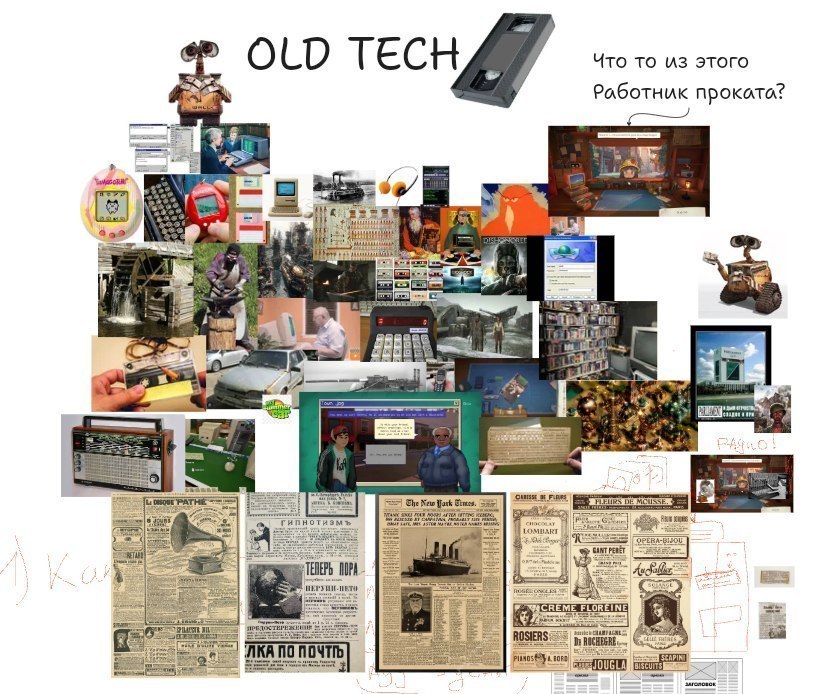
The theme is OLD TECH, and a flood of visual references hit us right out of the gate: nostalgic dives into obsolete machinery, dial-up internet screeching over landlines, winding cassette tapes with a pencil, Tamagotchis, and retro Dendy consoles—take your pick. But picking an aesthetic isn't enough; you can't build a game on vibes alone.
🔹 First, the gameplay foundation: a single room, tight routine loops—closest reference is ReStory.
🔹 Next, the core mechanic: assembling a newspaper layout by fitting articles and clippings onto a grid like Tetris—reference: Backpack Battles.
🔹 Then, the setting: a nation gripped by conflict, and we're a printing press worker—think Papers, Please.
🔹 And finally, the narrative: night shifts, the previous typesetter was hauled off to parts unknown, and we lay out the final print edition. We decide what makes the front page, while shady figures drop by offering scoops—or threatening our lives to spike a story before morning.
Where is this going to lead us?
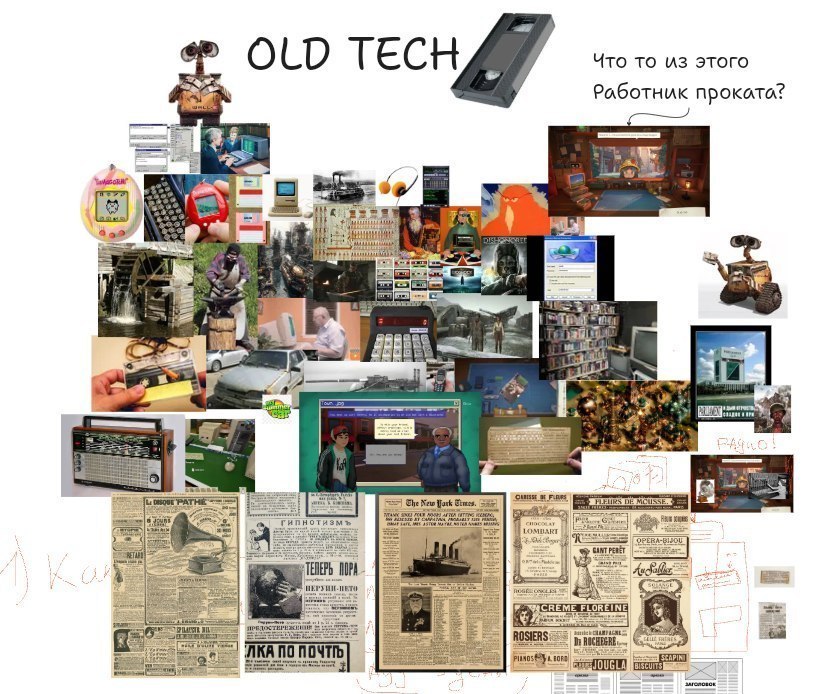
The theme is OLD TECH, and a flood of visual references hit us right out of the gate: nostalgic dives into obsolete machinery, dial-up internet screeching over landlines, winding cassette tapes with a pencil, Tamagotchis, and retro Dendy consoles—take your pick. But picking an aesthetic isn't enough; you can't build a game on vibes alone.
🔹 First, the gameplay foundation: a single room, tight routine loops—closest reference is ReStory.
🔹 Next, the core mechanic: assembling a newspaper layout by fitting articles and clippings onto a grid like Tetris—reference: Backpack Battles.
🔹 Then, the setting: a nation gripped by conflict, and we're a printing press worker—think Papers, Please.
🔹 And finally, the narrative: night shifts, the previous typesetter was hauled off to parts unknown, and we lay out the final print edition. We decide what makes the front page, while shady figures drop by offering scoops—or threatening our lives to spike a story before morning.
Where is this going to lead us?
We’ve never tackled narrative-driven games before, so traditional dialogue trees and Timeline-based cutscenes just didn't fit here. The shift at the print shop ticks on while you're actively working, and the story has to weave directly into the shift, rather than halting it. We had to build a custom driver from scratch.
A day is pure data. Events trigger organically from your workflow: a timer runs out, the front-page grid gets filled, or you slam down the final print stamp. Conditions check context parameters—like just how much we’ve already dialed up political tensions.
The driver orchestrates the whole shift. Come morning, the game saves. The shift wraps up, and the next day kicks off. But if the men in black show up for you on Day 4—even if there were supposed to be several days left—that day triggers a hard stop. It branches directly into its own unique bad ending: a custom sequence, shared credits, and back to the main menu. No further days trigger.
The scene itself is a sequence. The data layer only tracks the trigger moment (i.e., time to fire). From there, it's a top-to-bottom sequence of steps: an incident occurs, dialogue pops up, another event resolves.
This is just the high-level architecture; right now we're starting to drill down into the low-level implementation!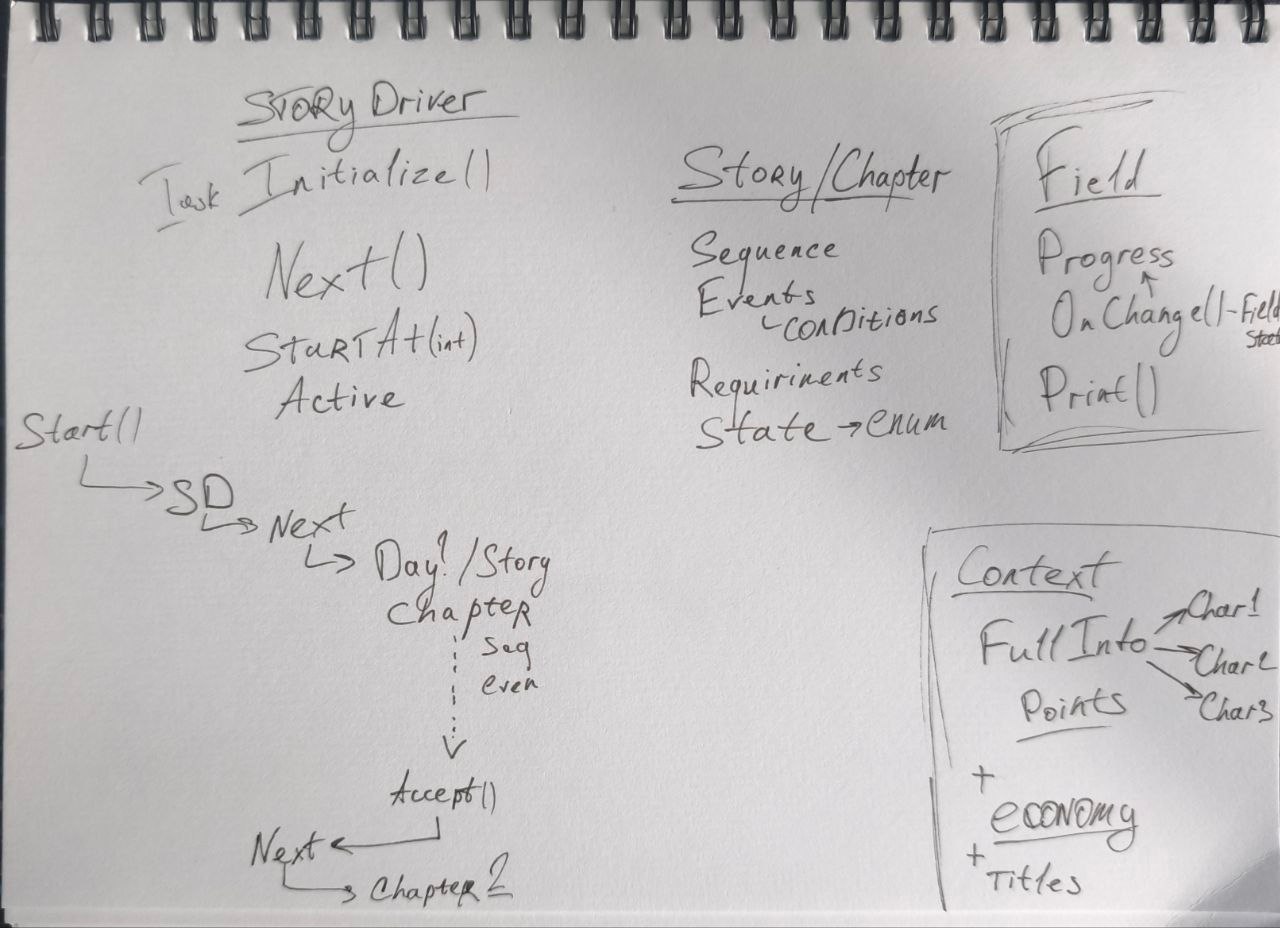
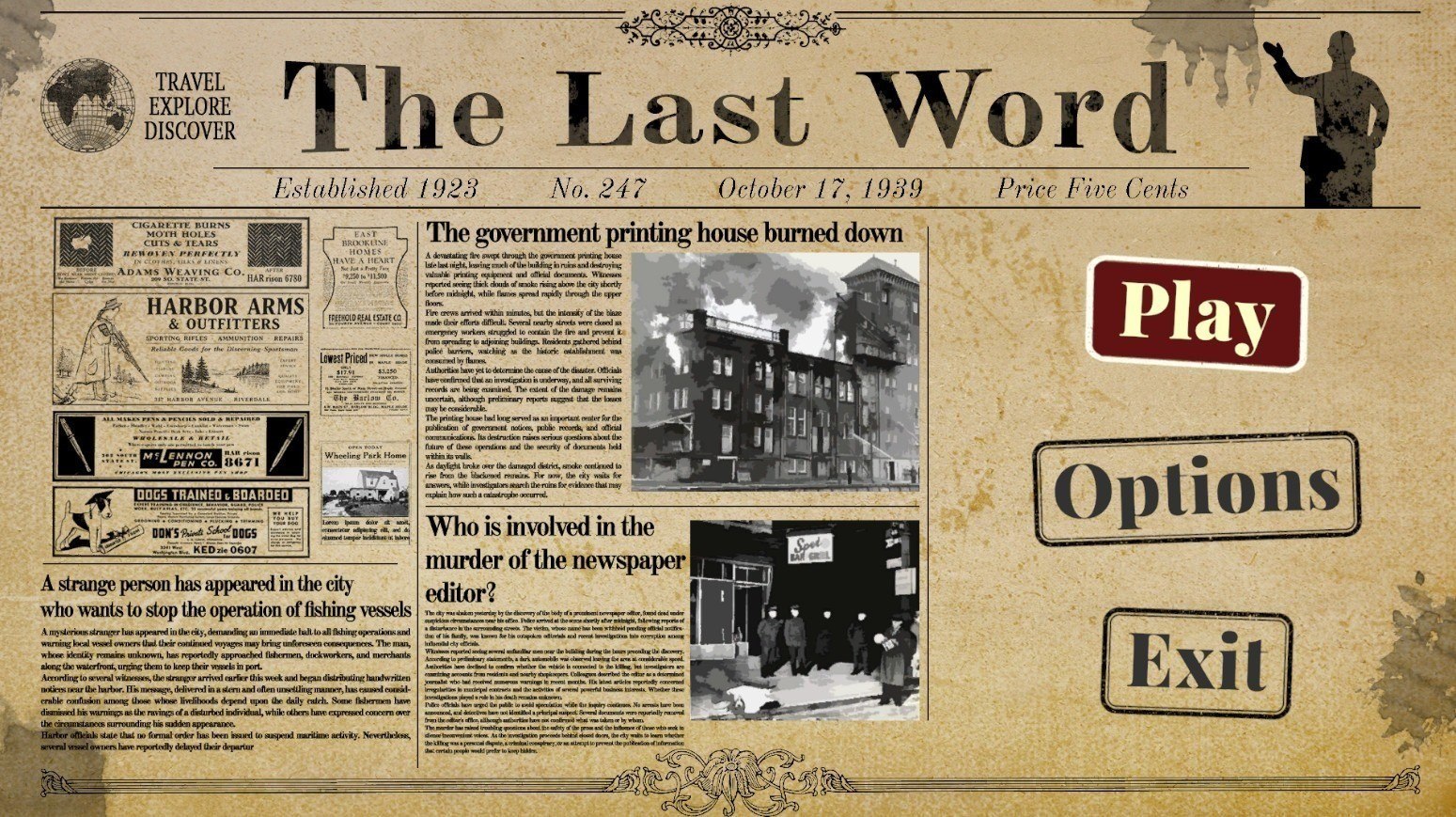
THE LAST WORD
We spent the entire day grinding non-stop. Roughly 75% of the core mechanics are already locked down, along with a major system designed specifically for branching dialogue and narrative events.
All day long, I kept coding with this lingering thought: "No way, there’s no pulling this off in time—it’s just way too much scope." The pieces just weren't quite clicking into place.
It wasn't until late this evening, when the team regrouped to sync and showcase our progress, that it finally hit me: we got an insane amount done, and we are actually well on track to hit our deadlines.
Two days left to go. The night-shift crew is taking over now, and I’ll be tagging them out first thing tomorrow morning. I’ll probably wake up to another jaw-dropping surprise seeing how much the visual presentation has evolved overnight.
By the way, tomorrow is my birthday, and it looks like I'll be celebrating it knee-deep in code!
We might even roll out the first round of playtests tomorrow. Having you guys play it would be the best birthday gift ever.
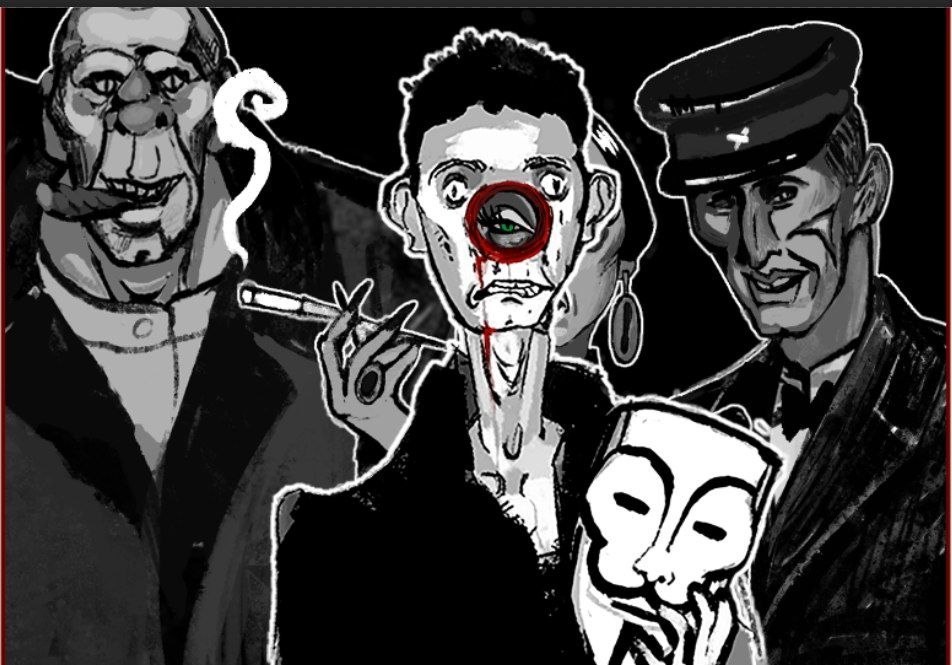
"When dictators seize control of the airwaves, cables, and television broadcasts… the final revolution will be stamped in lead and ink across newsprint. Old tech is the only thing they can’t simply flip a switch to shut down."
72 hours of relentless work, countless cups of coffee, and tons of late-night iterations are finally behind us. We are proud to present The Last Word, our entry for Ludum Dare 60 (Theme: OLD TECH)!
Step into the shoes of an editor-in-chief running a local underground printing press at the darkest, most pivotal turning point in society's history. The previous typesetter vanished without a trace. Every night shift brings impossible moral compromises: the articles you arrange on the front-page grid carry real consequences, and every spiked headline alters someone’s fate.
Will you comply with state censorship to survive another sunrise, or will you risk everything to print the truth before the printing press runs cold?
In a 72-hour jam, narrative usually gets cut first. In The Last Word, we hid side stories inside ordinary newspaper clippings that connect across days.
On Day 1, you get a classified ad about a lost poodle. It looks like filler to patch an empty spot on the page.
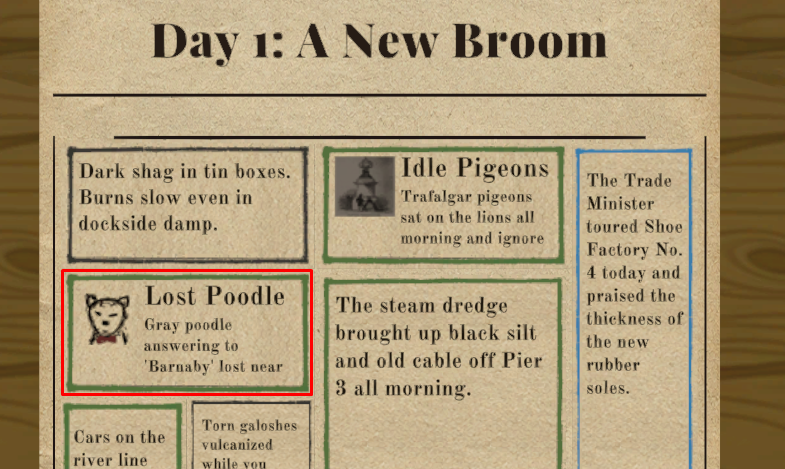
On Day 3, a police report notes a stray dog near a closed factory, howling at radios.
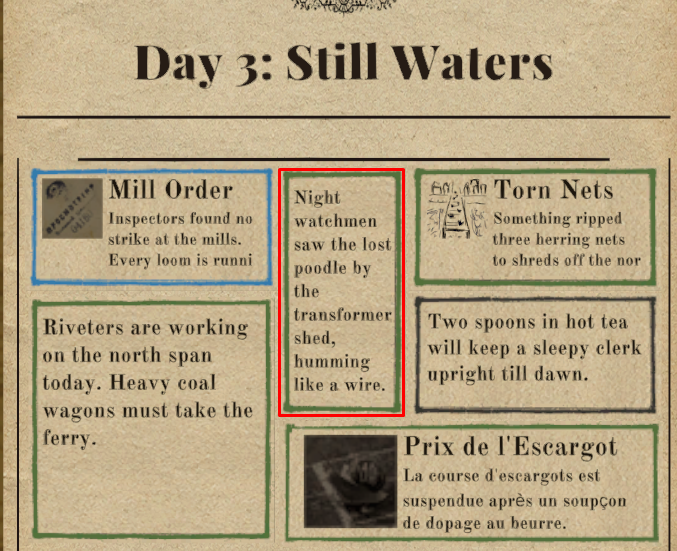
On Day 6, an article includes a photo of the same dog with a camera lens instead of an eye. The secret police used it to wiretap city officials.
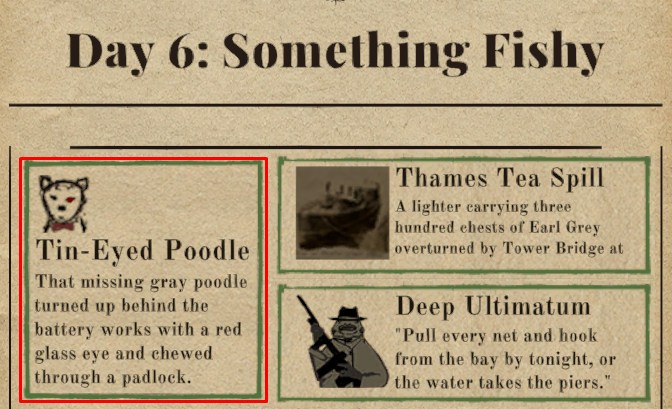
The game never points this out. Players who read the clippings piece the story together on their own.
Did you put background stories into your jam entry, or did you skip narrative for time?