strong99

LD22

Ludum Dare – I’m in

This will be my first Ludum-Dare. I’m founder of Islandworks, a “serious game” gamestudio.

Language: C++

OS of choice: Windows 7

Graphics Library of choice: Irrlicht

Audio library of choice: Irrklang.

3D Graphics: 3dsMax

2D Graphics: Photoshop/Illustrator

Have a great Ludum Dare everyone!

Tags: strong99

LD25

Ludum Dare – I’m in

This will be my second Ludum Dare.

Depending on what the theme and my idea will be: c++ or html5

Language: C++ or Html5 with Jquery
OS of choice: Windows 8
Graphics Library of choice: Irrlicht or Html5
Audio library of choice: Irrklang or Html5
3D Graphics: 3dsMax
2D Graphics: Photoshop/Illustrator
Audio: Audicity & Anvil.

I’ll try and post a “How did I do it” on the end as I did last time.

Last years entry: World Alone.
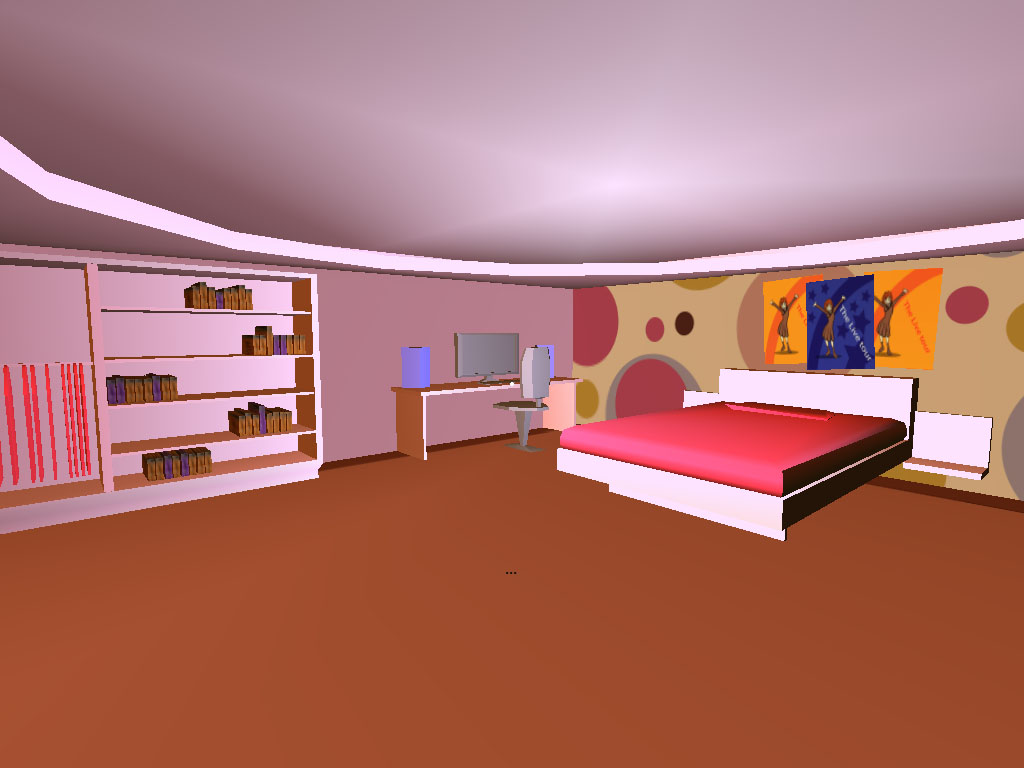
WorldAlone The room

Have a great Ludum Dare everyone!

Destroy Earth or perish

My concept was created in half an hour in which I was reminded about all those bad guys always trying to destroy the Earth but always lose the game and end up in jail or something. Not this time, this time you’re the villain is the idea and a game without winning is not fun. So, this time, you, the villain, will blow up the Earth starting with the two cities on your TODO list.

I planned to create a second “how did I do it” but I couldn’t find any useful new facts since the previous.

The deathray Control rooom

Obviously the heroes try to interrupt your evil plans but you found a way to lock them in the dockingbay where they try to cut the door. This gives you the time to go destroying the Earth. Sadly your station is not fit for such powerful ray and it starts to collapse.

Command your drones to repair the station as you try to blast Earth back to the medieval.

The deathray

Tools used: Visual studio 2012 (code/c++), Irrlicht (3d), IrrKlang (Audio), Photoshop (2d), Illustrator (2d), Anvil (Audio), Audacity (Audio)

Download and vote for the game

Tags: 2012, 25, 3D, C++, compo, Cpp, dare, december, final, Irrklang, irrlicht, ld25, ld48, ludum, Ludum Dare, ludum dare 25, microsoft, screenshot, visual studio

LD28

Ludumdare 28

This will be my third year of Ludum Dare and I’m going to keep a live blog which can be found here.

This year I’ll be using InCourse® GameCreator. It’s  a webbased game engine developed by Islandworks and dubbed ‘GameCreator’. It’s made in HTML5 and such, it will be quite different from my previous entries which were made in C++ and the 3d graphics engine Irrlicht. It’s going to be a challenge to make a game using only 2d art :)

OS of choice: Windows 8

Game engine of choice: InCourse 2.0 – Gamecreator

Graphics: Photoshop/Illustrator

Audio: Audicity & Anvil.


I’ll post a “How did I do it” on the end as I did the last times.

Other year’s entries were: World Alone and Be the Villain.

Worldalone - the lost bedroom The deathray

Have a great Ludum Dare everyone!

Tags: 2D, 3D, blog, game engine, gamecreator, incourse, irrlicht, islandworks, live, Ludumdare

The aftermath

I had a nice lay in until I got woken up by my sister at 8ish in the morning (Central European Time, GMT +1) I stupidly turned my game online and set a time: 06:00 in the morning to close again! Ooops…

Currently downloaded a bunch of games as I took a day off for it. I planned time to do 20 games, but I got sucked into adorable looking games. Mainly an asteroid look-a-like but with crazy defending satellites and a Deathstar like destroyer game (StabAlarash). Played those two for over an half hour, addictive and nice games! But I’ve only done 10 so far.

I find it good to know that this year everyone with a browser can play my game. Tried it just a minute ago on my rusty blackberry bold 2, 15 fps 😉 But it isn’t crashing!


Tags: 2D, Destroy The Core, gamecreator, html5, incourse, islandworks, Mental Atrophy, One Defender, One Earth, StabAlarash

The Dragon Journey statistics

I haven’t finished a proper post-mortem yet. I want it to add some more than I did last years. But I did collect the first wave of user statistics for my ‎Ludumdare‬ game. The previous times I ran out of bandwidth and this time I used my companies servers with a higher bandwidth.

Seeing the large amount of visitors revisiting the blog I must admit being very proud!

The ‎LD28‬ weekend was during the 14th and 15th of December and the game’s release for public on the 16th. Read a more detailed explanation here: http://bit.ly/1gNTgiT

Tags: dragon, gamecreator, islandworks, journey, LD28, ld48, Ludumdare, strong99

I’m in

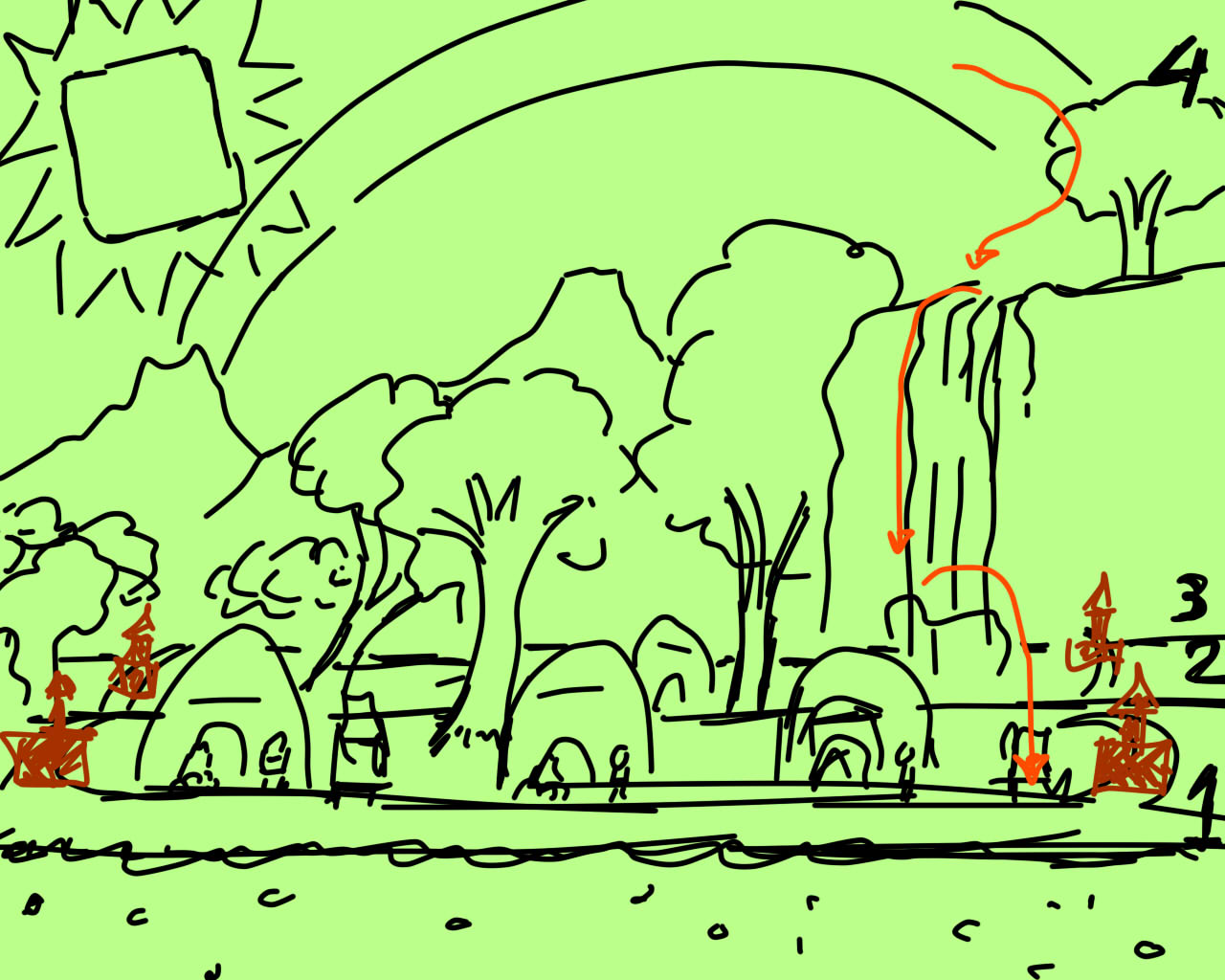
I found some time between daily chores to join this miniLD49. It’s a perfect opportunity to improve my art skills :) I’ll be using Audacty, Adobe Illustrator & the GameCreator. I already made some sketches and quick concept drawings. The game features a player as Unicorn and several owls dying from thirst. It’s up to you as the unicorn to gather water and food for these poor critters.

Sketch

A first sketch for the MiniLD49


Sketch-01

First concept for the MiniLD49


LD29

Ludumdare 29

This will be my fourth year of Ludum Dare and I’m going to keep a live blog like last time which can be found here.

This year I’ll be using InCourse® GameCreator. It’s  a webbased game engine developed by Islandworks and dubbed ‘the GameCreator’. It’s a webbased game engine. I’ll be using the Ludum Dare promo code for more statistics.

OS of choice: Windows 8.1

Game engine of choice: InCourse 3.0 – the Gamecreator

Graphics: Photoshop or Illustrator

Audio: Audicity & Anvil.

Hardware: Wacom cintiq (Pen tablet), Space Explorer (3d Mouse), M5 mouse, dual monitors etc.

I’ll post a “How did I do it” on the end as I did the last times.

Other year’s entries include: World AloneBe the Villain and The Dragon Journey.

Strong99's Ludumdare 22 entry - World alone Strong99's Ludumdare 25 entry

Strong99's Mini Ludumdare 49 entry Strong99's Ludumdare 28 entry

And a lot more! Visit my live blog during the event!


Good luck fellow Ludum darers!

Troubling times – How did I do it?

It’s a couple of weeks after the contest, a few days before the results will be released. It feels about right to add a how-did-I-do-it? post.

Like last time I kept an extensive log on the subject and my progress. I used these tools:

Using my 3d mouse the 3d explorer and a wacom cintiq drawing board as main hardware input.

I started off with the writing down the concept on paper (or word for that matter). The game ended up as a point and click adventure through an underwater base which is near total destruction. I thought up an emotional story about a young girl, trapped beneath the surface of the ocean. As she’s the only person, deep underneath the surface, she feels trapped and alone as she tries to flee her confinement.

Writing down the concept on (digital) paper

After finishing those I went on to create every scene in a story board. I drew my storyboard directly inside the GameCreators editor as it allowed me  to quickly prototype it.

Sketching and prototyping

After I decided the prototype was correct I continued to improve the logic and update the graphics.

The three stages I used to improve the scenery.


What went wrong?

Nothing really went bad, but I did end up with an issue related to the audio. I couldn’t match the mood with the audio, so I had to leave it out. Other thing is I probably used too much time on the scenery. I first thought to draw it all out in 2d. But after I finished all the mockup scenes I decided 3d modelling would allow me to easier set the mood I wanted.

What went right?

After I decided to go full 3d I only needed a few hours to work out the scenes in 3d. It looked good and was easy to import and fit inside the editor replacing the old art.

The thing that really succeeded with my chosen game type was the ease to create storyboards in the game editor I used and transform it to the final game.


To read more visit my LD29 blog.

To play the game visit the LD29 entry


Tags: Beneath the Surface, gamecreator, incourse, islandworks, ld29, ld48, Ludumdare, strong99, troubling times

Copycats and protecting against them

It hurts to see that most lovely game ideas and even complete games get ripped, copied and being sold. It makes it impossible for those who had the idea to improve it beyond “good”. So what would be the good kind of “protection” against this?

It’s never impossible to copy or even recreate if they want to. (re-engineering get’s easier by the day). The thing is, you shouldn’t rely on the product you create. You should rely on your ideas. Rely on the experience you design instead of the product itself. Keep developing, keep ahead of your competition and copycats. Everything gets copied from books, movies, games up to houses. Did you know they remodelled Paris and Venice in the USA and even bigger in China? It’s a small sized mini-Paris city. Things get already copied before they’re a day old. Don’t rely on your product, rely on your innovative ideas. Create your space, your slice of the world where people can sign up and enjoy your ideas (a brand so to say) instead of a single product at a time. That’s what Ludum Dare could be, beyond the compo, it’s own brand where people come to enjoy the fresh ideas of the community.

Image from http://www.dailymail.co.uk/news/article-2384036/Inside-Chinas-mini-Paris-Town-built-look-just-like-French-capital-complete-Eiffel-Tower-Champs-Elys-es.html

Image source, daily motion, copy of Paris.

That said, always keep an eye out for copycats. If you can take them down from stores, go ahead, but don’t rely solely on your product that is always copyable.

I regularly compete in the Ludum Dare competition and develop games for companies. I like using these kinds of competitions to get in touch with creative minds and recruit them. If they stop competing it would be a great loss. I designed the online tool GameCreator to easily create and share games or interactive presentations to wherever and whoever you want. It doesn’t contain code in the old sense of the word. But the idea behind it is to easily mock up, extend, improve and share your ideas. Instead of developing a few weeks, mock it in a day, share, improve and share again. Since it’s an online cloud service it’s also a bit harder to directly copy it from the web to an appstore without ripping almost the entire service and its build in protection. Instead they could set up a link and embed in an app’s browser. Which you would always notice in the tool’s analytics. But the game’s source code would always be shareable for the competition.

Feel free to contact me through twitter, linkedin or otherwise.

Tags: cloud, copycats, gamecreator, islandworks, Ludumdare, rex van dorp, stealing, stolen, strong99, tool

LD30

In for Ludumdare 30!

This will be my fourth year of Ludum Dare and the seventh time I compete. I’m going to write a live blog like I always did which can be found here.

This time I have to put a bit more effort in music rather than graphics 😉 I learned my lesson.

This time I’ll be using InCourse® GameCreator again. A webbased game engine developed by Islandworks and dubbed ‘the GameCreator’. It’s a webbased game engine with an easy and no-coding editor. I’ll be using the Ludum Dare promo code for more statistics. I’m excited!

OS of choice: Windows 8.1

Game engine of choice: InCourse 3.2 – the Gamecreator

Graphics: Photoshop or Illustrator

Audio: Audicity & Anvil.

Hardware: Wacom cintiq (Pen tablet), Space Explorer (3d Mouse), M5 mouse, dual monitors etc.

I’ll post a “How did I do it” on the end as I did the last times.

Other year’s entries include but are not limited to: World AloneBe the Villain and The Dragon Journey.

Strong99's Ludumdare 22 entry - World alone Strong99's Ludumdare 25 entry

Strong99's Mini Ludumdare 49 entry Strong99's Ludumdare 28 entry

And a lot more! Visit my live blog during the event!


Good luck fellow Ludum darers!

Tags: anvil, audicity, august, blog, compo, gamecreator, gamedev, incourse, LD30, ld48, live stream, Ludumdare, ludumdare 30, rex van dorp

How did I do it?

During my seventh Ludum Dare competition the theme was Connected Worlds. I started around 05:30 CEST on Saturday and submitted it around 03:00 on Monday. I worked thirty-six hours on the game, slept ten hours (2 + 8), used three hours for writing down a concept, drew sixteen hours, used around eight hours for creating the game’s logic and six hours for music. The other time was used for play testing, blogging, eating and quick breaks.

Play the game! Rate the game! Read about the game! Original blog post!

Concepting

First things first, before you can start making your game, you need an idea and plan. Thus I started with brainstorming. Writing down related and interesting keywords around the theme “Connected worlds”. I figured most people would go for a space or island settings, which is attractive but I wanted to create something different, more unique. I made some small trips and played with ideas related to abstract, race and relation types of connected world and decided to settle down with something from my favorite theme: Cyber Punk, most notable worlds like Ghost in the Shell.

Brainstorm diagram - spider First map sketch

Prototype

When I finished writing down a small synopsis of my brain twists I started to lay down simple visual world and adding the elements. When I got a small world I proceeded with testing and adjusting the concept bit by bit until I was satisfied.

Drawing

Once I had the prototype of the actual gameplay I could start drawing the game world.

Game level and icons

This included a background, network node icons, guard icons, citizen icons and more. I spread this in several stages, every stage ending up more detailed. I swapped between drawing on the game level and icons and the prologue and epilogue scenes. Which allowed me to take a break on a drawing and look at it again after an half an hour with a “fresh look”.

Gameplay Prototype result

Prologue & Epilogue

The prologue and epilogue were a bit different from the art I had to draw for the actual game. The prologue and epilogue are a timed story without interacting but with moving assets. This took the most time to draw. I planned six scenes with several large moving elements like humans, hands or walls.

 Screen cap epilogue

Music

Audio is one of my worst development skills. I don’t work with audio often or I have a composer making the actual audio. For the simple sounds like button pushes or other quick sounds I used simple tones, combined, altered just to give a small beep. For the actual music I decided I was going to use a combination of audio generators and Audacity. It took me a while before I had the desired sound which didn’t get annoying after the initial 30 seconds.

Audio composer

Submission

To make sure the game was submitted on time (before 03:00) I already submitted it around 02:30 on Monday. That was before I found out the submission deadline was till 04:00. The good thing about hosting it online you can post a link and update it. So around 02:55 I wrapped everything up and ended with a good stretch. I was a bit stiff from hanging above my drawing tablet 😉

So?

Everything done and submitted, I’m happy about my schedule and work. I didn’t really have timing issues but some things did take longer than hoped. The concept seemed easier than it was. And of course the concept took some more fine tuning to make it actually challenging.

Play the game!

Rate the game!

Read about the game!

Original blog post!

Tags: audacity, connected worlds, gamecreator, how did I do it?, islandworks, LD30, ld48, Ludum Dare, post-mortem, rex van dorp, strong99

LD31

I’m in

It will be the eight time I compete. I’m going to write a live blog like I always did which can be found here.

This time I’ll be using InCourse® GameCreator again. A webbased game engine developed by Islandworks and dubbed ‘the GameCreator’. It’s a webbased game engine with an easy and no-coding editor. I’ll be using the Ludum Dare promo code for more statistics. I’m excited!

OS of choice: Windows 8.1

Game engine of choice: InCourse 3.5 – the Gamecreator

Graphics: Photoshop or Illustrator

Audio: Audicity & Anvil.

Hardware: Wacom cintiq (Pen tablet), Space Explorer (3d Mouse), M5 mouse, dual monitors etc.

I’ll post a “How did I do it” on the end as I did the last times.

Other year’s entries include but are not limited to: World AloneBe the Villain and The Dragon Journey.

Strong99's Ludumdare 22 entry - World alone Strong99's Mini Ludumdare 49 entry Strong99's Ludumdare 28 entry

And a lot more! Visit my live blog during the event!

Good luck fellow Ludum darers!

Tags: anvil, audacity, compo, december, gamecreator, illustrator, incourse, islandworks, ld31, Ludum Dare, ludum dare 31, photoshop, rex van dorp, strong99, Windows

I’m in, LD32

I know, it’s a bit early. But I’m already preparing for the upcoming Ludum Dare competition. Like previous years I’ll be competing in the April Ludum Dare. This will be my ninth time in the 4 years I compete.

To get myself prepared I’ll be doing a series of research on “What makes a game good?”. From experience I know there’s a list of do’s and don’ts. I’ll be keeping a blog on this here on the Ludum Dare website and my own blog. Up to the event I’ll be posting eight blogs, followed by reviews on how my blogs fit with games made by you. Feel free to request or comment. And if you’re in for a review on your entry about “What made your game good?” Leave a message!

Previous blog

Current blog

For the upcoming series and Ludum Dare I prepared my normal toolset including:

And lastly

  • Tape, lots of paper and a pen

Tags: emotions, features, gamecreator, islandworks, ld32, ludum dare 32, mood, rex van dorp, strong99, what is a game?, what makes a game good?

What exactly is a game?

We all know games, everyone plays games, but do we really know what defines a game? Before we can create a good game we need some sort of definition of it. So what is it? Sure, everything with rules can be defined as a sort of game. But let’s define it a bit better than that. So let’s try!

What would be the most simplistic game you can think of? The first game that comes to my mind is the child’s game “Tagging”. It has two very basic rules: One player is “it” and if you’re being tagged by “it”, you become it. Remembering my years on the primary school’s playground the game had different additional rules all the time. An often used additional rule was “You can’t tag the old “it” back”. Although these were set by us, additional constants where there too. For example the teachers didn’t allow you to leave the playground or trip others. Not a rule set by us, the players, but by our superiors.

The summary of the game? There’s conflict, no-one wants to be “it”. It would be boring if someone wanted to be “it” because of the lack of conflict. The rules define boundaries in the game. The outcome of the game was clear too, the child being “it” at the moment of the school bell lost the game. Katie Salen, a veteran game developer, her description of a game comes to my mind:

“A game is a system in which players engage in an artificial conflict, defined by rules, that result in a quantifiable outcome” (Katie Salen, Game Design Fundamentals, page 80)

If I apply this logic to one of my previous Ludum Dare games, for example, “You only get one” we could describe it like this:

Conflict: the player wants to get home without being eaten while the dragon keeps advancing.

Rules: the player is constraint in a 2D world, there’s gravity, the game is lost when touching the dragon, his fire or falling out of the screen.

Outcome: the player wins when he enters his house (time constraint).

Ludum Dare 28 - The dragon's journey

That is quite clear, but how does this apply to popular games like Minecraft? Is it a real game? Let’s try:

Conflict: the player needs to stay alive (retain its hearts)

Rules: the player loses hearts when hungry, the player receives damage from mobs, the game is lost when its hearts are depleted, the player can eat food, can create weapons and armor etc.

Outcome: is there any? What about defeating the ender dragon?

Is the ender dragon really a quantifiable outcome? After defeating the dragon the conflict itself remains, nothing is resolved. The main conflict centers around staying alive, not on the dragon roaming a different realm. Thus, I wouldn’t describe it as an outcome or a game, but more of a sandbox or toy. Though open world games like Oblivion feature some kind of the same freedom as Minecraft, in the end you resolve the main conflict, defeat the bad guy and establishes peace. That’s a clear quantifiable outcome with rules and conflicts.

This is my first of a series of blogs on “What makes a good game”.

What’s your take on the definition? Does it fit mine?

Tags: Ludum Dare, rex van dorp, strong99, what makes a good game

Target audiences and user motivation

Creating an artistic game is one part. Making a game popular for an audience is another. My company creates games for businesses, a different kind of audience than Ludum Dare participants. How to make sure that a game will fit them? The key is to know your target audience to the bone, to make sure they keep playing and recommend it to friends. Our goal is to make lots of people play and enjoy our games. So, what does motivate a human to enjoy my games?

Whenever you create a game you’ll have an idea about the people you expect to play your game. We’ve discussed how to make a game fit to everyone in the previous blogs in the series. But how to define your audience? Let’s take a look at the game I previously made for Ludum Dare 29 called “Troubling times“ . The theme in this competition was “Below the Surface”.  Since it’s made for a Ludum Dare competition, our first and main audience are the Ludum Dare participants. The game is intended as a physiological and survival story driven. The player gets stuck in a submarine base and finds itself locked while the base slowly but steadily breaks down. There is a bit of exploring (finding out why) and a goal (escaping).

Beneath the Surfaace

If I reflect on why players would play it I ask myself “What does motivate them to continue and play?”. To do this I often use four intrinsic motivations. Intrinsic means a part of, the default nature or the self-desire, from within the player. For example: you’ll end up being a game developer, because you enjoy learning about games. It isn’t: you’ll end up being a game developer, because you adore money. That’s an extrinsic motivation. With an extrinsic motivation you’ll do it for the reward (money), not the process (learning).

Player motivations

These motivations are well defined in the RAMP framework, namely: Relatedness, Autonomy, Mastery and Purpose. The exploring element relates to a bit of autonomy while our goal of escaping fits the purpose motivation. I miss two types: players who are motivated by relatedness and mastery will bite the dust. What does this mean for our target audience?

It means that the target audience for this game wasn’t the entire Ludum Dare user base. It was a niece audience who longs for purpose or a bit autonomy. I never researched our Ludum Dare user base, but probably less than a half would qualify as the real target audience of users who fancies such games.

Expanding our audience

How would I change this game to fit a broader target audience? I missed the motivations: relatedness and mastery. Let’s start of relatedness, this motivation is about being connected and creation relations with others. I can do two things, make you feel really connected to the other character ingame or by sharing your current game status to others for hints or even discussing solutions. To include the mastery motivation the game needs to have learning curve. The current puzzles are too short and simple to really motivate or challenge you to learn how to solve. A set of more complicated puzzles, a bit harder after the previous, would increase the mastery motivation.

So next time when we start a little game for Ludum Dare, we keep the target audience in mind and what motivates us to play your game. I know I will. To get my games better fitted with the Ludum Dare participants I’ll design an easy to use matrix.

What techniques do you use to check your target audience? Or do you rather create artistic games for the fun of creating?

Tags: game, player motivation, RAMP, RAMP framework, rex van dorp, strong99, what makes a good game

Comments

15. Mar 2015 · 14:26 UTC
Thoughts about target audiences never cross my mind while creating stuff.

My usual rule of thumb is, I develop whatever I do like myself. That seems to do the job most of the time.

LD32

How to make sure a game idea is good?

You finally came up with the game of your dreams. You wrote everything down, used all available studies and it sounds too good to be true on paper. But how do you make sure it ends up being fun to play? You could build the game and throw in endless testing afterwards until your test subjects think it’s fun. But is that really the way to go? I think not. There are better ways to do quality checks. So what easier and quicker ways are there?

Periodic player involvement

Don’t shy away from asking potential players to try and review your game concept. Besides the obvious part where they give feedback on what they like or dislike, they are also the first to try the game itself when it’s finished. If you gain their interest the chances are they will be the first group to spread the word. Not to mention they feel a part of the game since they were involved. It’s a good way for a small indie developer to get some attention. But let’s get back to the obvious part. If you think developing your game takes around 5 months. Make sure to involve your future players at least once a month. It gives you time to act on their fears and comments. Later on this will lower the time taken during testing.

Prototype, prototype and implement

I learned that creating your game at once with all features feels good, but it gave a headache to test it with my audience. Instead, I tend to build smart prototypes in the GameCreator with the most important game features. When I’m making a platform game with a special boss I take the bosses mechanics and put it in a small level which I can easily fine-tune. It’s quicker and easier to get done for your next session with players. Nothing beats seeing your involved audience smile for five minutes rather than get stuck on issues you didn’t want them to comment on.


Analytics

To further know if your game will be a success, write down which statistics to record and how you expect them to analyse. Letting players test your game is one. But how do you record the necessary information you need to know the players act as you wish? Is watching enough? Do you need to record the screen and eye moments? Before I get to play-tests I write a simple table with bullet points I need to know in Excel. It often contains: time needed to finish a level/section, amount of retries, keys being pressed, the player’s emotion and their average compared with all others.

Use structured tables to keep your data at hand

This is just a small set of techniques I use and have seen in other companies. They give you the edge and act as a forward warning system when users freak out about your concept. Large game development companies even have their own departments with data analytics who analyse every pixel of a game during game-play.

How do you make sure your users enjoy? Did you ever use play tests? Or are you planning to? I would love to know!

View all blogs from the series “What makes a good game?”

Tags: product quality, rex van dorp, strong99, what makes a good game

LD33

I’m in and more!

Ninth time I compete and this time around I’m hosting a Ludum Dare party at the Islandworks’ offices. I’ll be teaming up with Ruben from Gamestad (A global but also city orientated community for gamers and game developers engaging with eachother) and with us will be @dickpoelen doing his own thing, the creator of Paca Pong 😉 It will be the first time I’m doing the Jam and the first time I’m hosting an Ludum Dare related event. It’s all so exciting!

Follow us on our live blog!

For the upcoming series and Ludum Dare I prepared my normal toolset including:

And lastly:

  • Tape, lots of paper and a pen

Looking for last minutes hints and tips? Visit these blogs!

Some previous compo entries:

Strong99's Ludumdare 28 entry

Follow us during our live blog

Tags: gamecreator, im in, islandworks, LD33

LD35

I’m in, 11th time

Eleventh time I compete and this time around I’m meeting at GameStad again.

For the upcoming dare I prepared my normal toolset including:

And lastly:

  • Tape, lots of paper and a pen

A previous compo entry: