LD26 April 26–29, 2013

Hit The Button Post-mortem

Woke up last Friday as someone who has never made a game and did not know about Ludum Dare. A crazy 3 days later, I have released my first game.

I wanted to explore the theme restricting the game to a single specific way to interact with the game, which was to click a big button in the center of the screen. I was inspired by the generally horrible Zynga-like games that had little quality interaction with the game, in large part due to the artificial “energy” bars that don’t let you continue until some time had gone by. My thought was to take that mechanic into the most simplest (minimal) form possible:

  • Click something
  • Some seemingly inconsequential random event happens
  • Some annoying time restriction before you could continue
  • No completion to the game

So the “game” idea became partial commentary, but I wanted to challenge myself to see if there was anyway possible to make something fun in that framework. So it turned into a game where you click a button and you either gain or lose a random amount of gold or hearts. If you went broke or lost all your hearts, game over. Here are some of the things I tried to add into the mix to attempt something mildly fun:

  • It’s essentially a super dumb slot machine, so I wanted to crib from Vegas by making the button pushes big epic noisy visual events. I did manage to fit in a little animation after the button push, but it wasn’t close to the amount I wanted to do. I also ran out of time to implement any sound.
  • I added a combo mechanic where clicking the button quickly (under 320 milliseconds) would earn you combos. If you got to 5 combos, you got to see some feedback after your button press about how quick you managed to push the button, as well as your current combo. As you got higher and higher combos, the time between button pushes would decrease and the button shrinks. For example, if you get your combo to 25x, the break between button being active was random between 0.8 and 1.2 seconds, which provides a decent challenge. I wanted to take this further by moving the button around but did not get to it.
  • There are 5 trophies you can obtain. The game keeps a running tally of a number of metrics, and trophies can be earned by getting enough deaths, bankruptcies, high combos, overall clicks, and bad clicks. The thresholds to get the base trophy were somewhat small (relatively: you needed over 1000 clicks to get the click one), and they were upgradable all the way up to 1 billion for some of them.
  • I cheated a little and added some messages that would be shown after clicking anywhere but the button. There’s about 20 random messages that are shown to the user which are meant to be insults because it’s really hard to miss the huge button in the center. I was hoping that people would stumble onto these and find a little humor in them, and continue to try and trigger all the messages. Examples of these messages include “Juuusssstttt a bit outside….” and “It says Hit Me. I can’t make it any easier.”

Other things I wanted to implement but didn’t:

  • Many more different events that happened when you hit the button. I wanted to randomly give (and take away) a bunch of pointless gifts like the ones Zynga has you spam send to your friends. I wrote out a framework of a narrative that would slowly evolve by chaining together combos. The idea was that the button was this miserable character who lived this horrible life of people always beating on him. It would eventually lead you to gain sympathy for him and (somehow) ends in you destroying the button, thus freeing him from his misery. I also like the idea of giving an ending being a screw you to the types of games I discussed above.
  • Lots more random visual things that would happen. Moving the button, changing colors, making some background things happen. I also liked the idea of making some “glitches” happen.
  • Sound. I even started to conceptualize a song and lyrics that I would record and sing to go along with the story mode

What went right:

  • I shipped something. :)

What went wrong:

  • It’s not a fun game: You can chalk this up to poor game design. As I stated above, I wanted to experiment to see if I could create something fun with a very strict rules on interaction. Turns out, I couldn’t. Looking back, I should have known this immediately, because the games I was inspired by bored me to tears. I think I was kind of onto something with the combo system which gave it a little play depth, but even that only holds your attention for 1-2 minutes at most. The extra carrot of the trophies ended up not being worth it because players were super bored well before those were achieved.
  • Time: Since this was a last minute decision, I already had a bunch of other commitments. During the 72 hours, I went out for meals 4 times, went golfing, went shopping for a bed (one of the most relaxing and frustrating experience you can enjoy with your wife), watched 2 baseball games, and got distracted by the UFC event. Oh, and I worked a long day Monday so the final 24 hours was shot. Combine this with trying to learn very basic things (did I mention this was my first time already?), l just ran out of time on almost every area, whether it was graphics, features, play tuning, etc.
  • Graphics: I am a non-game programmer in real life, and I deal with graphics very little. This was a huge challenge for me, and I was not happy with the visual style. I especially did not like the button graphic. Looking back, I would have made it look exactly like a Facebook game, maybe even with a fake frame that looked like Facebook. Since the game was doomed to not be fun, I could have done more with being explicit with my commentary.
  • No web installer: I used monogame, which meant I wasn’t able to ship a web version of the game. Next time, I’m going to switch to Unity so I can ship a web version. I also had issues because monogame has dependencies on .Net 4.0 and OpenAL. I quickly put together a release that included the dependencies (how I did this and the horrible hacks I used could be a separate article) so thankfully most people I talked with were able to get that working.

Conclusion
In all, I’m glad I did it despite the outcome. I learned a TON, and it’s inspired me to continue learning about game development. I am also stunned at how good some of the games I’ve been playing. Can’t wait for #27!

Link to game: http://www.ludumdare.com/compo/ludum-dare-26/?action=preview&uid=22624

Tools Used: Visual Studio 2012, monogame, Photoshop, Illustrator

Theme From Invertigo

Sometimes when you haven’t got much time at all, you can do cool things. This is also true of music. Here’s an annotated guide to the general thought process when putting together the music for Invertigo:

musicianship ftw!

Yup.

Here’s a link to the Invertigo soundtrack, for your downloadin’ pleasure! http://soundcloud.com/rotodrone/invertigo

Haven’t played it yet? That number to dial: Invertigo!

Comments

johnfn
30. Apr 2013 · 20:57 UTC
Ha! I used Ableton too! Your song is really awesome 😀

“U” – Maniac level

Looks like a lot of players have a problem with my game. Right in the ending! So I made this video:

Just a LITTLE bit tricky!

Now Try it Yourself!

Return Home: Post Mortem + Timelapse

Return Home


When the theme was announced I was actually expecting something like ‘Dreams’ or ‘Ancient Ruins’ to the the winner, but I was susprised by the majority, as usual.. Altrough it took me by surprise (I had Minimalism voted as neutral, havent even considered it), it wasnt a bad theme, unlike past LD’s.. It gave a more broad range of stuff I could do.
Basically, in my head, any game can be minimalistic’d, with the proper approach. Minimalism isnt a restrictive theme at all, au contraire; Its so broad that you can make practically anything, and had it fit the theme somehow.

So, after that my idea was to make an isometric game or a shoot em’ up. I went with the Isometric idea first, and having made only one little isometric game in my whole life, I found it exhausting. Too much little stuff that just dint worked the way I expected, too much code for simple tasks like having to recognize in wich tile im on, etcetera. I ditched iso right away with the promise of coming back to it later on the future, but never again on a LD.

Started with, what I thought it was a shmup, while watching some retro/vintage science fiction posters around the web, and fell in love with some of the styles I found there. I was always a big fan of retro-like stuff, and vintage posters are simply beautiful (when properly done), not to mention most of them are drawn very minimalistically. so the game was started and intended to look like one of those right away. Having the style defined allowed me to start pushing other aspects of the game quickly, like asteroids and props, also creating the gameplay super quickly :)

ships designs

While developing the initial aspects of hte game, wich was supossed to be a vertical shmup, I kinda thought of the story behing this little ship I drew.. It looked like a rescue or transport ship more than a fighter/warship.. So maybe we just have to go somewhere or escape from somewhere instead of shooting random hordes of aliens..? And so it happened that I ditched the shmup idea to make a vertical dodge-and-survive kind of game. It lacked most of the elements I would have liked for it to have, but overall, I really liked it, not to mention that the visual outcome was, besides minimalist, very beautiful, even to my likes!

I finished the game within the initial 30 hours of the competition, being the quickest LD for me until now, for wich I am very satisfied, but I lacked the imagination to use the rest of my spare time.. I would have liked to add more stuff to dodge and maybe even stuff like powerups, but I just couldnt think of anything that suits both the theme and the game idea. even until now I found that to be hard work.

Overall, most important things went just fine:

  1. I finished the vast majority of the game within 24 hours and all of it within 30hs.
  2. I defined a style right into the beggining of the compo, that allowed me to focus on more important things quickly.
  3. Having made everything so quickly also left me with plenty of time to develop and poolish different platform ports, especially HTML5 wich is usually a pain to fix, works just as fine as the desktop version with a couple minimal graphical discrepances.
  4. Slept more than enough
  5. Timelapse didnt failed (phew!)

What went wrong:

  1. The game is not as extense as I would like, solely because of my lack of imagination for it, since I had plenty of time to add new stuff.
  2. Besides the art style, the game doesnt fit the theme much more.. its a 50/50 thing.
  3. No music/sounds.. completely forgot until the last day, and I was like, ‘oh well, who needs that stuff’
  4. havent really gone out home in the entire weekend, and I just focused on the game the whole time, in the end I got really stressed. I just wanted to go out and run ~100 miles.
  5. havent drew anything on paper before starting, in the end it didnt affected me because I developed the idea right away, but it is the second time in a row I do this, and im scared I wont be so lucky next time.
  6. Didnt had a reliable internet connection during the entire compo, that kinda slowed me down a couple times, especially when looking for inspiration or particular images. Not to mention IRC kept on closing unexpectedly and twitter didnt even loaded :(

Game page:
http://www.ludumdare.com/compo/ludum-dare-26/?action=preview&uid=2290
(the game works on Windows, HTML5 and Android)

Timelapse video:

As usual this was a super-awesome experience, I havent really worked on any game since last month, and the ammount of inspiration this competition pumps on me is priceless, you are all awesome, and I am looking forward to play ALL of your games asap!!

Thanks Ludum Dare people!! =D

Tags: final, post-mortem, thoughts, timelapse, video

Undercolor Agents Updates

So I just pushed a decent post competition build of my entry, Undercolor Agents out, along with a Youtube video here!

I have addressed most of the difficulty and control issues I found post release, and also has a new soundtrack written by Surasshu, to play the latest jump over here. I  Look forward to the feedback on the improvements and the video!

edrt 2013-04-29 20-31-05-44 (2)

# – A Postmortem

This was, as always, an absolute blast.  I’ve had to miss the last two, due to commitments beyond my control, and last weekend I remembered just how much I’ve missed.

ld26FinalSS3

# is a game about shooting squares.  That’s really all there is to it.  Wait… and sometimes the squares grow back. And sometimes they shoot out at you.  Oh… and there’s a piano.

The Theme

We all know the theme.  My take on it was more of an aesthetic than a game play one.  Soft colors, simple objects, piano music playing simple chords.  I think it worked.

The Gameplay

# was a lot of fun to develop.  I had the basic concept in my head prior to the theme being announced, but some of the big mechanics, basically the “layer” shifting and the audio component just sort of happened.

The layer thing was introduced as sort of a player control mechanic.  It is really easy, as was pointed out, to beat the levels by holding the left arrow and space bar.  The layers gave the lower squares a fighting chance to get established, as well as forced the player to do something than just “sit and spin”.

ld26FinalSS2

The balance however, was off a bit.  I initially balanced the game, unaware of a bug that could would make the last square invincible to most, but not all bullets.  This made the game considerably harder than it really was.   When the bug was fixed… the game became super stupid easy.

I made corrections, but didn’t get a chance to get back in and really do the balance work the game deserved.   You can eventually get yourself comfortable enough where it’s not frustrating, but probably not in the time the average person plays a LD entry.  I tried to make the early levels as accessible as possible, then ramp up the difficulty rather quickly there toward the end for the more interested.  Not as hard as pre-bug unfortunately… but a decent challenge if the dice don’t roll your way.

The Graphics

Like I mentioned before, I wanted to go clean and simple, and that’s what I did.  Not really a lot to say about it, except I really like the green, and the purple.  Red needs work.

ld26FinalSS4

The Audio

I’ve never been an “audio” guy, and this game has a lot of sound happening really fast, bullets flying, blocks breaking…   I knew sounds generated by sfxr would have a high potential for ear bleeding (at least the ones I generate).  As I was shifting through layers, I thought, wouldn’t it be cool if the music chords changed when the layer did?

I jumped into the idea with absolutely no idea how I was going to accomplish it.  I almost scrapped the whole thing entirely.  I generated a lot of sound files, and tried to tweak them to work with the rapid pace, with ear splitting results.  I did, somehow, manage found a bright piano sound that would pass, although not perfect.

What went right

  • Fun and easy to develop
  • I believe there’s a solid concept in there somewhere.
  •  Graphics / colors were nice and fitting
  •  The audio idea worked.

What went wrong

  • That stupid invincible square bug wasted a lot of time.
  • Balancing issues, especially consistency.
  • The Red Layer

Thank you all for your kind feedback.  I look forward to playing some more games!

Link To The Game

Thanks

Ross (Kitch)


Tags: postmortem, xna

Timelapse video!

I made a timelapse video of my Ludum Dare entry that I made in 7 hours! Check it out if you feel like it. :)

Timelapse

Wow, Almost forgot to upload my timelapse video.

Only one person has got past level six so far, come on guys…
I didn’t think it was that hard.

My entry.

Tags: timelapse

Timelapse online, Soundtrack is now royalty free and available for download!

Finally got the Timelapse for my game up on Youtube, after several long hours of trying to persuade Windows Movie Maker it dislikes crashing on startup. Remind me to get a better program for future LDs…

I also got my soundtrack up on Soundcloud. The soundtrack is available for download, and for those of you who don’t understand what “Royalty free” means, you can use any of it freely in videos, games, whatever you want, without paying anything. All you need to do is give me credit for it.
Although since I haven’t put more than 45 minutes into any of the tracks on this playlist, you could probably find better royalty free stuff.

It’s the though that counts, right?

On the off chance that you do actually ant the Soundtrack, drop me a reply if you want the looping version (doesn’t include the fading out at the end).

Now back to rating!

Dehumanizer video/gif

Dehumanizer is the 16×16 minimalistic ultraviolent game I made for LD26.

It uses an outdated video mode (not Direct3D) to render, so it took a lot of fiddling to get video of it!  (I had to plug my laptop’s headphone jack into its microphone jack using an AUX cable, and record with CamStudio)

Here’s a GIF:

Short animation of gameplay in Dehumanizer

Here’s the full video:

Thanks for playing!!

Better late than sorry!

Well, it took me a whole extra day to make the preloader work right :(

But now my game actually starts! So you can try it!

It’s still not really tuned for playability, so it’s very challenging.

So far I’ve been able to discover the first 3 elements. Can YOU make BERYLLIUM?

http://www.ludumdare.com/compo/ludum-dare-26/?action=preview&uid=22869

Hydrogen: Discovered!

Hydrogen: Discovered!

Please play this Flash game and leave comments for me, because I intend to continue developing it. I know it’s not tuned up properly — sorry — but I can tell it has fun potential because I personally REALLY want to discover BERYLLIUM before one of you does it!

100 Games Later… Some Favorites/Highlights!

Woo, got to 100 games played and rated. It’s a lot of fun, but also a lot tougher than expected since I like giving some useful feedback to each game’s creator(s). Didn’t succeed on all counts, but I think I did a pretty good job.

Anyway, I guess I’m not the first one doing this but I think I’ll celebrate my 100 games mark with a little highlight reel of my favorite games so far!


True Treasure of Kartoffelschloss
http://www.ludumdare.com/compo/ludum-dare-26/?action=preview&uid=20884

Of the 100 games I played, at least 5 of them had the “you lose an ability/item after each level” mechanic as the core minimalism thread in the game. This game executed it amazingly well. At first it looks like a decent platformer with bad wall jumping, but once you get through a few levels it becomes very deep and one of the funniest and most emotional games I’ve played this LD.


Follow The Line
http://www.ludumdare.com/compo/ludum-dare-26/?action=preview&uid=17883

Very simple and polished one-button game. Challenging and frustrating, just like a one-button game should be. It’d probably make a very good mobile game.


Centroid
http://www.ludumdare.com/compo/ludum-dare-26/?action=preview&uid=12606

Puzzle game where you find the center of mass of a shape. I felt like I’ve seen the idea before but nevertheless it’s still damn original and the execution is great.


Be The Wind
http://www.ludumdare.com/compo/ludum-dare-26/?action=preview&uid=22673

Not so much a game, more a fun little zen garden. You swoosh around, plant trees, make the procedurally generated trees swoosh around, and smile. Found this one on Reddit, actually.


Gods Will Be Watching
http://www.ludumdare.com/compo/ludum-dare-26/?action=preview&uid=11045

The gorgeous LucasArts adventure style graphics is the least impressive thing about this survival adventure. You are stranded on a planet and you have 30 days to get out. In the meantime you have to manage crew morale, food, fix a radio, and generally not get killed by one of the many things that want to kill you. It’s reminiscent of Oregon Trail, if Oregon Trail involved decisions like “should I kill off the mom who is infected with a deadly alien virus so everyone else can eat her rations?”.


Unfortunately, my Unity Player decided to completely crap out on me this last week, so I haven’t played any of the Unity games yet. Hopefully I’ll be able to do that soon because some of these Unity games look damn good!

Oh here have a shameless plug of my own game. My favorite comment so far is that it’s almost as mean as Super Hexagon. =)

curves postmortem

i had fun making my first “real” game, called curves.

here are some thoughts.
what went right
i had fun.

i was already familiar with the tools i used.

i didn’t have to draw pictures! trust me, if i make art for anything, it sucks.

my idea popped into my head pretty fast as well, and i finished early.

when i found a game-crashing bug, i slept on it and fixed it the next morning. always the best idea.

speaking of sleeping, i didn’t adjust my sleep cycle too much. this made it very easy on myself, and i never felt tired.
—–
what went wrong
i played it too much. might be a good thing?

my code is an absolute *mess*. especially the variable declarations, they take up a whole page and they’re just a big pile.

i kept worrying about how other people were going to like it.

i underestimated my ability, and took too many breaks. i finished 10h early without trying.

i threw out too much.

i failed to test the old level editor. turns out clicks mapped to every level, not just the selected one. this caused edits to the last level to ruin all the previous levels. luckily they weren’t very good.

i tried to be too minimal. i even thought the friggin particle system was too complex for the theme.
—–
what you and i should do next time

overestimate your skill, and cut things if needed.

remember the rule of 2: when you tweak a variable, multiply or divide by 2. nothing else or you just get all ocd about your number.

remember that 48h is actually a lot of time. and keep the jam in mind: if you can’t get finished, submit to the jam.

help others and ask for help. it’s not like you lose money for losing the dare. be a good loser.

don’t look down on your own game. because it’s great, and nobody gets to see it if you don’t submit it.

thank you.

Slight Update to LD entry:

screenshot101

I’ve made a few minor improvements to The Vale and will hopefully have custom controls fully implemented come Thursday or Friday. Here’s a list of the updates made:

*added a better in-game explanation of the shield/projectile mechanic
* fixed several tiling errors
* in keeping with the minimalism theme, adding approximately one music track and sound effect
* a few minor level edits to decrease the overall difficulty

After that, I expect to move on with this project. Many thanks to everyone who commented on my entry. The Ludum Dare was a great experience that I hope revisit in the distant future.

Comments

01. May 2013 · 00:10 UTC
Looks good

Where do the hours go? A Post-Mortem of “i need to lie down” with PIECHARTS!

How much time does it take to create a Ludum Dare game?

play2

You should play i need to lie down, before reading this post-mortem!

When the theme “minimalism” was announced at 12PM Saturday (Australia) I pretty much knew what I wanted to make. An idea came to mind immediately, and I was able to start work straight away.

I knew that I wanted to build a game based upon a particular set of emotions and feelings, and I wanted to convey these same feelings to the player. Normally I create action games, but I wanted to try something a bit different this time around, something a bit more experimental.

Make a Flash Game?
I started with the intention of making a Flash game so that it would be easily accessible, however after following some tutorials of Box2D integration with Flash-punk, I ultimately gave up, and decided to use Multimedia Fusion 2, the tool I use for most of my projects.

MMF2 has the ability to export to Flash, however I found that the Box2D extension had different behavior to the EXE builds. I decided to cut support for the web and make a Windows-only game. I know that it means less people will play my game overall, but the upside of this was that I could use shaders and full screen to enhance the experience. And this was definitely worth it.

I began the project by getting making the player move with Box2D, and then I had the various black squiggles swarm around. Due to the art style I chose, I was able to rapidly create assets with multiple frames. With each frame only typically taking a few seconds to create.

From here, I continued to play the game over and over again, iterating on designing an experience to evoke a certain emotion in the player.

Time Breakdown
I constantly had RescueTime (referral link) and Procrastitracker running on my computer so I’m able to tell you the exact time it takes to make a game like this and where the time goes. Here are the results:

chart_2

saturdayproductivity

Social is made up from Twitter, IRC, and Ludum Dare Blog writing. Audio is Audactiy, Labchirp, and FL Studio. Development is Multimedia Fusion 2. Testing is me playing the game.

As I expected, I spent a large amount of time testing and playing my game as well as developing it. It’s interesting to see how much time I spend playing the game, and I’ve noticed a similar pattern in my other game projects. Note that these results don’t take into account the fact that I used MMF2’s built-in image editor to create graphics, and it only captures the active time spent on a window (e.g. I could be reading IRC on my second monitor even though I didn’t have the window open). Overall I spent about 15 hours, 40 minutes, over the course of two days. For a larger set of data, including a breakdown of the times, you can view the Google Doc.

Using a tool like MMF2 was a valuable asset since I was able to continually tweak values, polish, and iterate on my design until I reached a stage where the game finally expressed what I wanted it to.

Interpretations
As for the meaning of the game, I initially wrote some dialogue to be displayed, but apart from being unnecessary, it was also a little too personal. I felt a little strange explaining what the game was based on, and in not explicitly stating it, people are able to apply their own experiences and generate their own interpretations. I was pleasantly surprised by the range of interpretations, and judging by the comments, it definitely impacts people the way I wanted it to.

(This is of course assuming that the player reads into the game a little more than a few black and blue squiggles on a screen!)

Quicker than expected!
At the end of the first day (Saturday evening), I felt the game was close to completion. This is a rare feeling for me in a gamejam. Typically for Ludum Dare I’ll work all of the first day, have a normal amount of sleep on the first night, and then work until 11am on the Monday morning when it’s time to submit (as you can see from my Stray Whisker time lapse). For this LD I was happy that it didn’t take so long. This was primarily due to the theme and the fact that my game didn’t need large amounts of content (such as levels) to be generated. In games like Stray Whisker and Ant Surf Hero, I had to build large levels and test them to make sure they were fun. For this game, it was just about iterating on getting that one mechanic right.

Besides the decision not to include narrative, the only other major decision I made was to change the pink triangles and golden circles in early builds to more meaningful symbolic representations. I think this added a more personal touch andeven if the symbols mean something to me, other players can apply their own interpretations once again.

Most of the graphical elements are synchronized to the breathing which is based on how many black squiggles there are and how close you are to them. The breathing is based on a simple cosine function. I was happy with the sound design, and I think it’s an important aspect of the game. I recorded my own voice for the breathing sounds and I used LabChirp to generate the other sounds. I did further processing and editing with Audacity and FL Studio.

Timelapse
I’ve made a fair few timelapses now, and I think I’ve got some good settings down. I use Chronolapse to capture my primary monitor every 30 seconds as a PNG. Contrary to what you might think, taking screenshots more frequently isn’t of much benefit, as when you make a video, the frames will flick by too fast and they take up much more diskspace (if you’re aiming to make 5 minute 20-30 FPS video, who can be bothered watching something longer than 10 minutes?). So those are the settings I recommend.

(Timelapse of the 48 hours)

It’s always fun to have a token of your work in this way. I like watching the clock tick past minute by minute into the early hours of the morning.

Conclusion
I submitted my game on the Sunday night 12 hours before the deadline, and the following day I simply fixed up the description and links.

Overall I am very happy with how the game turned out. And participating in LD has boosted my creative energy for my other projects.

As a bit of fun, I also bought a domain for the game http://www.ineedtoliedown.com Please check it out and share it with friends!

If you want to find out more about my development and current work, you can Follow me on Twitter @JigxorAndy.

Comments

01. May 2013 · 02:21 UTC
Cool, I was looking foir something like procastitracker and rescuetime for a long time and never found them! (Guess I wasnt searching correcly), Thanks!! :)

So we are supposed to make a post-mortem? Here we go.

So i made a game called ROCKET RUINS, fancy, huh? WELL maybe, if you have a pc test it out now. Then read my post.

http://www.ludumdare.com/compo/ludum-dare-26/?action=preview&uid=13757

BACKSTORY:

This was my first game made. Ever. I made a few games on the TI-84+SE, thus the name TIditto, and a few on scratch, actually turned out well on scratch, but this was my first ever “real” game. I usually make the music since that’s what I like, but let’s get into the Goods and Bads.

THE GOODS:

  • Successfully made a platformer with spikes walls, flying, endings, potatoes, fake stuff, and text
  • Successfully made music and sfx and did it quickly and well
  • Had tons of time to make the game
  • Learned Game Maker 7 on Friday night and Saturday night

THE BADS:

  • Did not spend time well. Spent hours making a mod pack for minecraft, should’ve went to better levels
  • Slept really late when I could’ve slept early
  • Didn’t know what I was doing and decided to enter a competition without any knowledge
  • Bent my neck with improper seating
  • Did not incorporate many ideas because i was A: To lazy B: Didn’t know how

Overall I guess this was a success mainly because I actually made a game on time. I scrapped many ideas that I spent hours on trying to make, but all in all I had fun. Thanks for everything LD48, will try again next time after a lot of fun with the 1gameamonth thing! Hope everyone else does well, seeya!

Tactical Spreadsheet Postmortem

So the code has settled and the sleep has been regained. I’ve thought a lot about how I did this time, especially compared to last time.  I think compared to last time, I wasn’t able to spend as much time on it.  Back in Dec. I was able to get about 20hrs of work in, but this time I only got around 16.  It was also the 48 competition instead of the jam, but both times I was done on Sunday night.

What went well

  • The idea went really well with the theme this year.
  • I was able to make the game winnable
  • I did a good job prioritizing

What didn’t go well

  • I didn’t have as much time as I had hoped over the weekend
  • I wasn’t able to add mouse input
  • There’s no polish to the game
  • I could have spent a little less time on the excel look

All in all, however, I’m pleased with the results.  I think the game is fun and will probably take a couple nights and polish it off.  It’s a good time to add mouse support to fission_engine. It’ll be interesting to see it as a complete product.

Tags: postmortem

Yet another post mortem

So this was an interesting dare.

The theme made for a very difficult start to the weekend and I was simply not ready.

I’m usually really good with coming up with an idea at the very least, but this time was different. I kept thinking of totally new things, none of which were amazing.

I spent the first two hours drafting my first idea, and the next six working on it before hitting a snag and deciding that no, this idea will not do. Panicking I began a new project based on a backup idea I had from a while back. But that turned out just as bad with me abandoning it just after the 24 hour mark.

Just when I was ready to give up a new idea hit me, not bad I thought, and got to work. If this was a Hollywood film, there’d be a montage scene for my next six hours, where I powered through and coded like a madman. With under 12 hours to go I had the basis for my game and just needed some graphics, sounds, and UI.

This was my first major attempt at making a game without a large engine (such as Unity), using Processing for graphics (Java) all I had to do was…everything else. And it was a blast.

Things that went right:

  • The theme allowed me to not worry too much about graphics and sound, I could make some small stuff and call it a day.
  • Developing without an engine allowed me to have much greater control over development, it’s a lot of work but quite rewarding.
  • I like Java programming.

Things that went wrong:

  • It took less than 12 hours to make this game, but I really wish I came up with this idea at the start.
  • Even thought I made what I wanted, it was originally a slightly different idea and had to be adapted when certain things just didn’t work (and when I didn’t have the time to fix said bugs)

My game, Don’t Get Wet, is available here, and I hope to soon have an Android port up and running.

Don't Get Wet

Tags: Don't, game, GET, LD#26, ld48, minimalism, Wet

Minimal ComplexiMoltato Postmortem

So I made a whack-a-mole game this time around.  Was it my original Idea? NOPE!.

You can try my game at http://www.ludumdare.com/compo/ludum-dare-26/?action=preview&uid=16392

I can get to level 8 because I am a fan of Tontie.  I don’t think anyone can survive level 9.

What went wrong?

– Minimalism didn’t suit my over the top tower defense game idea that I wanted to write.  fooey.- I spent nearly 20 hours of the competition sleeping or doing other things because I was more anxious about a font system than I should have been.  In the remaining time, I spent nearly 20 hours building my framework and only 8 hours on gameplay and media creation and testing the core components to be sure the game performed well.

– This was my first time using SDL and I got stuck in the mindset of using colorkeyed bitmaps to do transparency.  In this age of anti-aliasing and alpha blending being prevalent in tools, this didn’t work out well as there were some artifacts left around the edges of my images.  As I added all of them late in the last day, there was not much time left to fix them.  I know SDL supports alpha channels in bitmaps but didn’t spend the time to simply convert the source gimp files into rgba bitmaps.

– Sound was a last minute endeavour as well, throwing in SDL_Mixer and some non-optimal BFXR sounds in over the last 20 minutes of the competition time.

– As it turns out, many people use laptops!  What a bad combination with a game that requires a number pad for optimal play!  ouch!  Lesson learned!

What went right?

– the framework appears to run solid with rendering tied at 60 fps and the logic running at 30 fps.

-I have a framework to build on/improve that I may use for the next LD!

– I am a fan of games that push a player into overload with a simple mechanic, not many mechanics that overload from the get go.  I am a fan of progressive difficulty and my game sits perfectly in this paradigm as it increments the level of difficulty every 30 seconds you survive.  I am still quite pleased with it, even if some say it doesn’t have the depth of some of the other games.   Who said games always have to have a story!?

What would I do differently?

– visuals and sound

– code wise: plan ahead more.  never really built texture animation into a game, or had to write my own font loader/text to screen stuff.

– in future, consider having a framework ready or using potentially something like unity that can offer web play.  Even as a windows game, the download and play bit is probably much more hassle than some want.

– google drive didn’t make the download button (bottom right) so readily apparent for people.  maybe I’ll use drop box next time.

– plan implementational details for my game more than just “this should do that” design.  knowing what lower level functions need to be added to the framework or 3rd party engine to support your game ahead of time can really shorten dev time in the compo.

TLDR:  first completed LD48, graphics and sound suffered. core performance is high.  DON’T agonize over things like “I have to build a font system?”  just sit down and start designing/coding it, it will go easier and faster than you expect!

Again, please try my game! http://www.ludumdare.com/compo/ludum-dare-26/?action=preview&uid=16392

Ingame View

Ingame View

Tags: postmortem

Gimme back my keys

After a little problem with kongregate API I managed to make the score works, but I didn’t notice this problem until minutes ago so everyone who played my game until now didn’t have the score to show. So I’m still hold the first place with a miserable score e_e

highscore


I really hope to be beaten in my own game ^^


Also, I’m making the post mortem version with more levels, new gameplay and new score modes
The first level will include an explosive kitten:

teste 9

You can play/rate the compo version here:

http://www.ludumdare.com/compo/ludum-dare-26/?action=preview&uid=11711

I hope you enjoy it!

What I learned making an HTML5 game

What I learned from writing an HTML5 game:

  • Test on the major browsers before releasing – you never know what will break
  • Using <audio> tags will break the game on mobile browsers – use an alternative for sound
  • Get the game playable ASAP – I wasted time planning features that I never implemented
  • Use a JavaScript linter if possible
  • Take the time to write a one-step deploy script
  • It’s awesome to be able to render controls off of the main game canvas
  • Debugging with the Chrome developer tools is fantastic

Tools & software used:

  • Jetbrains WebStorm – Programming
  • Sublime Text 2 – Python and Bash scripting
  • Google Chrome – Debugging & Testing
  • Pixelmator – Art
  • BFXR – Sound
  • Git – Version control
  • JSHint, UglifyJS, and custom build scripts – Testing & Deployment

Submission and source below:

Screen:

LD0


Ludum Dare 26 Post-Mortem

This was my second Ludum Dare and I gotta say it went pretty well. I made the 48 hour mark and made something that I was pretty satisfied with.

Things that went right:

1. Scope: I decided I wanted to make a simple game with easy mechanics because they fit the theme. That allowed me to create a lot of levels and plan out the difficulty curve of the game. I was programming something I already knew how to do very easily. As the game went on the rules became more minimal – you can jump more, you can’t move left, you can only jump etc.

2. Art: I went with an artistic style of Piet Mondrian because it was the first thing I saw when I google minimalism. Also I really like his work. Making the art was SUPER easy because they were just basic blocks and lines. Creating the lines in the levels was almost therapeutic for me. It was nice to just listen to some music and draw out some lines.

3. Content: The game is pretty long and consists of 25 levels. This game has the most amount of levels of any game I’ve created which I’m pretty happy about.

4. Ending: At the end of the game you can create your own Mondrian style art by clicking anywhere on the stage. It will either spawn a line or a square. People really enjoyed this ending and it was cool to see what some of my friends made with it. If I knew how to I should’ve added a tweet your art button / feature.

5. Sound: People seem to really enjoy the simple beeps and boops of the game. I basically recorded C, E, G notes using garageband and the game randomly plays one. This fit the theme well because the sounds were pretty minimal, but enjoyable.

What went wrong:

1. Difficulty: Although the game has a lot of levels. Most people quit halfway through because of the game’s difficulty. This is probably because of the Level Design and lack of variable jumps. Also I really wanna make a game that my mom would be able to play and finish.

2. Programming: Ok so technically the game was easy to program which was good, but most of the code was copy+paste I could’ve written it a bit more efficiently. But maybe good code isn’t really the point of a game jam

3. Outside the Box: I could’ve pushed myself to do something different and in some ways I did (multiple levels). But I’ve worked with platformers before especially with flixel. Hopefully I’ll use Unity for the next LD which I’m definitely going to do!

4. Keep it simple: So the game is pretty simple, but I’ve realized I should’ve made it shorter so people are introduced to a new mechanic maybe every 3 to 4 levels instead of putting a bunch of filler levels in there. My next LD game should be clear and concise. Most people won’t spend more than 5 minutes playing some of these games so it’s best to convey the concept to the player as quick as possible.

5. Humor: The game isn’t funny at all…. My last LD game had some funny characters and text. I think humor really makes a game stand out.

Overall I’m glad I participated in Ludum Dare again. I was pretty apprehensive like I was the first time. But after about an hour I had a clear vision of what the game would be and executed it. Next time I really want to push myself creatively and try using Unity. I think I made something that was familiar with me because I wanted to make something that was well polished and doable. Hopefully next time I won’t be afraid to fail and try something risky. Well that’s all for now…I’m gonna go play and rate some more games. Oh and you should try out mine!

http://www.ludumdare.com/compo/ludum-dare-26/?action=preview&uid=18047

Dodge

Bit late in making a post on this, but I’ll do it anyway.

Dodge is my entry to Ludum Dare 26. After receiving a few feedback comments about it, I can now analyze the merits and problems with this game:

Merits:

It runs on a very simple concept: Dodge enemies. However, you are limited to motion in a very small area (There are only 9 possible places you can be).

The graphical style certainly fits the theme of minimalism. As much as I despise the theme, I think it’s brought out some of the best in my graphical ability.

I seem to find it difficult to resist playing again after failure. And seeing as one playthrough usually takes under a minute, it’s very hard not to. I don’t know if it’s just me though.

Pitfalls:

By far the main complaint I receive is that the sounds are too harsh. I agree with this (althouhgh I can’t fathom why they don’t just turn the sound down.)

Also, it’s a bit lacking in content and variety. Even though there are three difficulty levels to try, it still becomes repetitive fairly quickly. (Again, not sure if it’s just me.)

Do feel free to give it a go, if you so desire. I’ll see you again next Ludum Dare (Or the one after.)

Justice Post-Mortem

Justice is a game. Barely. It is as little of a game as it is possible to make while still technically being a game. I made it in around 20 hours in Unity. It contains seven sprites and one sound. It has received a vast array of responses, from frustration to deep engagement.

Justice screen0

Objective and reasoning:

The idea (inspired by several of the possible themes) was to make a game in which the player  has to make a decision about whether or not to sentence somebody to death in the American justice system. This has to relationships to minimalism. Firstly, the justice system theoretically wants to minimize its invasiveness, so the discussion of whether or not ending a criminal’s life is one of deciding how much punishment is “the smallest effective amount”. Secondly, if we accept capital punishment as a theory we also need to decide when we have enough information to justify an execution. Since we cannot possibly know everything, me must decide what is “the least fair amount of information that is relevant”.

The Game:

There is some fairly ridiculous setup that puts the player in a situation where they have limited time to ask questions before making the final decision about putting a woman named Fadiyah to death. They cannot possibly ask all of the available questions in that time, and they have a piece of evidence that changes the answers which they may introduce at any time. After the questioning period they have a small amount of time to think and then they are asked to make a decision.

Success of the Mechanics:

The biggest problem that users mentioned was pacing. Some people enjoyed it , but most people were frustrated by the amount of time it took for new text to come up. This is something that I was concerned about, and it’s not as easy to solve as one might think. The pacing serves two purposes: it makes questions take longer which runs down the timer (you cannot “listen faster ” as my dad once wrote on his office wall), and it provides valuable information about the tension in the room when somebody says something. If somebody has to wait 5 seconds to say something, they are probably (but not always) hiding something. I clearly need to do something about this, but I don’t have a solution yet. The answer might lie in giving the player some minor distraction to keep them from getting bored after they have finished reading the content of a sentence.

Some players also did not realize that Fadiyah’s answers changed after the player introduced the previously mentioned piece of evidence. I tried to make this clear in the writing, but that obviously didn’t work for everyone. I think the answer here is a better method for displaying the question list: I didn’t make it clear enough that questions the player had previously asked were re-added to the list.

The overall structure and theme seems to have been successful with all of the players, the major issue was pacing.

Success of the Writing:

Most users applauded the writing as a high point. I was originally positive about it, but ultimately feel that it was a bit too utilitarian (this is good for the game mechanically, but makes it feel a bit less reactive).

More interesting is the question of how sympathetic to make Fadiyah. I tried to write her so that, knowing the answers to all of the questions, I was unable to make a decision. While I don’t fall hard either way, I am generally anti-capital punishment and so probably made her a little bit too easy to dislike. One user accused me of writing her as an Arab stereotype, and it didn’t occur to me until after I responded that he may have been referring to her fairly violent reaction to external pressure. The two aspects of her were created separately: She needed to be fairly cold for the crime to play out as I wanted, and I made her an Arab primarily because it’s something different and provides some reason for her to be sympathetic: cultural differences and racism make for a difficult living situation, particularly for expatriate Arabs in the United States.

In the end, people didn’t seem to sympathize with Fadiyah much.  It’s hard to judge this since few people directly commented on it, but that was the impression I got. The fact that people only got the information that they felt was important enough to ask about probably influenced this as well, since the most obvious question (how the crime was committed) has an answer that is difficult to forgive.

Looking Forward:

I don’t want to redo this exact game, because I think that I explored the death penalty as well as I can with this particular toolset and this moment in time. This may not be the last you see of Ben McCoy though. Of course, I might give him a less copyright infringing name next time >_>

My 1st LD participation!

one of attractions

This is my #LD48 entry as 1st time participation.
You can play this on browser(HTML5) instead of installing. Enjoy!

go to my LD entry

Post MONO

Screenshot taken from my game. The eye is the “main character” you controll.

MONO is an art inspired game that I think is pretty relaxing. You control an eye through a series of levels which feature puzzle and skill based elements.

You can watch a video at the end of the post or play it on my entries page.

So here’s how it went for me:

Day 1:


I had a really hard time to come up with a good idea. I changed my game-mechanic again and again because several times I felt like hitting a wall. This was until the end of the first day when I decided to use all the features that I had implemented during the first day and to make the best of it. Not the best way to do a game.

But in retrospective that was the best thing I could do because I had quite some stuff working already.

So what I had were some not too exciting level elements like bouncy walls, gravity zones (that’s probably one of the more interesting elements), teleporters and triggerable spinning doors. So all I could do is some best-I-can level design to turn it into something good.

I really hated my game, and the theme, and everything by that time. Luckily that did change.

I started to use Tiled as my level editor but didn’t use the tiles at all. But it also has some nice meta layer facilities to create objects that are not tile based. I created layers for all kind of objects and was able to get up a level design workflow by the end of the day.
A screen showing the map in tiled and the final result with lighting on the right.

A screen showing the map in tiled and the final result with lighting on the right.

Day 2:


I had an amazing amount of time left to do level design, music and sounds and polishing. So my goal was to have a few levels that aren’t repetitive and I wanted each of them to look like a painting that fits the theme. The “main character” became an eye as I imagined the level to be a painting.

So it’s like the viewers eye in the painting is starring back at the viewer, cause it’s all about reflection. Or something like that 😉

Being in that mood I started recording the music that you can hear in the game with my Korg e-piano, Reaper and the awesome Sonatina Symphonic Orchestra VST. I could have used just an actual recording of the e-piano instead of MIDI and VST but that wouldn’t have been so easy to edit. I jammed like 3 hours and ended up using the recordings that I did in the first minutes of the music session. But it was a lot of fun :)

I spent the rest of the time with level design and exploration of good looking color palletes. I did a lot of polishing and minor tweeks to give the game a nice feeling and I am quite content with the result. Most people who played it think so too, I am really happy about that.
Some screenshots and menu gfx from MONO

Some screenshots and menu gfx from MONO


Bottom line


I used
libgdx, artemis entity framework,box2dlights,universal tweenengine,sfxr, reaper, cosmigo pro motion,tiled and a bunch of energy drinks.

What was bad:

  • I had the very strong intent to know what the gameplay exactly will be, before I start coding. That didn’t work.
  • I was in a rather bad mood on the later part of the first day.
  • I wish I had been able to do a more clever game for the theme.
  • There’s one or two places in the levels that are unnecessarily hard. But the game has no unlocking system or linear progression so you could just skip a level if you find it too frustrating.

What was good:

  • Entity systems rock in so many ways!
  • I was able to bring together all the parts and make a game I like
  • I think the game fits the theme very well as the game elements, the art, as well as the controls are quite minimal and basically it was all inspired by minimalistic art.
  • My game has no level that is white, has black lines and red and blue rectangles. Still it has Mondrian elements.
  • LD reminded me once again how unbelievable much one can do in 48h.
  • I made it so that the player can choose the sequence he/she wants to play the levels in. So if you can’t beat a level or don’t like it, choose a different one. I think that many games should do it like this especially in something like LD where time to rate is short and you want people to see as much of a game as possible. I think that avoids a lot of frustration and if your game allows for it, do it.

So here is a short video showing small parts of the game and if you like you can play it

on my entries page.

Hello I like to draw cute pixel things

Hi!
I’m Sakuyan, creator of DeaN! (and LimiT)

Menu2

I’m back again for my second LD48!

Po-Mo

I really had fun doing LD again, but I wasn’t too proud of my work for this LD competition :c
My coding skills really lack and I should really plan ahead bettter…

Some things I could’ve done better…

I don’t want to be “that guy”, but I really thought the theme was difficult and ridiculous for a 2D artist 😡
It took me about 14-16 hours to actually decide on a topic/graphic scheme/idea for the game…
In here, I probably could have managed my time a bit better.
I mentioned that I wasn’t as confident on this competition, because my game keeps bugging out on me! >_<

Here’s the storymode video that should’ve worked…

It works fine when I run it on my computer, but som#*$(@#$–You know what I don’t know ;-;
Someday I’ll actually learn programming… :I

Some of the stuff that was cool!

So me and two of my other LD48 compo buddies (doing our own game ofc) were on skype, keeping each other awake by talking about stuff was super cool.

If you have a buddy doing the compo, call them up and just chat! I promise you, the work will feel so much easier! ( But keep your games secret ;3 )
It made this game jam like 10x cooler!


Finally to close it off…
Ludum Dare is probably the coolest thing that’s ever happened to me! I would like to thank all the creators/moderators of Ludum Dare for giving all of us indies an opportunity to shine :)
Thanks~

Sakuyan
Twiiter – @hyungkim7

1234

Patience of Ninja

Two ninjasI was scrambling to come up with a suitably minimal idea to make tonight, so I could have a game out for April and keep to my #onegameamonth challenge.

After playing Bladeless and Potato Dungeon, I realized how much I liked the idea of a minimal swordfighting game, and spent most of my evening trying to figure out how I could do that without resorting to ragdoll physics.

I didn’t come up with anything, so I ended up thinking about the simplest possible game design I could imagine, where all you do is press a button at the right time to win, and otherwise you’d lose. It could be a sort of meditation game, where you just have to sit there attentively and wait for the signal to press the button. If you succeed, you move on to the next level. The time before the signal appears is random, but the maximum time keeps increasing with every level, so you have to be more and more patient to progress further.

I remembered that the word “ninja” means “one who waits”, and I thought it could be fun to theme this as a ninja game, where you have to wait for a long time for the right moment to strike.  But I was having trouble thinking of how this would actually look on the screen, especially if I was going to make this happen tonight.

Of course, then I realized this could simply be a samurai dueling game like Bladeless, where you stand facing your opponent, and you must press the button to draw your sword immediately after your opponent does. Or maybe it would make a bit more sense as a cowboy duel, but I like swords better. Still, it would have to be samurai, as no self-respecting ninja would stand around in the open, waiting to strike second.

So I tried drawing a person holding a sword.

Okay, yeah. This isn’t going to happen. I give up. I’m way too tired, I feel terrible, and there is no creativity left in my body.

So much for one game a month. :(

Comments

pereubu
01. May 2013 · 08:54 UTC
I don’t wanna make an advertisement for my LD26 entry, but Double edged is really made of this ideas :

2 guys duelling, both hiding in their own environment, waiting.
02. May 2013 · 03:30 UTC
Nice, that’s some great art on your game, pereubu! I wish I had someone to play it with…

Tulip video

A video of my entry Tulip:

The tulips along the bottom represent my previous deaths. As you can see I’ve been playing it a fair bit!

Post mortem

Earth Defender is my entry to Ludum Dare 26 (my first LD ever).  I really loved the theme “Minimalism” and it was a challenge for me creating for the first time a game with this theme, for this reason i decided to enter in the Jam competition so i could have a little more time to make Earth Defender ^.^

What happened?

I’ve been programming since last year almost in JAVA, my favourite language, so i’ve chosen to create a game in java within 72 hours using Eclipse as IDE and Graphics Gale to make the pixel art. When the competition has started it was night in my time zone, for this reason i could start working on my game only after 7 hours from the begin! But i got immediately an idea “Make a classic space game where you are the hero and you have to save the world from an alien invasion!“, i was pretty lucky ^.^!

First i started working on the collision detection (1st day) and i finished to code the game within about 30 hours! Then, using Graphics Gale, i made the pixel art, the sprites and the background! I made first the spaceship and the background (with a pixelated earth) and then the alien ships, it was very funny and exciting making the “Actors” of my own game!Finally after less than 50 hours i submitted Earth Defender as a jam entry, Ludum Dare 26 was certainly an unforgettable experience.

To play and rate Earth Defender go here ^.^

Anyone experienced with Game Maker: Studio HTML5?

Well, because I wanna make a web version for my game but I have no friggin clue how to do it.

I’ve already made everything in my game GM:S compatible but then I’m stuck…..

Comments

dualtagh
01. May 2013 · 07:24 UTC
Do you have the professional edition? you can’t export to HTML5 with the standard one as far as I know

Rocky Flight Balloon!

…and then I completely forgot about posting something about the finished game.

Well, I’ll do that now:

Here is Rocky Flight Balloon!

screenshot

I ran short on time, so I had to scrap the not-so-perfectly working bramble code and replace it with some simple rocks, which is also the reason for the new name.

But overall, that’s not necessarily a bad thing: I really like the new direction which also offered me a rather simple Background Story.

From the first feedback I got here and off-site, I’m quite tempted to port the whole game to mobile platforms — namely Android — because I can imagine it working rather well to pass some time on a touch screen device.

I tried recording me solving the “Impossible” difficulty, yet I just couldn’t pull it off (one attempt I’ve been off the goal by about one screen…) and at once another hour had passed…

Feel free to try it, if you manage to solve “Impossible”, make sure to record it, I’d like to see. But don’t be disappointed if you can’t pull it off: the “level generation” is completely random, so this game requires perception, planning, reaction, and luck.


A short post-mortem

I had quite some fun participating this time, despite being rather short on time. Finding some idea to do has been rather hard for me (“Minimalism” is sooo minimalistic idea wise and so generic!).

At first I haven’t been 100% sure about the art style, which is completely different from my last entry, Black Knight Blockade. Especially with a white unicolored background the game looked just too simple.

Fortunately, adding the sunset as well as the mountain range solved this problem rather well.

The player character works rather nice, considering his simple design; someting that really got me by surprise. I might adapt that style for future games.

Not being able to create some mean looking collidable brambles has been a small bummer, but as mentioned above, the rocks work rather well, too.

I’ll most likely spend next weekend looking for opportunities to port the whole thing to Android (I’m not really a big fan of Java). If this is successfull, I’m definitely going to add more things to the game like different obstacles (birds? brambles?) and make the game more configurable, possibly even adding some way to speed up or slow down the game also providing some kind of highscore.

Some people suggested adding some kind of progress or score display, but I’m not really sold on this. I tried to keep the UI minimalistic (i.e. non-existant) to have a clean and clear look. I don’t think I’ll depart from that. Also, just to mention it, the mountain range works as some kind of hidden progress indicator. The smallest mountain disappears once you’ve reached the goal. Just have a look yourself using the easiest difficulty.


One more last thing…

I’m still looking for a cute name for this still nameless hero(ine):

floating

So, if you want, get creative: I don’t want him/her to stay nameless I think.

Tags: a flight of thorns, postmortem, rocky flight balloon

My LD/ #1GAM game : GunBoat

This is a slightly modified version of a post I originally made over on the Beercave Games blog : http://www.beercave.co.uk/2013/04/30/ludum-dare-26-1gam-april-gunboat

“Hey, weren’t you making some kind of OutRun-inspired racing game?”, you’re no doubt wondering. Well yes, that was indeed the plan – but as (according to the internets) every famous military leader in history* said, “No battle plan ever survived contact with the enemy.”

So yeah, that game’s not by any means dead yet, but with the end of the month approaching far too quickly it was becoming apparent that I wasn’t going to get it anywhere near done in time., Too much time spent twatting around trying to get the rendering perfectm not enough spent making it actually playable.

Fortunately, last weekend was Ludum Dare 26, which gave me an excuse to temporarily shelve the racer and get down to some Jammin’. The theme this time around was “minimalism”, and I conveniently had an idea lying around that I reckoned would more or less fit.

Enough already – show me the damn game!!!

So where did this one come from? Well, weirdly enough I had a dream last week where I was playing a 3D boat-shooting game with nicely animated waves. Woke up around 4am and thought “thanks, subconscious – that’s a great idea”, and promptly emailed it to myself. This living in The Future thing comes in handy sometimes :) So early Saturday I got up, checked the theme and thought “yeah, I can use that”.

Visually, I wanted something fairly retro, with a call-out to the old UKResistance blue skies aesthetic, because far too many LD entries seem to go down the “must make art. must be depressing” route. So job number one was making a nice sunny day…

Yeah, that’ll do nicely :)

Next job was getting the sea in place. Basically each layer is just a row of blocks in a sine wave, with the amplitude and frequency scaled relative to the z distance so that they don’t all sync up.

Quite relaxing, isn’t it?

After that, I needed some happy little boats sailing on the peaceful seas.

One might even say “picturesque”

Yeah, sod that. Eat laser, you bastards!

And a sod-off big gun, because hey, videogames. Sod-off big guns kind of go with the territory.

So, if we’re going to be shooting things they should probably explode. If only there was somewhere I could learn all about how to do explosions.

OK, that might be a little *too* much explosion

That’s a bit more like it

So with that lot done, Saturday was drawing to a close and I was feeling pretty confident about getting something finished. Clearly there was nothing else for it but to catch an early showing of Evil Dead on Sunday. Wow – they did not fuck around with that one…

OK, back to it and it’s Sunday evening, I’ve got most of a game, it just needs a little polish. Titles, level transitions, being able to lose. You know – the boring stuff 😉 So I stuck on my hacking hat**and just barely managed to bash something together before bedtime. There was just one thing missing…

The People’s Theme : “Potato”

So what are you waiting for – go play and rate GunBoat now!

* Seriously – I’ve seen that quote attributed to everyone from Patton to Napoleon to Sun-Tzu to, I dunno, some fucking Klingon dude. It gets around.

** OK, not literally. I’ve got a Viking hat and a cowboy hat but no hacking hat. Maybe I should get one…

Slime Factory!

This is our game, Slime Factory!

screenshot

This is the reverse of a tower defense. In Slime Factory, you start in a deadly stage full of turrets, lasers, mines, and other nasty traps. Your objective is to help the slimes escape by manipulating the level with a limited array of tools. We managed to get thirteen levels created before the deadline. The first few are relatively easy, being introductions to how the game mechanics work. The last two levels are more challenging to complete.

Our goal with the minimalism theme was to see how much enjoyable game-play we could add while giving the player only a few choices of tools. The hammer can break destructible blocks, the wrench can modify some blocks, the bomb can destroy most things in a 3×3 area, and the red block allows you to modify pathing.

We love feedback, so please let us know what you think of the game in the comments!

Art Attack – Post Mortem

Alright guys, it’s been two days (more or less) since I finished my LD48 entry (If you haven’t yet, please go play it and maybe rate or leave a comment, I’d really appreciate it.) Last time I participated in a Ludum Dare competition was one year ago for the 23rd LD and I had promised I would eventually write a proper post mortem for The Dream Sequencer. I didn’t. I was too burnt out and I had a lot of other stuff going on so I never got down to actually doing it, I kept postponing and procrastinating and it eventually slipped.

This time I decided I would catch the chance to write a combined Post Mortem, especially considering my two games were very similar and the experiences as well, it’s catching two birds with one stone.

DISCLAIMER: This will be a lengthy post, feel free to bookmark it somewhere or just burn it and never read it. I promise it will be interesting!

The Premise

I enjoy adventure and story-driven games. I grew up playing Sierra and Lucasarts point and click adventures. One of the very first games I have ever played was The Secret of Monkey Island and, 20 years later, I still find that to be my favorite genre. Still today I am always shopping around and buying mostly point and click adventure games. When somebody asks me to make a game, the first thing that comes to my mind is its story and universe. “What would I do?” “What would be a great story to narrate?” The mechanics and actual gameplay come later for me. I know there’s a whole class of game developers that would frown at me for saying this, well, just sue me.

With this said, my rather short history of LD entries speaks for itself. If I had to choose a genre to adapt for a LD competition in 48 hours, only point and click comes to my mind. The other proper candidate would be an RPG of some sort but that’s way out of my league, especially in such short amount of time. This is why I decided to go with this genre, I feel it can be adapted to most themes although there were a couple of themes this time that would’ve made it very very hard to succeed. I’m overall glad Minimalism passed over others. (I would’ve still preferred “Afterlife” but that’s my personal opinion)

The Challenge Within a Challenge

I don’t honestly know why I do this, it’s probably some sort of masochism. 48 hours of full-on game development apparently does not satisfy me enough, I have to explore new approaches and try out new experimental stuff. Otherwise, how can this be a fun and learning process?

Last time, for The Dream Sequencer, I had decided to use C++ with Angel Engine. Keep in mind I had never programmed in C++ extensively before, my main and favorite programming language is C. Most of you game developers know how using pure C or C++ for “quick prototyping” is simply bollocks. There’s too much stuff you need to keep in mind, lots of bugs can be easily caused by pointers or memory issues, bad platform compatibility depending on libraries, harder time porting for Linux/Windows/OSX. And that’s what made it fun for me, I felt like I had to prove myself somehow and that’s the route I took. How it ended up? I’ll get more in-depth about that later.

This time I went for a more “portable” solution, I wanted everybody to play my game regardless of platform and operating system, so I went for the obvious solution: the web. There are many options for game developers targeting web platforms: Flash, Java, Unity Web, Javascript+HTML5 and a couple other less known. Let’s go over them one by one so I can give a rationale on why I didn’t pick them:

  • Flash – I use Linux. Flash somewhat “works” on Linux systems and I am well aware of that. Too bad I do not want to support it for many obvious reasons and I am trying not to use Flash for anything at all anymore. I don’t even have it installed on my system.
  • Java – Java applets are even worse than Flash, lots of security issues, vulnerabilities and overall annoying for most players. Really a bad choice.
  • Unity – I read that Unity was somewhat ported to Linux, I have played and rated several LD games made with Unity with their Linux/Mono executable. Too bad the Unity web player doesn’t work (or at least I couldn’t get it to work). Obviously not an option for me.
  • Javascript+HTML5 – This is a really good option. It’s still a bit immature and may have issues with some browsers but a lot of people are using it also on phones to make games, so why wouldn’t I? Well, it certainly is the best option among the rest, but there is only one problem… I don’t like Javascript

Given the alternatives, the obvious choice would be something that compiles and runs as Javascript+HTML5 that doesn’t use Javascript code. There are dozens of languages and compilers that would allow me to do exactly that, a perfect example would be CoffeeScript. Well, why didn’t I choose CoffeeScript? Too mainstream. No, not really, remember when I said I wanted a challenge? Well, I thought ClojureScript would be a more interesting and an overall more enriching experience to me, which is why I chose it. What is ClojureScript? Well, it’s a Clojure (a Lisp dialect) variant that compiles to Javascript.

I’m a big sucker for Functional Programming, ever since I played around with Scheme back in University and then dabbled a bit with Haskell. I have been waiting for a long time to have an occasion like this where I could actually employ a functional language for real. A few months before the competition began, I started playing around with Clojure. It was amazing, a really enlightening experience and solving some Project Euler challenges opened my mind. It was just great. I, however, also decided to keep the juicy ClojureScript parts for the competition itself, because I like hurting myself unnecessarily.

History of Bad Luck

Every developer knows that there is a supernatural force out there that always tries to screw up whatever plans or project you may decide to start. In my case, however, this seemed to have multiplied tenfold when talking about Ludum Dare. Let’s start from the beginning, with my troubled LD entry one year ago.

Around one week prior the competition began, on April 2012, my motherboard fried. I was without a computer and no chance to get a replacement in time for the 48-hour competition. This was a tragedy for me, I was so hyped to participate that I couldn’t just let this problem stop me. I ended up dusting off my old computer that I had been using as a home server, installed a somewhat “fresh” Debian distribution with LXDE and I was good to go… somewhat. The poor thing was so old and decrepit that it could barely run a text editor and a web browser together. Developing with C++ on that was truly a challenge, but I eventually managed.

Successful after my first LD, I decided to participate again in August. I usually never go on vacation or anywhere in particular, I am a very humble (and NEET-like) person, however my friends had managed to convince me to go out of town with them for a weekend. We had everything ready, all paid and done… and later it turns out that the LD had been scheduled exactly on that weekend. I cried a bit inside and decided to skip it, I could always participate in the December competition, right?

Wrong. I’ve been planning to choose a university for my Master’s Degree and my choice had fallen on one in a different country. That’s also when I was able to find a pretty awesome deal for 3 days (plane tickets + hotel) in that very same city for very very cheap, I couldn’t pass it as I might not have been able to find a better occasion to visit the university itself. Too bad the deal was only for that very same weekend on which the 25th Ludum Dare competition was scheduled.

With one whole year past my back, we have come full circle again. Planning and scheduling are still as useless as they were one year ago because even this time I found myself completely overwhelmed with real life commitments and deadlines. The most important of all, my band and I have been pretty much 24/7 in the recording studios for every single weekend of April to rush a new EP release. I really could not spare a week-end for LD… and yet I managed. I thought “screw it” and went for the 48-hour compo no matter what. I’ll get more in-depth with time scheduling in the following paragraph.

Lesson Learned: If you really want to do it, find the time. Sometimes it’s as simple as asking somebody else to cover you, some other times it’s not that easy and may require a lot of sacrifices and lack of sleep. All in all, if you really want to do it, do it.

General Time Scheduling

Too much time has passed since I developed The Dream Sequencer. I don’t honestly remember how I organized my time back then but I clearly remember an overall lack of sleep, which is normal for LD, and an intense feeling of rush and purpose as the hours slowly drew closer to the deadline. I had a tremendous issue with the sequence of screens which caused a lot of memory leaks and troubles which made me lose precious hours towards the end, but all in all I managed to do everything I wanted to and I simply slept away the following week.

This time, having to schedule my daily activities and availability around the LD competition was much, much worse. As I mentioned in the previous section, I had to carpool to and from the studios at least once every day. Starting from the early afternoon it would keep me busy until around midnight with an added commute of, more or less, 40 minutes (giving lifts to friends included). I had to do half of my development with my laptop at the studios and I had to be careful with planning if I didn’t want to find myself out of the compo. I always made sure I had the right plug/socket for my laptop charger, the right amount of paper for concept designing and my trusty wacom tablet for drawing. Drawing itself was the worst part, with only a small couch available and no rigid surface… it was pain.

Subdividing the daily routine is important, as I learned, when participating in these competitions. I had to distribute the load evenly between the hours, allowing myself some breaks, lunch, dinner and the aforementioned commute. Some tasks also had different priorities and deadlines. The engine development should come before the actual content creation, lest I find myself with a lot of content but no game. It is also not viable to record music and sounds in the early morning or late night (neighbors would kill me). On this related note, what is actually funny is that I couldn’t really record anything at the studios either if I wanted to do it myself, the equipment over there is not mine and costs money to rent/use so it was out of the question. With all these considerations, here was my planned schedule:

Saturday:
  • 4AM – Wake up, competition starts, let’s have a look at the theme
  • 4.30AM -> 6AM – Overall brainstorming for idea fitting the theme.
  • 6AM -> 12PM – Full head on development, researching on ClojureScript (remember? I never used it), reading short tutorials and example code, implementing base engine
  • 12PM – Lunch break
  • 2PM -> Midnight – Commute to the studios, keep developing base code and have a fully working engine with everything implemented, proper interactions and everything code-related.
  • Midnight – get back home and sleep
Sunday
  • 8AM -> 10AM – Wake up, start recording audio and musics ASAP
  • 10AM -> 12PM – Designing basic puzzles and small content creation
  • 12PM – Lunch break
  • 2PM -> Midnight – Commute to the studios, draw lots and lots of contents and puzzles.
  • Midnight -> 4AM – Final playtesting, eventual bug squashing and upload to LD website

It sounded like a smooth plan, right? Well yes, it was exactly that, a plan.

This is how it ended up being:

Saturday
  • 3AM – Wake up early because I couldn’t sleep all night, this is usually when I go to sleep so my body isn’t used to it
  • 4AM -> 6AM – Rage on irc about theme (a staple of LD), try to find a proper story
  • 6AM -> 2PM – Read a lot of posts, articles, interesting news and interesting stuff about ClojureScript. Try to implement other people’s code and get a base engine working. Also forget lunch.
  • 2PM -> 7PM – Continue developing at the studios, struggle with silly Internet connection that keeps dropping
  • 8PM -> 2AM – Get home earlier because change in schedule and keep working on engine getting around half of the required features working.
Sunday
  • 7AM -> 9AM – Wake up and try to implement missing features from engine
  • 9AM -> 9.30AM – Realize it’s getting late and I absolutely need to record sounds, ignore engine and start setting up recording equipment. Find out that there was a bug with the recording software and my guitar cable is faulty so I have to look for a proper cable and solve software issue. By this time I was frantic.
  • 9.30AM -> 10AM – Record 4 improvised tracks, abandon all hope to record extra sounds for the game.
  • 10AM -> 2PM – Implement sound system in game, test simple features and get a semi-working codebase
  • 2PM -> 11PM – Draw a lot of pictures and silly things sitting uncomfortably on a couch.
  • 11PM -> 11.30PM – Try to get back home but realize a friend forgot stuff at the studio, give him a lift back
  • 12AM -> 3AM – Frantically try to finish the bare amount of content I have, bugs… bugs everywhere.
  • 3AM -> 3.45AM – Implement ending scene, put everything together. No playtesting, final destination, upload it to the website
  • 3.45 AM -> 4AM – Wait for last 15 minutes of competition to end, staring bleakly at the screen.

“But… Morg, we don’t really care about your private life.” Well, you should. No, not really, however there is a great lesson to be learned here. Look at the differences between the planned and the actual succession of events. I literally finished writing the last line of the ending scene in my game exactly when the LD countdown hit “15 Minutes”. I had poor planning, no real expectations for the tasks I was required to do, and to top it all, a lot of things went wrong. I was overconfident on the first day, I was too frantic on the second one. There is a huge difference there. I’m pretty sure most LD participants can identify with such behavior, it’s very common. The most interesting thing was how I had to “waste” 40 minutes helping a friend get his things back from the studios. I don’t really blame him but that is the perfect example of something that went wrong and that I should’ve taken in consideration for my planning.

Lesson Learned: Plan carefully, don’t overdo yourself. Always leave yourself some space for a few breaks or unforeseen hindrances and accidents. If all goes well then you’ll be more rested and thinking more clearly. If something goes wrong then you’ll have enough time to fix it.

The Engine

Last time I had used Angel Engine, a C++ engine for the quick prototyping of simple games. It’s really powerful and is the codebase on which I based the whole Dream Sequencer game. This time, however, I coded everything from scratch in ClojureScript. I had no real engine to work with and I didn’t really need it. The purpose of an engine in itself is to abstract away unnecessary boilerplate code for the programmer, to give him more time on actual content creation and less on menial tasks.

Using ClojureScript, it is actually easier and faster to just write your own functions and filters and maps and lambdas and whatnot, rather than trying to integrate someone else’s code. This is obviously true if you’re working on a deadline like this, proper programming practices still exist in the functional world and Clojure is no silver bullet exempt from them.

I am overall satisfied of how the engine turned out to be. There were a lot of bugs and a lot of issues due to proper planning (see earlier paragraph) but in the end it was solid. I have to thank functional programming for that, keeping functions without side-effects, using proper state keeping instead of throwing everything into globals (exceptions taken for some parts). I had a lot of fun passing lambdas and higher-order functions around to schedule events, combinations of items and elements in the game and all that stuff. It was really refreshing and an experience that I would suggest to every serious developer at least once in their life.

On the opposite, though, there were a lot of problems too. I honestly had no idea what I was doing half the time, I had to ask for help on irc, use Google, learn how Javascript and the Dom model work, how browsers act, etc etc. I am surprised I was able to get this much done in just 48 hours, by the end of the first day I was pretty sure I wouldn’t be able to finish in time and I was already considering getting into the Jam instead.

The most troubling part of my engine development was actually realizing, on the second day, that I didn’t develop a mechanic I really needed for most of my puzzles, which is opening a dialog and obtaining a new item when combining an item in your inventory with an item on the scene (aka an actor, like giving the brooch to the fisherman, if you played the game). This is a very core mechanic of point and click games, without this it’s not really possible to advance, else your puzzles will be bland and uninspiring. I ended up solving this issue in around 30 minutes hacking together a few functions in charge to check when a new item was acquired and opening a dialog depending on the item and its “on-pickup” description. This is exactly the reason why the fisherman disappears before you receive the text on screen. It’s ugly but I had no time to implement it properly.

Another funny realization was finding out in game that you could just get rid of one guard in front of the throne room to be able to click on a few pixels of the door behind them and get into the throne room itself without solving half of the puzzles. Obviously you’d still not be able to finish the game but that’s another matter. This sequence break is the consequence of some decisions I took early in development where I decided not to go with actual “game events” and instead assume players wouldn’t be able to sequence break and speed their way through the game. This was developed with cheap tricks like putting items over exits (like the waterfall) to prevent the player from getting through. In retrospective, it was a bad idea, but a least it worked and was quite simple to realize.

Lesson Learned: If you can, take your time to learn a proper engine and avoid making your own, it will save a lot of time later on when actually developing your game. However, keep in mind that cutting corners is a viable technique and if you’re going for quick development/release (like in LD48), your player will never know how many cheap tricks you pulled out of your magic wizard hat to make the game work.

The Story

For those of you who played my previous entry, you know I tend to do stuff like this. I enjoy starting from A, getting the player through B and then suddenly jump to D, skipping C altogether. I am well aware this is an approach that a lot of people don’t really enjoy. I fell for that trap with The Dream Sequencer, turned the story 180 degrees in the opposite direction halfway through and then unloaded a massive mindfuck bomb at the very end. This time I had promised myself I’d be more careful with that sort of things… and I somewhat failed. I don’t really know, the ending is very disconnected from the rest of the game but that was on purpose, however it does look like it was very rushed and poorly planned.

Maybe it’s true, I didn’t plan properly. Maybe it’s not true and that was the intention, it doesn’t really matter. What matters is how the players perceive it. At the end of the day, that is what really counts and you can try hiding behind words as much as you like, facts are still more important.


WARNING! Spoilers Ahead!

At the beginning, during early brainstorming phase I had imagined a totally different story. In the very same universe and with the same vibes, just a different purpose. I imagined the main character to be some sort of magical spirit of “Art”, trapped into his prison by an evil sorcerer who turned the whole world into a minimalistic mess. You’d eventually wake up one day and have to find a way to break the evil sorcerer’s curse and bring color and details back to the minimalistic world.

All in all, it made sense in my head, however it lacked the mood I was looking for. It felt really generic and bland, a staple of point and click games. That’s when I decided to add the twisted ending, taking a bit of inspiration (subconsciously) from The Whispered World. First, I considered making the main character actually a patient of a mental asylum, suffering from schizophrenia (or some other illness of the mind) and eventually coming to terms with his condition, realizing he was living in a fictional world and breaking out of his psyched chains.

The concept itself would have been great, I’m sure. I’m actually noting this down for a possible future game, no kidding. The problem is that there was no way I’d be able to deliver an appropriate narration and closure for such a theme in just 48 hours. That’s where I changed direction and went with a more generic (and rather unimaginative, if I have to admit) main character trying to escape from this weird world and get back home, to a place he doesn’t even know about. Then I properly transformed the ending into a messy-but-somewhat-convincing grand finale that hardly tied to the rest of the story and yet delivered the proper punch to the reader.

Lesson Learned: Aim high, but not too much. If you’re a developer focusing on story, don’t try to pull plot twists everywhere, especially at the end. It’s way too simple to lump together an innovative and experimental writer with an actual inept and bad one. The players decide how good your story is, not you.

The Puzzles

This is an area that really improved with the transition between last year’s LD and this year’s. The Dream Sequencer’s puzzles were hardly there, there was no challenge, no real purpose. Just a mass of jumbled crap, one-way transitioning areas and small inventory. Prior to this I had never actually wondered about the effective complexity of designing interesting and yet challenging puzzles in adventure games. Make them too hard or too illogical and the players will get frustrated. Make them too simple and you might as well not put them at all.

There are several things that I managed to improve and I feel this part was actually somewhat successful (by the 48 hours limit, obviously), from the humbleness of my green game design experience. Here’s a quick list and explanation:

Give the player the chance to backtrace

Nobody wants to be confined in a corridor. For The Dream Sequencer I was limited by my own knowledge and engine, I made it only possible to go forward, advancing each room and solving puzzles individually. This time, by giving the player the chance to go back on his steps and decide to tackle multiple puzzles at the same time, I managed to make the game broader and more open. A more open world means better immersion and less constraints on what players do.

Add somebody to talk with

I didn’t have enough time to add proper dialogues and character interaction in either game, but I realized The Dream Sequencer was lacking a lot of classical point and click spirit. It was lacking NPCs. You really need to have a window to the world you’re playing in, you need to immerse in that and the best way to do that is to have somebody to connect with. By adding the fisherman, the princess, the two guards, some interactive notes and all of that, I made the world more real and more interactive. It doesn’t matter if they don’t participate in puzzles, they still populate an otherwise empty universe.

Useless stuff is not useless

On a related note, The Dream Sequencer mostly had only useful items. It was pretty obvious a good 90% of the game’s content was pickup-able from the get-go and players knew exactly what to do. This time I decided to go with more background details, add a window here, a bed there, some useless and uninteresting stuff. At least people now had to actually think (somewhat, in the 48 hours limit obviously) to solve puzzles, they had to actively examine items and further learn about the game’s universe without actively playing it all.

Make logical puzzles

This is something I have failed to properly achieve in both The Dream Sequencer and Art Attack. I acknowledge that, I had poor planning and didn’t take enough time to properly formalize the games themselves. Cracker with parrot isn’t a good puzzle, mushroom with water isn’t either. A good puzzle integrates well with the story and makes sense. All puzzles should be logical, straightforward and intuitive. This, however, doesn’t mean they should be easy. Just a bit out of reach for the player, to give him enough room to think it through.


The Art & Style

Fitting the art and the style to a LD theme is always a challenging task, especially with some less-inspiring themes. This year, with Minimalism, I have seen a big amount of games with pixelated and “minimalistic” graphics. I don’t really agree with their interpretation of the theme as I mostly consider Minimalism to be different from “minimalistic”, however this is all down to personal interpretation and all is good. What I have also noticed is that a lot of people implemented and emulated Mondrian‘s style. Mostly because it’s one of the first examples in the Wikipedia page for Minimalism and he’s got a very unique and eye-catching style.

I fell into the latter category of developers, adding my own touch to the artistic current, using also other colors like green… pretty much whatever seemed to look good at the moment. I decided to go for a very “unique” and stylized art style, this doesn’t mean it was a good decision, though. It certainly helped me develop a good amount of content in little time, and that is a really important thing to consider in a 48-hour competition. The downside is that the idea felt much better in my head than it was on screen.

Honestly, from some comments I received in response, it seems like people enjoyed the art, somewhat. I don’t fully understand it, I created it and I think it’s not that good but I’m glad others are actually liking it. Either that, or they just feel pity for my so-called “art skills”. Time (and voting) will tell.

Related to the art, the same rules as the story apply. No matter how intended it was, if people perceive it as bad then they will most likely think you’re a bad artist and consider it a silly attempt at spriting, rather than an intended innovative art style. I’m not really trying to justify myself here, I am not the best artist in the world. Far from it. However I know I could’ve done a much better job had I given more thoughts to the art department. I wouldn’t have been able to finish in time, however.

Lesson Learned: Even if it’s on purpose and you want to make a game so bad it’s actually good… well, people will still think you’re a bad artist. Always put effort in the art department as it’s what most people notice first, even before playing the game itself. Although, always factor the time it takes you to create good assets and come down to compromises to deliver the promised product in time. That is the #1 priority.

The Music and Sound

I love music. If that wasn’t clear enough from my previous mention of recording studios and all that jazz. I always try to achieve something original in my soundtrack for the games. I have seen way too many LD developers use sfxr for sound effects to actually consider it myself, regardless of the fact that it’s an amazing tool. As a musician I prefer recording my own tracks even though I’m probably not the best audio technician in the world (far from it).

The sound recording process for both The Dream Sequencer and Art Attack was fairly similar. Just get my guitar, plug it into the computer and record the track with some effects form my pedal. Loop it as needed and eventually call it a day. There were, however, a few differences between the two processes, mostly related to the actual hardware.

For the Dream Sequencer, as I mentioned earlier, I had a very old piece of crap computer to use for the development. Getting Audacity to work with that was simply pain. It would crash every time I clicked on the record button, it would create useless static noise, high latency, it couldn’t keep up with more than one track… I am actually surprised I managed to record what I did.

For Art Attack, it was much easier. Having at my disposal both my new laptop and my actual desktop made it much more comfortable to work with. After solving some cabling issues and understanding how to get real-time monitoring on Ardour (it was surprisingly easy, it just took me too long to explore all the menus), I was good to go. I quickly improvised four different tracks which turned out not so bad. I am actually very fond of the ending song, sporting a nicely improvised solo.

Unfortunately I didn’t have enough time to record additional sound effects or voice acting, time was running low and I was already out of my daily schedule. I also had to rush any post-processing and added mastering/mixing to each track which would’ve made them way better.

Lesson Learned: Make sure your hardware actually works prior the competition, you don’t want hidden surprises half-way through the weekend. Use any kind of content creator (sfxr is fine too) to ease your process but always try to be original, it does pay off in the end.

Bugs and Issues

Bugs… the bane of any developer. Who doesn’t hate them? From my personal experience, bugs can literally kill your development and productivity and make you drop out of the competition straight away. I risked failing everything both times because of silly bugs that kept me busy with petty maintenance tasks instead of letting me focus on actual polishing and content creation.

With The Dream Sequencer, I realized near the end that under some very specific circumstances my game would crash seemingly random. Some pointer allocation and memory leak was making the whole application fail brutally. As I mentioned earlier, using C++ for quick prototyping of a game isn’t the smartest choice in the world, and here is why. If I kept adding dialogues screens I would slowly start losing memory and dropping frames and eventually the game would crash. I realized a few hours before submitting my entry that the game had started failing to load some lua scripts, seemingly for no reason. Turns out later that an apparently innocuous assert() was failing silently and the whole thing would go down. What’s funny is that it started doing that only later during development, until then it had worked fine.

As for Art Attack, using Clojure has saved me quite a lot of pain. Thing just worked and there were very few issues at first. Later on things got a bit worse when I introduced proper asset loading and migrated from localhost to a real website. The added latency would occasionally freeze the loading process and up to this day I haven’t been able to fully solve the issue yet. What is ridiculous is that it would behave in a totally different way on Chrome or Firefox (haven’t had the heart to test it on other browsers). I know browsers and HTML5 can behave very differently but there was apparently no reason why the loading of a few images and sounds would freeze the whole application on one browser but not on the other.

A pretty big downside of ClojureScript was proper error reporting. Having to compile your code to Javascript means you get to lose the ability to see which function is actually failing in the game because the names are all mangled and you have a much harder time debugging stuff. All I could do was add a lot of console.log() and js.alert() functions everywhere until stuff started working again.

One thing that hit me both on my previous and my current game is that after the games end, they both crash. It’s something that I found very hilarious because no matter what language and technology you use, old friends (and enemies) still come back to haunt you. Still to this day I decided to just let it go and ignore those bugs, I don’t really care if the game crashes upon completion, I’m still happy I was able to get it that far. After all it’s just a 48-hour competition, right? Right? (I know it shouldn’t be acceptable but pretend it is)

Lesson Learned: Bugs are everywhere, a single bug can really screw you up. Always be careful when designing and debugging your game, you don’t really want old bugs to show up at the end of the development process. Trust me. However, keep in mind that sometimes you need to coexist with less harmful bugs and just deliver your game. That’s what counts the most.

Words of Closing

Well, this has been a fairly lengthy post, as I had promised. I tried to give some insight in the development process for both my previous and my current LD entry. Who knows, maybe somebody will find this interesting or even useful. I’m not a very experienced  game developer but I enjoy sharing my experiences with the community, just remember to take everything I say with a grain of salt.

One thing that should always be important for every LD participant is to enjoy it and have fun. There really shouldn’t be any other reason to participate, you don’t win anything, you don’t lose anything. It’s just for fun and because you want to create new games and put yourself to the challenge. Always keep that in mind.

I’m really looking forward to playing a lot of good LD games, there have been a lot of submissions this time and the ones I have already played have been great.

Feel free to comment below and share your experiences, I’d really love to hear from other developers about their own LD submissions.

Terminally Ill – a Post Mortem

Hey, I decided I’d write a short post-mortem for my first Ludum Dare entry – Terminally Ill. Quite fitting I thought…

Play the game

Watch gameplay

Terminally Ill Gameplay

Before I begin, let me introduce myself: my name’s Sebastian and I’m a sixteen year old aspiring game dev from South Africa. I think that covers everything important..


I stumbled (well actually crawled on all fours) out of bed at 4am on Saturday morning to read the theme announcement. I had spent a half hour the previous night sketching out some rough ideas for the themes I thought most likely, so the first thing I did upon hearing the theme was minimalism, was to just flip through my notebook to find the relevant page. This is what I found: http://bit.ly/theLDSketch

Not the most awe-inspiring of GDDs! But I decided to go with the idea anyway.

So the first hour or so I spent just getting a basic text system down where I could give the program a string array and it would type it out nicely and not go over the edges or anything silly. And of course I also had to get the player’s side to work with basic functionality like backspacing and detecting commands. Nothing too difficult, but it still took a while, groggy as I was.

Then I decided I should probably give the player some context, so I started working on a few basic story ideas. At first I wanted to have a kind of Portalesque story where computers have taken over the world and are performing tests on humans to determine whether or not humanity poses a threat to them. I had some vague ideas of making it so that you had to do very badly in the tests so that they wouldn’t wipe your entire race out, but I struggled to find a way to turn that into enticing gameplay. Unable to find a story I was satisfied with I decided to leave it until later, but I did make the decision that I would take a rather dark theme. In general I prefer more light-hearted games so I’m not sure what the logic behind that was, but anyway…

At this point I thought it was time to start working on some actual gameplay so I decided to create the first minigame – pong. Pong is pong, so it didn’t take much time to make (although I do think I could have implemented it a lot better than I did) and I started thinking about some other ideas. In retrospect I think I should have sat down and planned all the minigames out because as time went on I started running into problems with things like the multiple games requiring the same controls and I didn’t want to make the player use obscure controls like IJLK to move around, because thats just completely unintuitive. Another thing I feel I should have planned better is the layout of the game. I am quite happy with the end layout, but I must have changed it at least six times during the creation process which really slowed things down. One of the main problems there was that I couldn’t figure out how many games should be playing at once. I also wasn’t sure if I wanted to keep the players’ terminal open so they could type stuff in, for example I was going to have a minigame where the computer would ask you a random question and you’d have to input the answer before the time ran out.

By the end of the first day I had a fairly decent system where I could add games in and the terminal would output what game was being added and what controls were required to play it. I had only managed to complete two minigames however, pong and a falling block dodging one. At this point I was unhappy with my progress and contemplating spending Sunday just relaxing and not submitting my entry after all. When I woke up I decided I might as well just see where the game would go if I spent another day working on it.

I dawdled quite a bit, watching some tv series and the like and by midday I had only managed another three minigames. I decided I should at this point turn the game into something playable and from there I could refine it and add more minigames if I had the time. So I decided on a final layout with two games split horizontally and the computer terminal on a strip on the side. After some intense arguments with the framework I set up on day one I had everything working semi-smoothly.

Now it was time for the part I was most apprehensive about – the music. I play a bit of piano and I have a nice little midi keyboard that I’ve never learned to use properly, but I’ve never actually tried to compose anything. Well I did try once, but the results of that once was the main reason I was feeling so apprehensive :P

After listening to the Castlevania song Bloody Tears a bunch of times over I finally started bashing away at some keys and after a little over two hours I had something that could be considered more or less not completely unbearably awful.

I then put everything together, spent a frustrating hour chasing down elusive bugs, spent an even more frustrating two hours trying (and completely failing) to get my mac, pc and linux builds to not completely break when downloaded (not sure if there’s something wrong with dropbox at the moment or what) before finally admitting defeat and just uploading a web build.

So I think in the end I’m quite happy with my game. I’ve received a number of positive responses which is very gratifying. Despite some ups and downs my overall impression of the event is a very good one and I’ve found it extremely fun playing through everyone else’s games. I think the main thing I need to remember for next year is simply more planning!

Well that’s it for me, didn’t mean to write quite so much..

Cheers – Seb.

Tags: First Ludum dare, postmortem

0

This entry was posted on Wednesday, May 1st, 2013 at 7:32 am and is filed under LD #26. You can follow any responses to this entry through the RSS 2.0 feed. You can leave a response, or trackback from your own site.

Grasshopper, Post-mortem

Background:
This was my 5th Ludum Dare 48 and the 3rd time I actually submitted a game, so that alone made me happy =).

For the first time in LD I didn’t have any stress and the design phase didn’t feel like “endless grind”, which for some reason usually happens for me.
This was also the very first time I’ve ever used Love2D and Lua for well, anything, and I really learned valuable things in just one short weekend (actually made me order the Programming in Lua third edition to help me integrate Lua scripting to my work-in-progress engine).

In general this was the most fun I’ve had in LD ever, I’m very satisfied with my game, mainly because of the earlier mentioned “no stress” approach and that the tools were new to me.

The finalized game

The short story
I woke up at 06:15 Saturday. The theme was announced 05:00 Finnish time, but I’ve learned from previous LD’s that it is much better wake up well rested even though it means hour or few head start for other than to wake up feeling like you know what and just forcing yourself to design.

When I noticed that the theme was minimalism I immediately knew that I wanted to be shown in the game-play itself rather than just graphics or audio-visuals in general.
Took me a good few hours to get the design down, and at first I kinda doubted it, but when I started to actually working on the development I grew more fond with it.

The coding went fairly well even tough working on a new language always poses its own difficulties. If I could change 1 single thing from Lua I’d definitely would prefer that variables and functions would need to be declared before used. This might be just because of my own sloppiness, but I had few occasions where I had typoed some name and the error didn’t pop up until much later.

Art has always been my main nemesis especially when the schedule is tight. I just can’t do it. The game only has 2 distinct tiles (and few variations of them) and a few sprites, yet making the art took about 3 times as long as the coding… not good!

Music is along with coding my other passion and I had a real blast making the “main theme” for the game. I had this strange inspiration/”image” in my head of a sad Russian cartoon when composing the song and I think the music kinda fits that. I’m not saying the music is any good, but the fun alone I had making it, made it very worth while.

The Good

  • No-Stress approach, having much more fun, which echoed itself in to the end result I belive
  • Learning new tech gave the event even more meaning for me, which helped me motivate myself
  • Simplistic design, which could’ve been easily expanded if I so should’ve desired
  • The bad

  • Art, as usual, takes way too much time for me and the result itself does not justify the time spent
  • The verdict
    Not even knowing (or really caring about) the results yet I can say that this was the best LD I’ve had so far!

    Some screenshots from development
    Coding in Geany, a great editor for Linux & Windows
    Composing in TuxGuitar

    EDIT: Ofc I forgot to link the game in the post, so here it is: Grasshopper

    Tags: development, post-mortem, screenshot, story

    Tower

    We’re done! Play it here: http://www.ludumdare.com/compo/ludum-dare-26/?action=preview&uid=10296

    Tower is a very simple platformer with an integrated level editor.

    We are very satisfied with the result, although we did not completely finish it. We are currently in the middle of final exams at our university, so we did not have as much time as we would have liked.

    What went right:

    We wrote the whole engine from the ground up, using my framework, Inugami, for graphics. There are no external dependencies for the Windows version, and the Linux version needs only very common shared libraries, such as GLEW and all the silly X libraries. The engine’s infrastructure is very extensible, which allowed us to add new functionality very easily. Getting things on the screen was trivial.

    What went wrong:

    Too much time was spent making the integrated level editor. The level editor is awesome, but the actual levels we made for the game are very terrible. We also didn’t have time to add two more planned enemies or sound. I’ve never submitted a game with sound because I always wait until the last minute, but it takes more than a minute to make sounds. In fact, the source code has a bit of sound infrastructure, but it’s all commented out.

    Overall, we had an overwhelming amount of fun while making this game, and we plan to keep developing it until it reaches our original vision.

    Timelapse!

    Uploaded the time-lapse for ‘My Mini Castle’! :)

    Link to the game here

    Now avaible for both Windows and Linux!

    Iceberg Explorer is now avaible for Windows and Linux (32bit and 64bit).
    Best wishes to everyone who helped me with providing the binaries.

    screenshot_main_logo

    “I arrived at the small iceberg I want to explore. The chance to find something here is minimal, but
    I’m optimistic. Hopefully I’ll become a famous explorer and make my mummy proud.”

    Start exploring the iceberg

    Mini[mal] Wars

    I had some grand ideas for this game, but of course the 48 hour time limit forces one to be a pragmatist. It was going to be all the best bits of Age of Empires or Rise of Nations, mashed into a side-scrolling, minimalistic theme.

    The list of “essential” features missing is endless, but i’m still pretty happy with the result.

    sun-11-42-pm


    http://www.ludumdare.com/compo/ludum-dare-26/?action=preview&uid=4380

    http://aaroncowie.com/LD26/

    The minimalism theme was to extend to the controls which should be all intuitive, gestural based with little to no HUD. Of course such a thing is hard to achieve while frantically debugging some of the most confusing bugs I’ve ever encountered (e.g. Flash/Flex classloader issues and circular dependencies… yuck).

    The final game became a kind of ambient war simulation that you can just sit and stare at for ages.

    Despite being a programmer, my strategy was to begin with the art. This was very out of character for me, but I thought I’d give it a go and I think it paid off pretty well. The focus on art forced me to distill exactly what I wanted the game to “feel” like rather than to stick my head into the code and lose perspective of what i was trying to achieve. I strongly recommend it to anyone who’s reasonably confident in their game dev skills and wants to try out a bit more game design.

    Over the coming weeks I’m going to give this some polish and release it in some form (maybe android/iphone) and then move towards an HTML5 rewrite and fully featured version.

    All in all a great experience. Will definitely being doing this again :)

    litteguys

    “Stargazers” Post Mortem

    poster-image


    Play it Here! http://www.ludumdare.com/compo/ludum-dare-26/?action=preview&uid=10976 portrait-code Lack of sleep, FlashDevelop open three days straight, and twenty tabs open at all times littered with documentation? Yep, it must’ve been a Ludum Dare weekend! It was a total blast, and I think we must be doing something right because this last LD was the most fluid and least stressful yet! I think Stargazers is our most complete game and one that I would enjoy working on some more.

    It took us a few hours to decide on a theme but it eventually blossomed into a game idea. We wanted to keep the gameplay as simple as possible to fit with the Minimalism theme so we decided that the mechanic would only be clicking on stars to connect them. We got some incredible feedback already on features people wanted to see included to keep the gameplay from getting repetitive and stale and hopefully we’ll invest some time into a post-LD version of the game to incorporate some new ideas and mechanics. For this LD though I think keeping it minimal was a necessity and it helped us really polish the game.

    Once the idea had been decided upon I started prototyping the gameplay while Cake started work on the graphics. It didn’t take long at all before there were dots on a screen that could be clicked and linked up to each other, then a bit more and the level would “end” when you linked back up to the star you started with. That was all well and good but we needed a way to evaluate how well someone did. I ended up doing a bitmap comparison system that draws the “correct” constellation and compares it to the drawing of the constellation the player created. It’s not a perfect system but it worked well enough.

    The most fun was probably working on the moon cycles. Looking up documentation for curveTo and tons of examples of people using it to draw circle segments so that I could accurately represent a shadow traveling around the moon, it was awesome. We originally had bigger plans for it, and you all might see the fruits of those ideas in our post-LD version of the game.

    As always, LD was totally worth it. I would trade away restful weekends for LD anytime. I can’t wait to play all of your games! Now then, we’ve got games to play. Thank you all for being such an amazing community!

    portrait-cake I can’t believe LD is already over. D: I feel like it goes by way too fast *EVERY* time. Zeik and I had a blast this time, having barely recovered from spending 3 scorching days at the Coachella Arts and Music festival the weekend before. And honestly, “Stargazers” is definitely one of my favourite games we’ve made to date. It’s the most complete game we’ve made so far IMO, and I’m really proud of how it turned out.

    Time

    Time was awful to me this weekend.  I had to periodically pull away to work on school projects and google hangout with classmates, or friends would come over and hang out. >.< But at the same time, we dealt with our time management a lot better this time around than in the past. Less crunch time and more sleep as well!

    Art

    I had spent the whole month or so beforehand gathering different images to absorb for inspiration. While I only used a fragment of those images due to the theme, I was fairly happy with the way the art started coming together. I was actually pretty disappointed the theme was Minimalism. I felt a small sense of obligation to hold back on what I originally intended to do art-wise. My original ideas and direction for a LD game were much darker, detailed, and elaborate. But at the same time, the art style really helped in having me work on less detailed art work and more of the game’s general visual design. artist-screen
    Lessons Learned I think next time I’m going to really try to put less heart and determination in pre-deciding the game’s art style before we even make it! Stargazers looked great, and my process was slightly hindered by begrudgingly changing my original ideas to something new. I also need to sketch more! I’m starting to get out of the habit of sketching, and I feel like it’s making my art slowly more and more static and less interesting.

    Also, something that Zeik didn’t mention is that this LD is marks the 1 year mark of when Zeik and I started making games!

    Cheers, Zeik! You’re a fantastic and amazing partner! :)

    Tags: postmortem

    6

    This entry was posted on Wednesday, May 1st, 2013 at 9:24 am and is filed under LD #26. You can follow any responses to this entry through the RSS 2.0 feed. You can leave a response, or trackback from your own site.

    NuSan !Complex PostMortem

    Hello, here is a little postmortem of my entry on LD26 : !Complex

    First, you can find a time lapse here : http://youtu.be/HBs6oL3Qv1k

    Screen_01Screen_02
    I have made an HTML5 game using THREE.JS to manage matrices and vectors, and mostly because i like making shaders !
    WebGL give you a lot of raw power throught the GPU, that javascript can’t.
    My view of the theme was : making a game looking simple, but by playing it, the player will disturb it, transforming it to a more chaotic or complex version.

    Characters
    I started by making a voxelize character, all proceduraly, starting from a single cube spawned on the edge of some primitives : cube, sphere, and capsule.
    Then, the individual cubes are snapped on a 3D grid, witch give you this proper voxel style, and enable you to change the resolution by changing the size of the snapping grid and cubes. Animations are made from sinus functions apply on rotation of individual body parts.

    So enemy and your character are simple bix flat boxes when you remain still, but become a recognisable character when walking or fighting. The ground also is plain white and become shaded and lighted when you move around.
    At this point, the simple style was a little bit unreadable, and so when you prepare a jump, you cant even seen platforms edge while remaining still. So i added an edge detection pass that draw lines around everything. A last thing i added is the red “lava” under the ground, because a lot of time, i was falling into death without even knowing the ground wasnt there. With a bright red, at least you cant miss it.

    The level only use a heightmap to displace some cubes, and a spawn map to place the enemy spawning locations.

    Then, the gameplay was a bit hard to do, specialy with my basics skills in javascript. I made collision system, pathfinding, and it took a lot of time, and the enemy keep falling into trap or getting stuck on corners. In the end, i have managed to avoid falling, but not the getting stuck one.

    In conclusion, i am prety satisfy with the graphic result, even if i wanted to do more by realy morphing the ground and adding cool voxelized FX. The gameplay is realy simple but working, i just need more content, meaning several enemy types, bosses, some weapon or buffs for the player, and a final ending like Fez !

    I realy like the LD format even if its hard on sleep time, and it’s like the only way i can motivate myself to finish a game ! Thank you all ! Now i go back to rating and playing.

    I Know Nothing

    Finally getting around to posting my competition entry here on the blog! What a couple of days that was. This was my first Ludum Dare and it was truly quite an experience. I guess I was still recovering! Hehe. In fact, this is my first game ever, so let me know what you think of I Know Nothing.

    I Know Nothing

    I will write a full postmortem hopefully in a few days. I also hope to port it to HTML5 but I’m facing some strange bugs that I have no idea how to fix. I will post an update here if it works.

    Looking over the games there are some real gems. I’m amazed at some of the creativity on hand but really bummed that I can’t check out most of the entries that are hosted on dropbox due to my current location (I assume).

    Either way I hope you enjoy this little thing I made. Your feedback is welcome and thanks in advance.

    Tags: LD#26

    making a multiplayer game – The problem on voting

    Like everyone else now I have to vote other games, some games are very fantastic. Good job everyone =)
    A normal developer just play other games and read comments of other people that commented your game.

    And here is the problem. I can not only play other games, I have to play my game too, because if someone want to play and no one is playing he can not test the game and vote!

    So, I’m alt-tabbing every second when my game… (wait.. someone just entered in the game)… ok back, what I wanted to say? Ah yes, so I’m alt-tabbing and watching if someone want to play my game and lets play together and chat a little with him.


    This is very stressful, I have something like 30hours of developing and 60 hours of playing my game! haha
    Playing and chatting with other people that have to review my game is very fun. I’m becoming a maser in my game, so I have to slow down a bit my skill and let him win sometimes.

    Then there are some oddities. There are some people that log-in, play something like 20 second, I kill them and… they log out and vote. Ofc I don’t know what they vote, but what you can understand about a game in 20 second of playing? Log-in another time, I promise you I won’t kill you! T_T


    my game is a easy multiplayer game made in DART (lang) using websocket.

    Here is the link if someone want to play =) http://www.ludumdare.com/compo/ludum-dare-26/?action=preview&uid=8548

    Comments

    alwaysinbeta
    01. May 2013 · 10:39 UTC
    Haha, hilarious, I was wondering if that was you playing. How are you even covering different timezones? What about toilet breaks lol?
    01. May 2013 · 11:08 UTC
    I liked the game a lot. I know how you feel making multiplayer games somewhat. This is my second ludum dare to make a 2 player local only game. I like making them a lot but I imagine most people can’t actually play them while judging.

    Cubecatcher post mortem

    cubecatcher_ld48_1GAM

    Here’s the post-mortem I wrote for my blog. Great way of reflecting on the game dev process!

    My last LD experience in December didn’t quite go as planned, but was still lots of fun. This time I had even less time than the meagre 48 hours given to compo participants. I had played Volleyball all Saturday and was too tired to even switch on my computer in the evening. Sunday morning I slept in, woke at 11 a.m., had breakfast and only then took a peek at the Ludum Dare theme: minimalism.

    Finding the game concept

    devscreen_0A minimalistic game seemed possible to do, especially with lots of experience gained since the last LD through making games for One Game A Month (#1GAM). so I started brainstorming. Soon the basic visual concept was clear: 2D & cubes. Using physics was intended at first, but later was dismissed, because the game worked fine without, minimalism was the theme and physics are always a hassle to work with.

    devscreen_1The first gameplay idea was to have a ‘player cube’ that the player would use to collect other cubes of the same size only. If the player cube collided with a larger cube, that cube would split up into smaller parts. Smaller cubes would simply be destroyed on impact with the player cube. I wanted to make this concept more dynamic, so the thought was to make all cubes grow in size in random intervals. This way, cubes that were the right size would become impossible to pick up and would have to be split up again. At the same time, smaller cubes would grow to the right size. The cubes would move randomly and colliding cubes were supposed to merge into larger cubes.

    devscreen_2To add some complexity, I then added colours. Only cubes of a specific colour could be picked up. The correct colour would be indicated by the interface which would change randomly. The interface itself needed to be simple and clear to read but at the same time very flashy so the player would notice its changing colours immediately.

    Time for a break. In my case this was a couple of hours during which I did some non-game related work.

    Prototyping the game, and changing it

    devscreen_5I built a prototype in Unity3D and found that discerning the correct cube size was very difficult. That’s why I tabled the cube splitting concept and used the different cube sizes to indicate differently score values.Picking up a cube of any size would now not split it but randomly spawn 0-5 new cubes of random size. This also removed the last physics elements the game had. Any cube pickup of the right colour would score points, the wrong colour would subtract them. Since picking up small cubes is more difficult they got the highest value. Logical, but a bit counter-intuitive, since bigger is usually considered better.

    Giving the player a purpose

    The game’s goal was still unclear at this point, I simply had a random cube distribution, a cube pickup, and a scoring system. But what was the goal? Why would the player keep playing? He wouldn’t. At some point the screen would simply be full of coloured cubes making it impossible to discern right from wrong and the player would have to give up.

    cubecatcher_interfaceTo remedy this situation, I introduced a target score and a countdown timer. Countdowns give the player a sense of urgency, a drive to reach the target score in time. To make the game more interesting to continue, I added a level system that increases difficulty with each time the player wins a level and continues. Difficulty is governed by time, target score and the frequency of colour changes..

    Adding the potatopotato

    I love Easter eggs and hidden features in games and my game wasn’t very funny so far. That’s why I joined the Official Potato Challenge by the fabulous McFunkypants (creator of #1GAM) and added a random potato feature. The potato is a super scoring (50 points) item that flies through the screen. Its worth was later reduced to 25 points because it was too overpowered.

    Adding soundnanostudio_making_game_sounds

    A soundless game is half as fun as a game with great music. Sword & Sworcery would have been pretty boring without it’s fabulous music, no matter how great the graphic style is.

    Sadly at this point I didn’t have much time left, so I had to content with making simple pickup sounds for the cubes. A ‘ding’ for a correct pickup and a ‘dong’ for an incorrect one as well as a special potato pickup sound and level win and loss sounds (those last two, by the way, didn’t work properly in the compo entry version). I used the free Software NanoStudio for this.

    Adding a start & end screen

    cubecatcher_endscreenFinally, I added a startup and an end screen. The start screen got an intro text with explanations of the game & controls, the end screen features the statistics (points scored, cubes picked up, time played etc.) as well as instructions on how to continue and quit. There are two different texts, depending on whether you won or lost a level.

    cubecatcher_screen1

    Post-compo: Fixing bugs & making improvements

    The rating & comment system of Ludum Dare is a great thing, because you quickly get feedback from other game developers. They brought attention to some minor bugs and many said that they found the immediate colour switch annoying or irritating. They wanted a short warning before the change so I added a feature that makes the GUI flash briefly before a change. Initially I didn’t want any warning because I found it funny how you steered towards a blue cube and right when you reached it the colour changed to green, but getting input from other people changed my mind.

    devscreen_6The other major improvement was mainly intended for the mobile version (see next paragraph), but also helps on the desktop / web versions. Originally, the player could leave the fixed camera field of view and move outside of it. With keyboard control, this isn’t a problem, because the controls are quite accurate and the player never gets to be very fast. On mobile devices, using the tilt acceleration of the device for controlling the player cube, it would shoot out of the screen too easily. So I added a boundary (created dynamically for different screen sizes) that resets the player on the other side of the screen.

    Porting the game to mobile

    unity2mobileHaving finished the game, I realized that it would perfectly fit mobile devices, and also be fairly easy to port. Only the player controls would have to be changed from keys to a tilt-acceleration control.The main problem was that I only have a Unity 3.5 mobile license and had made the game in Unity 4. You can’t just open a Unity 4 project in 3.5 – the engine has changed too much for that to work. But some things can be simply copied & pasted: assets like sound, textures and models as well as the scripts. Scenes can be imported but not opened, GUISkins, materials and prefabs crash the editor immediately.

    Since my game mainly consists of scripts and only 2 prefabs, 2 GUI Skins and 3 materials, remaking these and the 3 scenes wasn’t too hard. That’s the advantage of programming as much as possible and using very few non-dynamic game objects.

    I then added the Input.acceleration commands and built the game to test on my nexus 10.
    Here’s a first look:

    The game ran smoothly, but I noticed the above mentioned problem of the player cube falling outside the camera field of view. The second problem was the text size since mobile doesn’t allow dynamic font resizing that I had used in the web/desktop versions. Thirdly, allowing the device orientation to turn the game automatically is really annoying when playing a tilt-controlled game. I fixed that by allowing auto-rotation only in the start and end screen and fixing rotation as soon as the player enters the game.

    The game that could have been

    In retrospect the first concept with the splitting cubes could have been reworked in a different direction that would have played out fine. The problem of the user discerning different cube sizes quickly could have been removed by making different shapes. A cube would split into triangles, the triangles could split into circles and additionally, each type could have been colour coded, too (which would remove the colour-matching element, of course). I think I’m going to make that game sometime soon. 😉

    Another way of making cube sizes more clear would have been to add a dimension. 3D cube size might be easier to discern than 2D cubes.

    Where to go from here

    What is the future of this game? What can it become and what could it become? Here are some ideas: online (global) highscore & music. An endless level system, implemented via a function that simply takes the difficulty up a notch each time a level is won and the player continues (currently that’s a fixed function for 5 difficulty levels).

    Final words

    The jam was great fun! Thanks to all who organized it and participated & special thanks to everyone who rates my game 😉

    Play it now

    Here’s the LD game page: http://www.ludumdare.com/compo/ludum-dare-26/?action=preview&uid=18208

    The game can be played in both compo (v1.0) and post-compo versions here: http://david-arndt.de/cubecatcher/ (the game source can also be downloaded there).


    Tags: cubecatcher, post-mortem, unity3d

    Post Minimalist Mortem

    When the theme first came up, “Minimalism”, I wasn’t happy or sad… I was more like… whaaaa? So, off to Wikipedia I verily did trundle. The part of it that I was most familiar with was art… and art discussion… and art discussion makes me think of art critics, and art critics make me think of the wonderfully plummy-voiced UK art critic, Brian Sewell, so I decided early on that the game would have him in some way.

    This is not the game I intended to make!

    Original Plan
    … was to have Brian as a sprite and similar to Ghostbusters (on the ZX Spectrum), you’d move around a grid city, except this would be London and you would be chasing art students who are turning London’s lovely landmarks (“St Paul’s Cathedral”, “Nelson’s Column”, etc.) into Minimalist versions and you had to race to correct them, all the while with Brian shouting “ghastly, you rotters”!

    What went wrong

    Well, it soon dawned on me the amount of sprites that I would have to draw to do this. There was (at a minimum) 4-directional Brian, a series of buildings, detailed landmarks (in both real and minimalist version). So, if Brian wasn’t going to be running and shooting, he could be talking!

    My flat is rather small, and I was embarrassed that my neighbours might hear my Brian Sewell impersonations, so I took my little Zoom H2N into my office as no one was about and went BRIANTASTIC without a care in the world.

    What went right

    brian_danceI started with a small sprite before I even got the game together and very much built it on the fly (as you tend to do in LD).

    A fair bit of time was spent in Unity3D learning how to draw dynamically on a Texture2D. As I was pressed for time, I ended up using the native Texture2D.SetPixel, GetPixel and SetPixels(Color[] ) functions… which actually turned out to be really fast!

    The more I use Unity (which I only started using for the last LD), the more I fall in love with it, and how it makes it so easy to get your ideas moving as quickly as possible.

    Post-mortem : Mondrianarium

    Minimalist Timeline

    Saturday morning , around 6:00 CEST ( Paris), I woke up and immediately turned on my computer. After some everlasting minutes, I saw the theme : [Minimalism]…ok: Challenge accepted!

    [Brain)]: “so Minimalism…minimalism….hum…[open google]…ahh!…That’s great…yep there is something there…[See Mondrian stuff]Uh?…wait a minute…oh yeah!….YEAH! This is THE THING I WANT to do!”

    >>|Saturday|6:40 am | CEST|: CONCEPT DONE <<

    [[  Code, code, code…]]

    >>|Saturday|3:40 pm | CEST|: AVATAR CODE DONE <<

    [[  Code, code, code…]]

    >>|Sunday|00:20 am | CEST|: CORE GAMEPLAY DONE <<

    [[  Code, draw, code…]]

    >>|Sunday|02:30 am | CEST|: SLEEP TIME! <<

    [[ Brain’s dream : code, code ,code…]]

    >>|Sunday|07:00 am | CEST|: What year it is?What is that place?….Aah right: Ludum dare! <<

    [[  Code, code, code…]]

    >>|Sunday|1:40 pm | CEST|: GAME NAVIGATION (menu&stuff) DONE <<

    [[  Code, rage, code…]]

    >>|Monday|2:50 am | CEST| H-1h: LEVEL IMPLANTED <<

    [[  Think, write…]]

    >>|Monday|3:10 am | CEST| H-30m: PROJECT NAMED <<

    [[  Write…]]

    >>|Monday|3:30 am | CEST| H-30m: PROJECT PUBLISHED <<

    [[ -blank-]]

    A thousand lines of code and a blurry vision later, I had a little “game” (without real tweaking ) that I threw in the arena and went to bed.

    Today, I wrote a post-mortem about it…

    What went right ?

    •  Using the tech:  at least enough to be comfortable for coding the whole core concept without researching and being stressed about how to do every little things.
    • Having fun : what a relief it is to just enjoy the challenge, the community and all the little things that community produced.  As a result, I just enjoyed the whole LD and even more, touched from the tip of my finger this “territory”: where you built your game without be harassed by technical pitfalls or unknowns life crisis and having fun by doing it! Well it’s the key…
    • Loving and quick idea/concept : or how to have a core concept about forty minutes after waking up ! Well, as a “beginner programmer”, to have a concept that you love,that  you are capable of doing it and this the earliest possible  is a rare delicacy: that allows you to be focused on the damn coding thing!But it has its hidden traps…see below!
    • Mondrian : I know…It wasn’t the theme…But I do think it help me designing the concept and that concept is well adapted to the theme as a minimalist dungeon explorer!

    What went wrong ?

    • Too focused on the production aspect: At the point that I didn’t pass much time on the conception: questioning the theme, thinking about different ideas, deepening the core gameplay. I did have others ideas but I quickly chose to go with that’s one. It’s not entirely a negative thing to quickly choose but it became a major weakness if you didn’t clearly identify the core features of your gameplay, the ones which are literally the border between an experimental “thing” and a game(with defined rules, a goal…) .To be too much focused on the tech part ended like: – My brain : “Is it a scoring game?But you have too much to do. So…here, write a score formula in 10 seconds, it will do! Trust me…” Ahem…So this time, I did have flaws in my game design and I didn’t said :” Stop! Stop producing like a mad man and take a moment to think about your gameplay!”. Next time, I will…
    •  No level Editor: Raaaaahh! I can’t use a tiled editor and I don’t have time to create my own level editor. ‘have to place every little things the old way! (by the way: thanks Mondrian for the basic Level Design.) – My brain(again): ” So we said about 4 or 5 levels? How about one fake-tuto level and one basic level? Yeah…That’s it! Oh! And you have to forget the polish&sound time because this task will take you every minutes left…Have a good night!”

    What I failed to do :

    As expected for a 48H project, There is many defaults but I only have one little thing about which I’m a bit mad:

    SOUND !!

    Why I treat you so badly, so unfairly? Because you’re not important? because I don’t have any time left to make you? It’s a mistakeSounds = Universal Feedback,  Music = Mood levels up like hell! In my case, the solo use of the sound should have greatly enlightened what happen to the avatar entering my little white rooms. So I failed that part…(this time at least!)

    What’s next?

     – For the project itself – (link)

    I want to take time to polish that one. That means:

    • Add sounds,musics…anything even noise!
    • Change Avatar’s controls
    • Add dynamics feedback.
    • Insert a real Scoring formula…
    • Maybe, potentially… create a level editor.

     -For the next Ludum dare-

    Be even more comfortable with the tech…

    …for really focusing on the concept and theme!

    Make and use sound, music and noise !

    Having fun again and again and forever…

    Tags: journal, LD#26, post-mortem, postmortem

    Games you should play

    I’ve now ranked just over 10% (161) of the compo entries. You’re all amazeballs. I’m incredibly impressed by what everyone is able to accomplish in a weekend. But there have been a few that have really stood out to me. So, here’s the start of my LD #26 must-play list. I chose games-to-rank fairly randomly from the rating listings. And, I only played web-based games (unity, flash, html5, etc.) so if there wasn’t a port, I didn’t play it. Sorry. These are also all compo games, no jam. All links go to their LD rating page.

    0. My game, Distradiction, of course =). A short and sweet game of distraction elimination. I’m happy enough with it I’m pursuing a post-compo version.

    1. You Must Escape, a personal favorite. An incredible mood game that is an elegant, beautiful implementation of a great concept (echo-location) and it fits perfectly with our theme.

    2. Balls, Balls, Balls. A physic puzzler which was easy to pick up, yet became delightfully infuriating. Simple to play, but complex to finish with the ideal (or minimal) completion.

    3. AlterSpace. A fantastic, and fun, game mechanic. You’re both the editor and the player of the game. Would like to see this developed more, as it’s currently a little too easy but awesome and inventive idea.

    4. O.R.M. Ontological Resource Management. Not the best looking game, but an addictive resource management game which kept me playing a while to maximize my output in the restricted time. (Took me a little while to understand the mechanics, but worth checking out).

    5. Boximalism. Unique and intriguing game mechanic. Pretty, and once I played a few times to understand the mechanic the developer was after (there’s a spoiler in the comments if you can’t wait) I had fun trying to get a personal high score.

    6. hru. Relaxing, pretty, 3D game with some pleasant audio that was still pretty challenging. Bounce a ball higher to win, with every bounce a new note. Nerve racking getting close to winning (saves wouldn’t be missed =). A great implementation of a quality concept.

    7. Colorus. Simple game of switching colors to hide whatever is about to hit you, that was extremely well-implemented. Smooth, good learning curve, humorous,  and a bit addicting.

    8. 0. Elegant puzzle game that is trixy to play. Has a great aesthetic and interface.

    9. Minyrinth. Addicting every changing, moving, labyrinth game that will stress you out a bit (recommend playing without sound).

    10.Equalizer. Very clean puzzle platformer, with a cool gravity based mechanic and a great implementation of good learning curve.

    11. Mesh. A clever game where you add torque to a gear to move it around and to connect with another gear. It’s fun, and well-considered.

    12. Love Connection. A very polished, charming, game that’s will make you smile. Not a complicated (or particularly hard) game, but incredibly cohesive.

    13. Solix. Cool mechanic where you change shape based on what color you’re on. Great concept, but still needs more polish to really shine. Still worth checking out.

    14. Join. An interesting take on a familiar (snake game) mechanic. Delightfully polished, with a good learning curve and well-thought-out puzzles.

    15. Cube cube cube. An enchanting variation on tetris, where you rotate to capture falling pieces. Smooth, well-implemented and a bit addicting.

    16. Just for fun, I’m including Get the Potato because the audio is redonkulous and funny. The game is meh, but clean.


    So, that’s a few games I’ve played which I think are awesome. Which games do you think rock? What inclusions do you disagree with?What web-based games should I play next?

    Bonus games:

    Ponkmorten. Making a game on an (actual) Commodore 64 over the weekend.

    Monoboy. A jam entry I thought was particularly pretty and fun.

    The Lamp. A jam entry which was creepy yet delightful to play.

    Comments

    rogueNoodle
    01. May 2013 · 11:24 UTC
    Great list, and I really enjoyed your entry as well :)
    invaderJim
    01. May 2013 · 12:35 UTC
    Thanks for the mention on my game! (Get The Potato) Though the link is wrong, but that’s probably for the best 😀
    Puccini
    01. May 2013 · 13:21 UTC
    Great games! thanks for sharing :)
    Catman
    06. May 2013 · 06:40 UTC
    Thank you for the highlight, I am glad you enjoyed The Lamp!

    Text Adventure : post-compo

    screencode


    I took into consideration all the feedbacks and I currently working on a new boosted version of “Text adventure” planned to be released to “One Game a Month”.


    forthcoming :

    – list of available directions directly on screen.

    – a real goal.

    – some shortcuts/alternative commands (eat, use, watch … ).

    – bugs fixes.

    – ton of new rooms / items.

    and more …

    Thank you.

    Comments

    01. May 2013 · 11:28 UTC
    Nice !

    HUGE POST MORTEM PICTURES

    Sorry for the size of them. I just wanted to do another post mortem in comic form (sometimes I  just skip the whole Ludum Dare and just make the comic :) see  the real world).

    Anyway, here are my thoughts about LD26:

    post mortem part 1

    post mortem part 2

    And if the comic wasn’t clear, here is the subtext:

    Things that went right:

    Positive attitude: I decided that there could be nothing wrong with the theme. The problem would be me. So I just had to be positive, so when my least favorite  theme was chosen I didn’t despair but relaxed and just accepted any idea  that would or would not come.

    Music: I made music for the previous Mini Ludum, but those were on the spot unedited improvisations. This time I had three (!) tracks made in Reaper and even did two retakes on the guitar (and used my C64!).  And having a premade playlist with energizing music helped as well.

    No compromise: I had some OK ideas that were very doable in 48 hours, but I went for the idea that looked undoable but made me go ‘YEAH!!’.   I also wanted some cartoons as  intro and ending(s) so there would be a story and I planned time for that.

    I was MAD! This idea (of the gamer having to program his entities who then went on their way)  was in my mind for a year but felt to big to do. Now I have something that (sort of) works in 72 hours! I can  expand on this.

    I made a last minute change to go with FlashPunk so I had no hassle with the graphical side.

    Things that went left:

    No preparation.  I decided to use Flash CS6 and FlashDevelop together but at some point I couldn’t get my program to compile anymore, some weird Java Error. Luckily after a lot of  searching I found a workaround, but it cost me a lot of time.  And I still don’t have a solution.

    Having a game where a GUI is important. I have almost no experience with making a GUI and the result was terrible. The biggest thing to fix in a post compo.

    Butt ugly in-game-graphics. I always thought ‘I can make cartoons so I can do graphics’, but I really need practice (or a team member) to make a game look good.

    No planning, no idea how far I was.  It just was a mad dash forward and after the deadline I found out that some key features did not work right at all.

    The game is hard to win or lose, so I expect hardly anybody to see the endings.

    Conclusion

    I don’t think I will be high on any category but for myself this was the  Ludum Dare that gave me the most satisfaction: I’m still in a wonderful afterglow (or is that sunburn?).

    Now back to playing all those games that look so much better than mine ;-)

    http://www.ludumdare.com/compo/ludum-dare-26/?action=preview&uid=14225


    11

    This entry was posted on Wednesday, May 1st, 2013 at 11:24 am and is filed under LD #26. You can follow any responses to this entry through the RSS 2.0 feed. You can leave a response, or trackback from your own site.

    Highlights So Far

    I have now rated ~1/20 of all the games in the Ludum Dare (112). People are starting to ask for highlights, so here are some. I’ve tried to go for a variety of interesting things here, rather than a list of what I think is objectively best.

    MATAR!

    OK, let’s just get this one over with. It’s dumb, but I laugh every time I play it. I promise that my other mentions will be less silly.

    Seed

    Seed is a very interesting action/puzzle game that requires you to manage your view of the top and bottom screens. It has a great atmosphere and a novel mechanic. It also looks fantastic.

    Hidden Squares

    This puzzle game is basically impossible. It is, however, undeniably cool. It’s a lot of fun to just play around with.

    Tinge

    Tinge is a nice place to be for a little while. No more, no less.

    O.R.M.

    A brilliant little strategy/arcade game. Play it once to understand how it works, and you will see that it is a work of extreme cleverness. I still don’t see what it has to do with ontology however.

    The Epicly Short Adventure

    For sheer polish and mechanical entertainment, this one is hard to beat. Also, Bioshock.

    Werewolf In Space

    Do you like game theory? It will be very helpful in this very tiny but curious game. I advise that you play it a few times!

    Triage: The Life of a Combat Medic

    My colourblindess rather precludes me from this one, but it alludes to some great concepts in story/narrative.

    Maximus Minimalist

    I lied. This one is silly too.


    I played many other interesting games, but the more I list the less likely people are to play them. So I’ll stop. For now.

    Mustache Armies – Artworks.

    Hi, my nickname is Sephy.
    I’m a French 2D designer – you can see my work on my website.

    I joined the TurboDindon team for the 26th Ludum Dare. It was a very great experience, I love my teammates.

    We finished our game ‘MUSTACHE ARMIES‘.

    Feel free to play, share and rate for us!
    http://www.ludumdare.com/compo/ludum-dare-26/?action=preview&uid=5611

    (My personal record is finish the map using 10 unities)

    You can discover below a few graphic researches, artworks and assets I’ve designed. My mate Raz did other graphics as main unities, backgrounds and logo. Graphics have been inspired by minimalist paintings and shapes. Not everything has been implemented.

    Mustache Armies - Artwork
    Mustache Armies - Artwork

    I hope you’ll like it.

    Sorry for my bad English.

    Tags: artwork, assets, game, Ludum Dare 26, map, robot, Shoot, tank, vector

    Comments

    bakudas
    01. May 2013 · 23:14 UTC
    awesome!
    mclax2
    26. Sep 2013 · 09:51 UTC
    а как её скачать

    A live-streamer improved my entry… live!

    zmore

    Ludum Darer JellyCakes has been live streaming his playing-and-rating efforts of entries in Ludum Dare 26. He’s an excellent reviewer: testing each game very thoroughly and fairly. And he’s hilarious. After giving my entry a good run through its paces he concluded with a crazy live mashup: LMFAO vs My game’s laser gun!. Might not fit the theme of “minimalism”, but dang… it’s awesome!

    For Unity users: Stop using the standard Character Controller!

    Hello there everyone, it has been a very good Ludum Dare. But the only thing I was disappointed about is the amount of people that use the First Person Character Controller prefab from Unity’s Standard Assets. So, I’ve listed some reasons why you should not use it.

    Evilness at its best.

    At LD #25 YOU were the villain. Now THIS is the villain!

    1. Standard MouseLook is buggy and horrible.

    The standart MouseLook script is terrible and should not be used. First, it is imprecise. For some reason, a minor movement makes a glitchy hop to another direction, I don’t really know why. Also, the standardsensibility is too great. Sensibility should be configurable by the player.


    2. Your player cannot be a physical object.

    With the standardCharacter Controller, you are not a physical object. If you add a rigidbody component to it, things get buggy. It’s no use. The movement script makes the physics by itself, and the physics are unrealistic. The acceleration is off and I don’t even know what else. Try adding force to yourself, it is impossible since you are not a physical object.


    3. You don’t do the scripts.

    So, how can you adjust anything on the scripts that come with it if you don’t know how they were done and why they were done that way? The answer is simple: you don’t. Make your own first person walking and MouseLook script, it’s easier than you think, you’ll learn a lot about scripting and you will actually understand what’s going on, you will be able to tune the movement in the way you like it.


    So, do your own basic scripts, it is good for you. If you have trouble with that, check out my Movement.js and Mouselook.js scripts  (they are not perfect) and take a look at RigidbodyFPSWalker. And good luck!

    Minimal Complexity – Post Mortem

    Ideas

    I knew from the start that no matter what the theme was I was going to create a simple clone of the game I’m currently working on. This is obviously not the spirit of the competition, but I really wanted to see how people responded to the basics of my game, since I only have the gameplay systems in place but no design yet (i.e. there is no win/lose condition, no goals, no story, no graphics, …). This is the current version of the game and displays what I thought to be a very interesting system:

    Basically, you can create new weapons/attacks by combining the most basic elements that make up an attack. So, in the case of the video above, the two basic elements are projectiles and areas. Projectiles can deal damage, fork (vertically or horizontally), pierce through enemies, reflect on walls, slow enemies, and so on… Areas can deal damage, slow enemies, explode, …. If you combine an area with a projectile, the area will be bound to the projectile’s position (or if it has an explosion modifier, then the area will explode once the projectile comes in contact with an enemy or a wall) and they will both apply their modifiers separately. The main idea is that you can combine all modifiers between projectiles and areas to create new and amazing attacks. Since I really like the idea of combining things, naturally I thought that this would make a great feature in whatever game I created. I’m not sure if I’m entirely wrong or not, but the competition helped me explore some of the issues with it.

    Execution

    In the first 24 hours I got most of the combinations working with only a few bugs left. I devoted the second day entirely to creating the actual game rules, additional touches and fixing bugs. The rules of the game were simple (or so I thought): you can create whatever weapon you want by combining different modifiers; each modifier has a cost, such that if you go for the most OP weapon ever it will cost you more; the more your weapon costs the bigger your score gets over time; the goal is to kill all enemies while maintaining the lowest score possible.

    Back then I should have realized that if it took this many words to explain the basics of the game, it probably was too complicated. But I didn’t. Anyway, I managed to implement this whole deal and this is what the upgrade screen looked like (you can also see the game on the background):

    What Went Wrong

    The game was too complicated. Usually games have scores that are one layer removed from the things that happen in the game: if you kill an enemy and your score goes up, there’s one level/layer between game action and score number. Ideally you want your game to have no such layers at all as the player should experience the rewards and punishments directly, not through a point system. My game had a three layers deep score system (weapon cost leads to higher score increase rate leads to higher score)! With so much abstraction it’s not a surprise people didn’t understand it!

    On top of not being intuitive, I didn’t spend much effort into easing the player into the game. I pretty much said: “here, take all these and have fun!”. A better approach would have been to have the player unlock different modifiers as enemies are killed, or have the player start with all modifiers possible and gradually remove them (which would be really on theme). There are a number of other ideas that would have worked better than just giving the player everything and letting him decide what he should use or not.

    Technically, the game was too complicated for two days. While I managed to make it work, I should have had more time to polish it. Adding some neat shaders, playtesting, maybe trying for a better graphical presentation? I don’t know, I just felt like it would have been better if I spent less time working on the gameplay system and more time polishing. 50/50 for each is definitely not the way to go, I think.

    The game looks bad. Again, I’m not an artist (at this point I’m feeling like I should spend some time learning how2pixelart) so I’m relying on squares. Many people can make it work. I’ve played lots of great games that also use only basic shapes (especially this LD, given the theme), but somehow I just don’t have the skills to do it like them… I need to work a lot more on my presentation!

    While I was more prepared than in the last LD, I should have prepared even more this time. A lot of the first day was spent building a system that I could have build in half (or maybe less) the time. Since I decided to use box2d I spent a lot of time rewriting some wrappers and basic box2d stuff. I should just really make all this into a library somehow. I also didn’t really have a way of making music. Luckily, I was watching quill18’s stream and saw him do it, so I just copied it. He used atrk-bu.py + SchismTracker. I also didn’t read my previous “What Went Wrong” list beforehand. I repeated some of the same mistakes because of that.

    What Went Right

    I managed to finish the game as I had it in my mind. Again, lists worked to great effect. Although this isn’t that remarkable at this point, since I can probably, technically, finish a lot of 2D games I can think of in 48 hours. The problem lies in polishing and on game design. It’s hard because it’s super highly impossible to remove yourself from being a creator and putting yourself on the player shoes. You can’t possibly realize if something is gonna work or not unless you have some experience.

    On that note, I also learned a lot of lessons! I explored some paths and failed, but I definitely have more experience now. Which leads me to…

    Lessons Learned

    If your game can’t be explained in a simple sentence, there’s *probably* something wrong. It doesn’t mean that it won’t work, it just means that it could be simpler. Also, people won’t read text. Don’t expect them to.

    Presentation matters a lot. People will not feel compelled to play your game if the presentation isn’t amazing. This sounds obvious when I say it but it’s easy to forget. You’ve worked so hard on all aspects of your game that sometimes presentation feels secondary, but it is one of the most important things you can focus on. Don’t forget it!

    Fail often. Suddenly the advice from Edmund McMillen in the video below makes so much sense. Only through failure you’ll have enough experience to know what works and what doesn’t. This further increases the value of things like One Game A Month and Ludum Dare itself. Make lots of games so you can learn a lot!

    Community

    The LD community is usually super fair and nice about their comments. I’ve mentioned previously how sometimes it gets too nice (i.e. feedback isn’t really feedback, it’s just people saying what they liked about your game, even though they may have disliked way more things), but there’s nothing I can do about this. Most people do try to give valuable feedback so it’s not so bad.

    The one issue I’ve noticed on this particular LD was the cheer number of people who simply didn’t understand what they were supposed to do in a game. I’ve mentioned in the previous section how people don’t read text. That’s okay, sometimes I don’t really read text either and just jump in to try to play the game. But some games are really simple to understand and still a lot of people don’t seem to get it. A great example of this is 0 by Cosmologicon, which had this exchange in its comments section:

    I’m really surprised that game developers have this much trouble understanding some simple games. I can’t really imagine what it’s like to release a game for real for thousands of people, only to have a huge number of them simply not get what they’re supposed to do. And it’s really annoying to play games that hold your hand too much too. So I guess, again, it’s a matter of experience in knowing how much should be explained and how much should be left as exploration to the player.

    Conclusion

    This was a great experience. I certainly learned a lot of stuff and took from this LD way more than from the previous one. If there’s one thing I should remember is that I should release more games. Of course, I’m just not gonna release some shitty games just because, but it helps to set deadlines (say, 2 months) so you have to experience having to cut stuff and having to work with what you have. Hopefully I’ll have more experience and I’ll be more prepared for the next one! See you there! Or not, I mean, any one of us could die at any point… That would certainly decrease our game making abilities.

    Ludum Legacy – All 2347 Games, Tweeted One Per Hour

    Just a quick post to let Ludum Dare raters and reviewers know about Ludum Legacy, a twitter bot set up to post one LD48 game every hour. There are so many games, this takes us into August – the time of the next Ludum Dare!

    Follow Ludum Legacy here!

    Well done for a great LD as usual. See you in August

    Tags: Ludum Dare, twitter

    Comments

    01. May 2013 · 13:52 UTC
    Great idea! And illustrates just how impractical it is for one person to attempt to rate every game. (I’m not saying impossible, just impractical)

    Standalone builds are here!

    Super Rope Dungeon
    Super Rope Dungeon just got standalone builds (Windows/Mac/Linux) for people who couldn’t play in the browser or just want more immersive experience!

    Grab it here!
    Or watch the video:

    Nova Jump Playthrough

    Okay, I’ll admit it Nova Jump is pretty difficult, as I set out to pass Nova Jump without dying… and fail miserably…


    Play Now

    Equilibria – Post Mortem

    So here is my Post Mortem for Equilibria. which can be found at my entries page here. As this was my first LD I am quite satisfied with the outcome: I finished in time and most of my ‘I like to have it in’-stuff actually made it in the game. Unfortunately a few things were left out and got scrapped during the last few hours.

    The Developent Process (iteration one)

    Got up at 6 AM, saw the theme and tried to come up with some good idea. As minimalism was actually one of my least favorite themes during the voting process, I knew that it was not going to be an easy task for me. After a few cups of coffee, my first concept was to interprete minimalism in terms of ‘reduce to the bare minimum’ and apply this to the sensual information of the game itself – namely color and music. The phrase that stuck in my head was something like “the empty screen is the goal” thus making the reduction process the actual gameplay: the player would start with some sort of chaotic sound and color system which he would have to tune down by neutralising sounds and colors, leaving only one color and one sound at the end.

    Exploring the first concept

    Some brainstorming and exploration of the first concept which turned out to be either not fun at all or overly complicated. And yes, the litte colored dots are M&Ms…

    As nicely this idea was in my head, as difficult it turned out to be to actually make a game concept out of it. At first I tried toying around with a puzzle-like game where you would have to throw color and sound particles at corresponding boxes to make them explode, thus removing more and more color and sounds from the game screen. But as the hours passed I did not see any progress so I scrapped this idea, make some more coffee and started fresh – at about 1:00 PM.

    The Developent Process (iteration two)

    The next idea was based on a different interpretation of ‘minimalism’: I thought of ‘minimalism’ as somehow describing the entropy of the game world. Going back to my earlier “the white screen is the goal” idea, this would mean that all color is somehow equally distributed. I then started toying around with the ideas of dual and opposing concepts like ‘light’ and ‘dark’, ‘black’ and ‘white’, ‘night’ and ‘day’ and especially ‘low energy’ and ‘high energy’ and pretty quickly came up with the concept for Equilibria. I wanted a game where the player had to maintain some kind of energy balance, originally I wanted to make the game into more of a zen-like experience, but it somehow got a life of its own and soon I had enemies added and some energy transfer laser beam. So now I had a concept at about 3PM on the first day.

    The Implementation Phase

    From that point the whole thing mostly boiled down to a ‘how fast can I get everything that´s in my head into code, sounds and graphics”. As I was using libgdx as game the underlaying development library and artemis (entity component system) as a coding paradigm it went pretty smooth at first. I did not have too much experience with both, so a good portion of the time I spent ‘learning by doing’ thus browsing for tutorials and investigating unexpected behaviors. Many hours were dedicated to ‘why does this stuff not show up on my screen’-related problems. Note: camera transformations are a *** in the *** – especially at Saturday at 3 AM in the morning.

    Map import, textures and raycasting

    Left: first working map import where for each tile I managed to create a physics body in Box2D. Middle: simple textures assigned to physical objects. Right: experiments with raycasting for later usage with the laser beam

    Graphics:

    As I wanted to keep the graphics simple, I did not spend too many time on it. I designed a tileset for the level with OmniGraffle (great tool for making vector graphics on a mac) but in the end did not use it as for the antialiasing made the whole stuff look really ugly. So I just used simple white squares as building blocks for the level. As for the additional eyecandy I spent approximately 2 hours designing the particle effects and writing my own particle-creating and -rendering code which went surprisingly well. I had a little bit too much fun toying around with the particles in the end, but well… particles… particles everywhere… wheeeeeee!

    Music and Sound:

    I started pretty late on these, guess it was about 9 PM on Sunday. I used SunVox and sfxr. As for the music I aimed for a simple and melancholic theme which I think went pretty well. Before the LD I thought about using real-world-instruments to spice the computer generated stuff up a little, but as I did not have enough time left to comfortly start this workflow, I kept it to the artificial instruments. As for the sound effects I at first tried to use sfxr but the results were too ‘comic’ like and I did not find them fitting so I created the laser and collision sounds in SunVox as well.

    Last few hours:

    I spent the last hours refining the game flow, adding a title and a instructions screen, creating some winning condition and test everything. Had a last-hour problem as my Screen transitions started to get messed up after two consecutive games. Bugfixing took far too long due a bad mix of sleep-deprivation and to much caffeeine.

    Tools of the trade:

    libgdx, artemis, Box2D, OmniGraffle, tiled, SunVox, sfxr and way too many cups of coffee

    What went right:

    • Using libgdx, a library I had never really worked with before was a risk but it turned out to having been a good idea. It is very powerful and can speed up your development process rapidly. Only downside is, that some parts are not very well documented.
    • First time I used physics in a game (Box2d) as well – something I wanted to do for years and now finally did. Yey!
    • For the most part I managed to keep my code clean and well structured. Only at the end some – maybe inevitable – ugly parts got in. But mostly I am satisfied with the result code-wise.
    • Lesson learned: entity component systems are great when developing games. First time using one and its amazing.
    • It is unbelievable how much is actually possible in such a short time, some kind of lesson learned here too.

    What went wrong:

    • It took far too much time for me to come up with an idea and a working game concept. I think the time I used in developing and thinking about the first concept had better been put to polishing the actual game. I have to improve here in terms of being more quick in throwing away an idea if it does not work.
    • I started too late thinking about a winning condition. I had a rough draft of the mechanics of ‘transferring energy’ but did not think it through in terms of  “what happens when enemies are overcharged? What happens when they are absorbed?”. Next time I have to force myself to really think this trough before, and not in the last hours.
    • Actually I wanted to use some fancy lighting using Box2dLights but did not manage to get it running in time.
    • Some gameplay mechanics and cool ideas had to be scrapped in order to get everything finished in time.

    Summary:

    Overall for me it was a challenging, inspiring and absolutely great experience!

    So if you have not yet tried my game, I would be glad if you do. It can be found at my entries page. And please feel free to leave a comment. Looking forward to hear your opinions :).


    Ninja Instinct – Post Mortem

    Because a lot of people have done a post mortem of their game, I decided to do mine.

    Screen02

    First what is Ninja Instinct ?

    It’s my first game in Ludum Dare compo. I’ve already done Ayond a long time ago in an old Ludum Dare jam. Ninja Instinct is a simple plateform game were every thing is made of black cube. The only way to finish the game is to guess the level intention or just remember where you failed. To help you, can throw shuriken, the sound of the impactcan give you clues on the danger of an object.

    The tool I used :

    Gimp 2 and Construct 2

    What went right ?

    The engine: I’ve made the game with Construct 2, I didn’t use it at all before. I was amazed on how simple and how fast you can create something. It allowed me to make something good with the time I had, and export it to HTML5.

    The idea: You can think it’s a bad or a good idea for a game to make everything look the same, but it saves you a lot of time with the graphics. I just had to do a little Ninja on Gimp 2, and every thing else was just sprites done directly in the engine.

    What went wrong ?

    The time: I was pretty busy this week end, so I had to make a very very simple game and I couldn’t make a lot of content.

    What I failed to ?

    To exploit the idea: I tried to make a lot of different situations but I think I could add a lot of other thing, like NPCs and different kind of ennemies. I also wanted at the end to make the game only with shadow play, but it was too late.

    What’s next ?

    Probably make a 2.0 vers: At the beginning I thought my game was poor and the idea sucks, but with all the comment I had, I think the concept of the game need a second thought. Maybe if people are really interested, I can make a new version with more ideas, more content and better graphics.

    For the next Ludum Dare ?

    I will try to find a team, because “It’s dangerous to go alone !” and have all the time I want.


    Links:

    Ninja Instinct: http://www.ludumdare.com/compo/ludum-dare-26/?action=preview&uid=12650

    For the one interested, my old LD jam, Ayondhttp://www.ludumdare.com/compo/ludum-dare-23/?action=preview&uid=10934

    Edit!!!

    Hi,
    now are available the IOS and the Linux Version of SUMOMiMAL.

    Enjoy.


    sumomimal_screenshoot2

    Rainworks – Late LD48 Entry

    Sometimes life kicks you while you’re down, and sadly I was caught up during the LD48 weekend. So I spent the last two days putting my original idea together.

    Rainworks is a simple water-physics type puzzler with a happy theme to it, while trying to stay true to the minimalist theme. Inspired by wanting to make something happy after the Boston incident to inject a little joy back into my life.

    You can play it here: http://dreamwinter.net/dev/rainworks/ 

    I plan on updating it to 30+ levels, including  a level selector, adding some new mechanics,  and making some tweaks.


    Out Of Light Post Mortem.

    ClosingScreen

    Well, I made my second entry to Ludum Dare. Now is the time to deconstruct it and say what went well, what didn’t and generate some points to learn from the whole experience.

    What went well?
    I finished. Got to be an important one. I kept the game simple, I didn’t let the feature creep set in.
    I learnt from previous mistakes. Last LD, I tried to use LWJGL, which I wasn’t and still am not comfortable in, this was a BAD idea, trying to learn a library, especially one as complex as openGL and do a game jam at the same time, don’t mix too well. This time I used Slick2D, which I have become very familiar with.

    I was happy with the rough, blocky lighting effect I created for the game, I was really happy that I could cast shadows using ray casting. I was happy with the level from bitmap, loading technique.


    What would I change?
    Well, for starters, I would more than likely, change the zombies, to allow diagonal movement in their path finding. I would probably have added more sound effects for the zombies, because the repetition of the same sound effect, became a little annoying. I would also have added a sound for the potato and health pickups. I may have increased the light radius, decreased the drop of ammo and increased the potato drop, because I think, the drop rates were a bit off at times. If I’d of had more time I may of added some way of finding where they key to the next safe room was without having to search all the really dark rooms, because I think some people might have found that a bit tedious!

    Points to think about:

    -Keep it simple
    -Don’t browse youtube so much!
    -Get the Ludum Dare weekend off work if possible.

    Thanks to everyone who has already played my game and rated and commented. Anyone who wants to give it a go, it can be found here:
    http://www.ludumdare.com/compo/ludum-dare-26/?action=preview&uid=17911


    Building a Better GIF

    I’ve recently become interested in creating animated GIF screenshots of my games. I was having a few issues with both file size and image artifacts. Here’s what I learned about how to make better animated gifs for when you want to put in a little more effort to make it look as good as possible.

    • Even if the camera normally moves it should be locked in a stationary position for the GIF, this will greatly reduce file size.
    • Record the video using FRAPS with frame rate set to 60 or 30 and set to Lock framerate while recording.
    • Open the video in VirtualDub.
    • Select Video / Frame Rate  and in the box for Convert to fps enter “30” if you had recorded it at 60.
    • Instead of exporting it for Virtual Dub as a GIF, export as an image sequence.
    • In Gimp use File / Open as Layers then select all the images.
    • Scale the image to the desired size.
    • Select Filters / Animation / Optimize (for GIF)
    • Export as a GIF and set the delay between frames to 33.

    Here is the same video exported from virtual dub as an animated gif versus the more complicated method. As you can see there is much less flickering and banding issues in the second image for about an extra 50% increase in file size.

    Exported as a GIF

    Using the improved method

    QTris – All after

    I didn’t really knew that I will participate this year at all :D. Anyway, got bored and picked up my phone to give it a try (since my parents are pretty aganist coding 48hs next to computer lol).

    This year theme was Minimalism. “Hm… it sounds a bit like all the Win8 and Metro stuff. That’s flat design…” – I thought. Cuz I do love 8bit things, decided to make a Metro-like Tetris. As you can see from the result, it went more pixel style, and that’s fine. My IDE of choice was AIDE, not because I specially like it, but since no other usable exists on Android. All the stuff looks like this:

    QTris in AIDE

    QTris in AIDE

    So I just launched the IDE and loaded sample Tetris app (yeah, bended the rule – that’s why it’s in Jam, not 48h compo). Since it was 3D-looklike, I’ve opened Pixel Paint and edited it a bit:

    QTris - Graphics #3

    QTris – Graphics in Pixel Paint

    I have crafted an icon, too:

    QTris icon

    QTris icon

    After some tweakings, adding music and debugging (with alot of bugs still present), it finally went in roughly 3 hours into this:

    QTris Screenshoot

    QTris in action! Yay!


    Well, that’s my first time LDing, so I think it has went quite good. Next time I’m gonna start on time (not 5hrs to end) and do my best.

    See you next LD!

    Mono Post-mortem

    BACKGROUND

    4

    Mono is a puzzle platformer about a colorless mime who wanted to keep the world minimal. Collect all the colored cubes to help Mr. Mime remove all the colors in the world and make it monochromatic.

    Play it here: http://www.ludumdare.com/compo/ludum-dare-26/?action=preview&uid=21974

    I worked on the programming and level design, while my friend Dave made the art. I made an “I’m In” post for the tools we used. Also, we were miles apart during the event, so we had to talk and send files and do everything online.

    STORY

    I am a big fan of minimalist digital art and typography, especially those minimalist movie posters thing.  So when the theme minimalism came out, I was like HOLY FUCK YES THIS IS GONNA BE EASY!!! Only, a few moments later, I thought well making minimalist typography posters and stuff is easy, but we’re not making freaking posters here, we’re making a video game.

    I spent a few hours thinking for a minimalist game idea. My girlfriend and I spent the whole afternoon on a coffee shop just brainstorming. I figured, well we could take a common video game, like a shmup or an infinite runner, and just use minimal graphics such as geometric shapes. But I didn’t want that. I wanted a game about minimalism, not a game that has minimalist graphics.

    a

    We couldn’t meet up for the event, so I had to send this image to explain the game idea.

    Finally, I came up with an idea about taking out colors from a world, or like turning the world grayscale/black and white. I told Dave about this and he replied, “Hey what if our main character is a mime, like that one episode in The Powerpuff Girls.” Yes! That was exactly what I thought. That moment was a bit awkward though, you know, watching a lot of Powerpuff Girls episodes and all. Hahaha 😛 Anyway, so we started. Except that was already about 14 hours past the theme announcement.

    Day 1 – Core mechanics. I was able to make a basic platformer as well as our color thing mechanism in less than a few hours. Also, I had a couple ideas for levels. The mime sprite was ready as well.

    Day 2 – I spent some hours on fixing the buggy collision, but got no luck. I didn’t want to keep working on something difficult for a long time, so I just went on to do something else – level design. I had to learn how to use Tiled and how to integrate it to Slick2D. The Tiled wiki was great though along with some online tutorials. Mime animations were also ready. About 75% done now. So far so good except for the collision.

    Day 3 – I still couldn’t fix the collision problem so I thought, to hell with it. I also added a monster to the game, which resulted to more interesting levels. Polishing, sound effects, main menus, tileset sprites, more levels and Mono was finished 3 hours before the Jam deadline.

    asd

    Evolution of Mono

    THE BAD

    1. I had no experience with making a platformer before, and I had no time to learn and apply a physics engine, so I just made a really really simple jump mechanism. It looked bad, but hey it works.
    2. The collision is very inaccurate which ruins some levels. I also didn’t have time to fix it.
    3. No music :(
    4. Time. 10+ hours could have been enough time to solve # 1, 2 and 3.

    THE GOOD

    1. A lot of players loved the gameplay. The take-out-the-colored-blocks concept worked well and allowed for some interesting level designs which I didn’t really expect at first. Although this was my first time designing levels, I was able to make 10 puzzly ones.
    2. Sprites and animations, especially the mime, looked great and minimal at the same time. Also, the levels with 3+ colors looked nice.
    3. Though I had to learn Tiled map editor during the event, it helped so much with level design. It also worked perfectly with Slick2D.
    4. We finished it! That alone is a really really huge achievement + bragging right for us. 😀

    This is our first time joining Ludum Dare and it has been a wonderful and fun experience for us. We surely are not going to miss LD27!

    Get Rid of Shit! – Post mortem

    So this was my third time entering Ludum Dare, but only my second entry.

    Get Rid of Shit!

    In the game, salesmen will come to your house and place shit you don’t need. So you need to get rid of it before the shit starts stacking.


    GOOD

    – I manage for the first time make a game under 48 hours.

    – Learned Haxe.


    BAD

    – Time, I planned something else but I got distracted with stuff around me.

    – Programmers art..


    Short and sweet 😉

    Now keep playing games and rate!

    Tags: haXe, LD#26, post-mortem

    Comments

    TijmenTio
    01. May 2013 · 16:18 UTC
    If you want to get better at making graphics, there are tons of pixelart tutorials on the internet! 😉

    Speedrun of MinimizeArt

    I uploaded a speedrun of my game: MinimizeArt. This might help some of you who were having trouble. You can find the entry here. Also, don’t forget to watch the Timelapse.

    Still slowly working towards a finished game.

    Now that the pressure for the jam is off, I can take things slowly. Improving explosions was never a priority, but now I can take my time making them beautiful. I tried to make screenshots but it’s much better in movement. So I’ll post the 2 versions of the game (Unity web player versions):
    Old explosions vs New explosions

    They can still use more work though.
    And here is the entry


    Now they have reflections and the light vanishes slowly

    Now they have reflections and the light vanishes slowly

    A brief postmortem for Mix

    Just wanted to take some time to think about how my second Ludum Dare game came out.

    What went right

    • Playable build very early: The game was playable with almost all features by about noon on Saturday. Some pesky things took until Sunday to add, but this gave me a lot of time to playtest the game and make little tweaks to the flow.
    • Simple controls: I like mouse-only controls to begin with, but the theme of minimalism solidified my desire to keep the controls simple. This in turn kept the game’s focus in check and prevented it from expanding beyond the 48 hour scope.
    • Preparation helps: I devoted Wednesday and Thursday of that week to making a small game with the tools I planned to use in the compo. Having confidence that everything was working and ready for use took some of the usual stress away.

    What went wrong

    • Getting sick: I woke up on Sunday with a bad cold. I stopped working because of it at about 1:30 in the afternoon and went back to bed. Thanks to some of the stuff that went right, this meant the game still turned out okay, since I was already on a good start. But it robbed me of a good amount of polish and playtesting time.
    • Bugs: The game has several bugs with the drag and drop mechanics that I couldn’t iron out in time. They don’t render the game unplayable, but they can be really annoying when you are in the middle of a heated play session.
    • No music: Music was one of those things I decided to leave until Sunday. Oh well. I was in no state to come up with anything that would have helped the game rather than hurt it.
    • Color blindness unfriendly: I forgot to check if the game was color blindness friendly before submitting. It’s probably not. Can’t forget to do this when color is a mechanic!
    • The name?: I have… ahem… “mixed” feelings about the name. It’s short. Minimal. It also does describe the mechanics. But I can’t shake this feeling that it’s not a good name, for whatever reason.

    Overall, I think the weekend was a success, and I’m proud of the game I made. I’m disappointed that the amount of time I had was cut short, but this just gives me something to look forward to next time.

    Play and rate Mix if you are so inclined :)

    Tags: postmortem

    We didn’t finsish

    Sadly, our game never made it under those 72 hours, mostly because of timezones. But because we liked the concept so much of the game, and because it wasnt really minimalism, we decided to make it bigger and better to release it later on, with more conent.

    Colourless Post Morten

    Hi!

    This is my third Ludum Dare and the first “good” game that I make in this competition.
    The game is “Colourless” and it’s about survival as long as you can. You can do it absorbing or avoiding the rest of the circles.

    Screen

    screen2

    The game had a lot of positive feedback lamentably. Why lamentably? Because they didn’t tell me what I was wrong to make it better. But I can collect information from many friends and some comentarys in my entry.
    This is the conclusion:

    Right:

    •  I can make the game be very minimalist in graphics, rules and inputs.
    •  The game is composed for only 4 rules , they are very easy to learn and I could teach without tutorials. Also the rules can be “exploted” in diferents ways , sometimes your decisions that killed you, can keep you alive.
    •  The art is very good for a programmer. I based de pallete of colours in the “Thomas was alone”
    •  The only GUI I have is the clock and it’s in the background to don’t disturb the player but it’s important to see.

    Wrong:

    •  MUSIC!!! I don’t know how to make music and I’m not good with rhythms so I decide not to do to not ruin the game.
    •  Colorblind.  The colorblind people can’t play this game =/ They don’t see very good the circles.
    •  The sessions of the game don’t last long. They don’t last more than 5 or 7 minutes.
    •   The name 😛 It’s very bad but it’s the only who liked a bit.

    To do:

    •   HighScore Table.
    •   Adapt for mobile.
    •   Add music and sounds!
    •   Add new simple features for extends the time sessions.
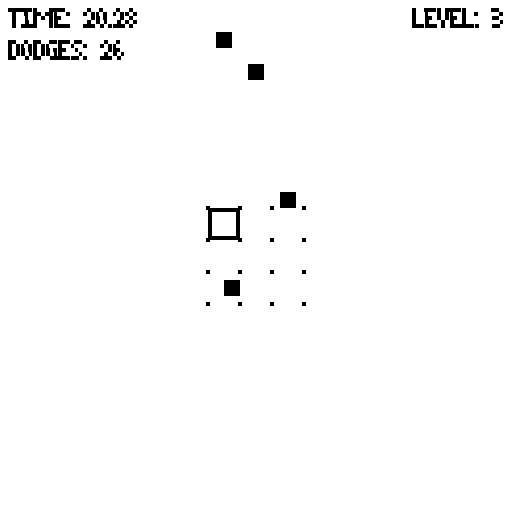
    •   Change the area of play to a circular form.


    Well, Thank to all who read this, play the game and talk with me in the IRC. Write a coment if you have a critic or a suggestions!
    By!
    PS: It was my April’s game for #1GAM 😉

    Fragments of Him – Programmer Post Mortem

    First things first, here’s a shameless plug to our game, Fragments of Him:
    http://www.ludumdare.com/compo/ludum-dare-26/?action=preview&uid=15100

    I highly recommend playing the game before reading on, it’s a lovely experience which will possibly be ruined by reading this post.

    Now let’s get going to the juicy stuff.

    Basic mechanics

    We’ve had the thought of trying a narrative based game before for a Game Jam, although we never got around to actually trying it. But apparently all the designers we know are totally into narrative, so this time we got to give it a try. I’ll leave the designer talk to him though.

    Our tool of choice was easy enough – Unity3D. I’ve grown to love the engine for its simplicity and the possibilities to quickly prototype. How quickly? We decided on the design and I started with a first rough prototype. Moving around in 3D space and clicking on objects. Since this was done within 5 minutes, it became clear that this was going to be a great game jam.

    I threw in the default character controller and the default mouselook script, wrote a script that does a raycast when you click on an object. When an object has a certain tag it will be made transparent. Total lines of code written so far: 20.

    That was the easy part, next part was telling a story. The story was to be told with individual lines of text which all have an audio file linked to it. Some of these would have to be played after each other, and some wouldn’t. Here’s my initial solution:

    Class Action{
    public var sound : AudioClip;
    public var text : String;
    public var isFinal : boolean;
    public var nextScene : String;
    }

    Class ActionWrapper{
    public var actions.<Action> = new List.<Action>();
    public var percentage : int;
    }

    ActionHolder.js:
    public var actions.<ActionWrapper> = new List.<ActionWrapper>();

    An action would always have a sound file and the text. The isFinal boolean would be checked whenever a file should trigger the event to go to the next scene. The ActionWrapper and ActionHolder simply hold lists of data. This data is simply fed to a function which picks the correct data and adds it to a queue. This queue is checked all the time and plays the audio (and shows the correct text). Something that nobody noticed so far, is that each event has 3 different options to pick from. The writing is unique with each of these options and the writing will always make sense, no matter which ones you get. Sweet.

    Shaders

    I’ve never written shaders in my life and I think I’ve only seen a shader file twice. Now we suddenly needed a shader that could make an outline around objects. Switching shaders on runtime, no probem. Right? Luckily, Unity came to the rescue again! There’s a toon shader which gives it an outline. That did the trick for a while, but it wasn’t what I wanted. The shaders make it toony (obviously), which is very much a different effect than our current shader. On to my quest to make the perfect shader. I hacked together a shader by combining the default Diffuse shader that Unity provides and the Toon Outline shader. I have no clue how it works or why it works. But it works. Sadly I didn’t have time to make a similar shader for the final scene (but then for transparent objects). A shame, because that would’ve been very nice.

    Looking back, I think we did well on all of the disciplines. The art looks great, the design was done well, we had great fitting audio and the tech side, well the tech side works.

    If you have any questions with how I fixed things I’ll be more than happy to reply. Just note that I’m not that great of a programmer, but I somehow always manage to get things to work.

    Here’s the difference between a screenshot that I made after about 3 hours into the jam and one I just made:

    mood

    If you missed it, another shameless plug: http://www.ludumdare.com/compo/ludum-dare-26/?action=preview&uid=15100

    Comments

    Topaz
    01. May 2013 · 20:10 UTC
    Since no one seems to reply to posts much, I thought I’d just say again that I enjoyed playing your game!

    10 Second Videos Compilation Project (Final part released)

    Part 1 | Part 2 | Part 3 | Part 4 | Index of games 1|2|3|4

    The last part is released, it’s a bit shorter than the others but still full of good games! That’s all for this LD! Thank you for participating and my apologies if somehow your game got left out (I hope I got everybody).

    37438618
    People make a lot of games during a Ludum Dare. We have reached a point where it’s impossible to play all the games ourselves. But what if we could just sit down and relax while watching as many 10 seconds video clips of the games as we can?

    I think that would be pretty neat. This is why I’ve decided to create such a compilation video. However I cannot possibly do it alone. You have to help me by recording a 10 seconds video showing your game and uploading it somewhere I can download it.

    I will mass download the files and compile them into videos you can enjoy. I hope many people participate and we end up with hours worth of your awesome games!

    Things to keep in mind:
    – please use well supported video formats (ex. avi, mp4, mov with common codecs)
    – The final video will be 1280×720 so 16:9 aspect ratio is best but I’ll letterbox other formats.
    – only upload videos of actually gameplay of your Ludum Dare #26 entry
    – the audio should be just your game audio please (or silence if your game has no audio)
    – 10s maximum, 20MB file size limit
    IMPORTANT: only use hosting services that allow direct linking to the file itself (dropbox for example). So that I can download the files automatically.

    Some video capture tools you could use:
    http://camstudio.org/ (free)
    http://www.bandicam.com/ (commercial, free trial)
    http://www.fraps.com/ (commercial, free trial)

    “For those on a Mac, screen capture can be done easily with Quicktime (go to File > New Screen Recording)” (Tip submitted by jacklehamster)

    Please allow a few days for the first compilation to be made. I can’t wait to see what the result will look like!
    FORM CLOSED!

    Tags: 10s videos, community project, video

    Comments

    DustyStylus
    04. May 2013 · 12:26 UTC
    This is brilliant, thank you!
    04. May 2013 · 14:57 UTC
    Haha, this is great. Thank you so much for doing this Codexus. :)
    04. May 2013 · 17:13 UTC
    Love it! I’ll be submitting.
    worff
    04. May 2013 · 18:06 UTC
    Codexus : Thanks a lot for the time of putting all those videos together !! Great idea and awesome work !
    iiechapman
    04. May 2013 · 22:25 UTC
    This is a great idea, I have submitted my video , thank you very much for doing something like this!
    05. May 2013 · 00:29 UTC
    I saw my video when watching. I have no idea at what time, though. After 4:45 someplace, I’m pretty sure.
    05. May 2013 · 00:43 UTC
    I just submitted. Thank you! :)
    naufr4g0
    05. May 2013 · 02:03 UTC
    I submitted my video, too!
    05. May 2013 · 11:59 UTC
    Thank you very much for this. It would be even cooler if you use YouTube captions to link every game, but I understand that this would be a lot of work.
    dsoft20
    05. May 2013 · 12:49 UTC
    Is wmv an acceptable video format?
    Neonlare
    05. May 2013 · 15:11 UTC
    Awesome videos! My game seems to have no audio on the first batch though :(.
    05. May 2013 · 15:33 UTC
    Looking forward to me being in there!
    kill0u
    05. May 2013 · 16:49 UTC
    Please don’t add Drug Hunt yet, Gnux uploaded it without the sound (which is important in this game) =/

    Sorry about that 😡
    05. May 2013 · 19:01 UTC
    nice ! and when will you publish the part 3 to see if i ‘ll be in 😉 ? thanks
    Jan Marcano
    05. May 2013 · 19:10 UTC
    Thank you for this <3
    Floko
    05. May 2013 · 19:36 UTC
    The 10 second video for LoneBlade, made by me and my brother:
    Floko
    05. May 2013 · 19:38 UTC
    oh, I forgot: this video was an AWESOME idea!!
    06. May 2013 · 04:31 UTC
    Great stuff, will get something to you later today :)
    06. May 2013 · 07:20 UTC
    Will all these parts be compiled into one video at the end?
    Patacorow
    06. May 2013 · 10:41 UTC
    I accidentally sent a bad video (it has my friends talking over it!!) I’m sending a new one please don’t use the one I sent!!!!!!!!
    kill0u
    06. May 2013 · 12:50 UTC
    Hi there o/
    06. May 2013 · 14:42 UTC
    the part3 ! the part 3 ! the part 3 !
    06. May 2013 · 14:48 UTC
    ok ! so we’ll be patient 😉 thks
    06. May 2013 · 17:18 UTC
    Posted :>
    goerp
    06. May 2013 · 18:11 UTC
    Bfff after seeing so many great looking games, I’m afraid of posting my own: See the guy changing the spreadsheet (as some reviewer called it).
    AlexFili
    06. May 2013 · 20:25 UTC
    My game got featured at 2:20! :)
    GreaseMonkey
    06. May 2013 · 22:50 UTC
    I’ve added a video, but my first upload didn’t have sound. I’ve done a second one which DOES have sound, courtesy of the analogue loop.
    07. May 2013 · 03:17 UTC
    It was awesome to see our game at 22:57 in part 2!! Thank you for doing this Codexus~ :)
    rogueNoodle
    07. May 2013 · 13:06 UTC
    Great job on this – thanks for taking up the task :)
    07. May 2013 · 19:11 UTC
    REALLY nice work, our game is on the first video, but both are awesome, hope GGJ get this kind of thing someday, in the end of the jam normally everyone gets home and that’s it ¬¬
    08. May 2013 · 13:48 UTC
    Thank!

    Will be continued?
    09. May 2013 · 03:26 UTC
    Thank you very much!

    I look forward to!
    Jacques_le_lezard
    08. May 2013 · 17:52 UTC
    Juste added my video! (10 seconds it’s too short ^^)
    09. May 2013 · 15:50 UTC
    YES! I’m in here! 3:05 – 3:15 on part 3 :)
    09. May 2013 · 19:03 UTC
    Thank you so much for doing this. It’s a great way to learn about games you would otherwise have a hard time finding. You are awesome!
    imagnity
    09. May 2013 · 19:22 UTC
    Hi! Thanks a lot for your effort. I submitted mine named OktumBoktum. Was there a problem with the video since it’s not included?
    naufr4g0
    09. May 2013 · 23:29 UTC
    My game Potato Station is here! 2:54 – 3:04 on part 3.
    jacklehamster
    10. May 2013 · 04:14 UTC
    Really love that index ;-D
    IndieRetro
    10. May 2013 · 08:45 UTC
    Here is my entry! I hope you can fit it in the next video! :)
    10. May 2013 · 08:54 UTC
    Ah and also if you could link the file directly like I request in the instructions rather than use mediafire it would be great (I suggest using dropbox). Mediafire links require a slow manual operation on my part.
    12. May 2013 · 02:10 UTC
    Thank you for putting my game in part 3! Awesome video 😀
    fermcg
    13. May 2013 · 22:27 UTC
    I posted a dropbox link on the form is it ok? it’s not strictly direct linking.
    16. May 2013 · 12:15 UTC
    Finally was able to post mine.
    20. May 2013 · 03:18 UTC
    Posted! Thanks for doing this!
    Merkoth
    20. May 2013 · 15:32 UTC
    Great job, thanks a lot for doing this! 😀
    21. May 2013 · 14:13 UTC
    Will you do this again next LD? This was just great. Thank you so much!

    Abyss, a Very Psychedelic and Entrancing Game!

    Have you tried Abyss yet? It’s a fun little infinite “faller” type game, where you guide a ball around obstacles and run into point cubes.

    Abyss Tip! Don’t be afraid of navigating the center! The point cubes you break open will surround your ball with a “shield” of mini point cubes for a couple seconds and destroy obstacles giving you more points!

    How many points can you get? Current record goes to Jaus_LXXIV with 43000! (I can’t even get that much :p )

    Try Abyss!

    (Really sorry about that ad that shows up. I don’t know where it’s coming from :( I tried disabling showing ads but it’s still there)


    Chroma – Analysis

    So, I have never actually wrote a post-mortem / analysis for a game, so here goes nothing!

    Chroma is a marble rolling game, where you attempt to navigate a ball through randomly generated mazes themed and created to look like you are playing inside one of Piet Mondrian’s “Composition” paintings. The name Chroma “Purity or intensity of color” and is a reference to the importance of the colored zones within the game-play.

     GameLogo

    This is the second Ludum Dare I have entered, therefore I felt a knew the ropes and as a result, was somewhat complacent. I didn’t myself nearly enough time to do things in, allowing other less important things, such as visiting family come between me and my laptop! The result was that I had to fudge a few things here and there, fortunately the theme came to my rescue, what better excuse then cutting mechanics then in the name of Minimalism.

    In the end my game had 5 mechanics:

    • Rotating a maze so that a ball can roll around under gravity.
    • Find and collect a key.
    • Get to the exit.
    • Jumping.
    • A limited number of lives for a level.

    By the time I had submitted I kind of wished that I had cut the final two, leaving as minimal a game as possible – just the 1 mechanic.

    The complete list of tools I used:

    • Visual Studio, c# & XNA.
    • Photoshop.
    • bfxr.
    • Chronolapse for recording a time-lapse video.

    Post competition I used http://exen.codeplex.com/ to port the game to Silverlight so that I could host a web version.

    SS1


    What Went Right

    • The idea! I got lucky with the theme, I had given it an up vote and a thought and knew what I wanted to make. The final game didn’t quite match original ideas but with a competition such as this, design has to evolve.
    • Work-pace, coming from a fairly hectic AAA background, a fast work-pace is second nature to me, one piece of advice I would give to anyone reading this thinking “I just cannot work fast enough”… hack, be messy, don’t worry about neatness, just get it done. If you care about code cleanliness and what people may think when they look at your code, format it once you have finished.
    • Sleep, its easy (I did it last time) to think “I’ll sit up till 3am, then get back up at 6”, in reality, you may get more hours in, but they will be of a very low quality, instead, on the Saturday night I had an early night, and a lazy morning on the Sunday, there is of course a difference, however subtle, between well-rested & lazy!
    • Realistic goals & tracking those goals, basically, if I had an idea,  I gave it a good think before doing anything with it, before heading headlong into a brick wall and losing 4 hours I would plan the whole thing, including an estimated time scale, basically what this means is lots of paper, and lots of lists!
    • Testing. It may feel like your just playing your game, but do it, and then do it some more, and be critical!
    • Recording a time-lapse video, I didn’t do this last time, I did this time, I will do it next time, it looks ace!
    • Randomly generated levels, randomly generating your levels is a great thing, it means you can have endless level and that you don’t spend half your weekend making and editor, and the other half making the levels, however…

    What Went Wrong

    • Randomly generated levels! While randomly generated levels are a good thing they don’t allow you to control the learning pace of your game, I found I was throwing the player into an enormous level without a map. During the twilight hours of the weekend I very quickly threw in 3 tutorial levels which introduced the player to the game, at this point I thought all was well… not quite so! Now the players are asking, “why does the difficulty ramp up so much after level 3”.
    • No real game tutorial, in my experience players don’t read the read-me, or the “how to play” screen, they just want to dive in and learn as they go along, from my point of view I think an explicit tutorial is a bit naff, you introduce every mechanic at once, and almost immediately, the player forgets about them. The best way is to bring your mechanics in gradually, and explain them well… with reference to the above point, I didn’t achieve this. As an example, most people don’t seem to realism that the little dot points you to your goal.
    • Audio, audio is massively underrated, without graphics or code, your game is unplayable, however without audio your game is in-complete, the audio in Chroma is thrown in at the last minute and not the best it could be.
    • Physics, for a game based around rolling a physical ball, around a physical maze, my physics sucks! No more can be said on this point.

    The Port

    I like working with c# & XNA for a number of reasons, the main two being API familiarity, and the turnaround speed of c#, two very important factors to consider when working to a tight deadline, if you attempt to learn a new API/engine during the weekend, you are destined for failure! This approach does have its drawbacks, this is something I felt during LD25, and something I wanted to avoid for LD26, windows only games will not get played as much as web games, its a fact… I do it myself! Looking back to not attempting to learn a new API during the weekend, I went windows only, then on Monday morning decided I wanted to do a port, I stuck to the rules of keeping all functionality the same, however getting the port done was more stressful then getting the game made!

    I had set myself a side-challenge for the port to have it done before the end of the jam, this left me with around 3-4 hours of programming time.

    I ported to silverlight using the ExEn librarys, if a little un-documented these did the job fantastically, I would recommend anyone else who made a C# / XNA game to have a go at porting it. One major fail I came across was my use of primitive rendering to draw everything, something which I couldn’t, this meant I had to re-write all the rendering code, and the result was the game being a little bit slow in silverlight, and not looking as nice. However next time, I now have the knowledge to target both Windows and Web during the weekend.

    Final Notes

    The weekend was really good, I will be entering the next, and I will be spreading the word and getting everyone else to enter. One of the best parts is writing this, it really gave me a chance to reflect back on what I have achieved. If you are reading this, and have not wrote your own, then right one, and post a comment, I look forward to reading what you have to say!

    Comments

    01. May 2013 · 19:03 UTC
    Really cool. I also made my game using C#/XNA and went a different route to get a web version. I used a project called JSIL to convert my game to javascript + HTML5 so that it can run in a browser. In general the port was pretty easy, but I did get some help from the developer of JSIL. It’s cool to see that there are multiple options for deploying XNA solutions beyond just a executable download.
    01. May 2013 · 19:41 UTC
    JSIL, I’ll have to give that a look, it looks even easier then ExEn. Was there anything special you needed to do, or special considerations?

    How I felt my first LD went.

    Potato!

    Potato!

    This was my first Ludum Dare 48 hour compo. Originally I was going to do a Jam with my brother, because I felt like my programming skills were not good enough to go solo. After I did two warm-up games I felt like I could do it alone, so we had a game-off to see who could get the best game. Here’s my game and here’s my brother’s game if you’re interested in seeing who won our game developing game-off :P.

    What I liked about my game

    – The setting

    – It’s a point and click game

    – I managed to keep the art style somewhat consistent

    What I don’t like about my game

    – Worst most wonkey controls of LD 26

    – Really short

    – The ending sucks

    I’ve always wanted to create a game that takes place in a dystopian sort of setting. I like how I tried to make the style of drawings match the setting’s urban and dystopian environment I tried to convey. When it comes to point and click games like Machinarium or The Dream Machine I love going through an engaging story with interesting appearance and puzzles, both of those games were obvious inspirations for my first LD game.

    When I was making the framework for my game I was just clipping away at it because I wanted lots of time to add content. As a result I made the horrible (and possibly common) mistake of not taking much time to think about what I was really implementing. This ended up with weird controls like the Greater than and Less than buttons being move buttons, and the U and P keys both being use buttons for very awkwardly specific things. I also found content being kind of annoying to add. I was only one person and even though it was all black and white I was trying to keep shading and whatnot consistant. I think I also made the actual act of adding content in the game way too tedious. For an example, an “Interactable door object” had over 10 arguments that were all integers and did not have a smart order to them. I found myself double checking the methods and constructors of my objects a lot to make sure I was implementing things right.

    Even though I spend almost half of my productive time drawing I didn’t end up with a whole lot of content. To make it worse I didn’t think of a real story, just a setting I wanted the player to explore and be interested in. I ended up awkwardly stapling an end to the story that I didn’t actually come up with until about 10 hours before the dare was over. Anyways, I’m rambling a lot here, I’ll probably add a TL;DR.

    But Ludum Dare newbie! This was suppose to be a learning experience! wat did u lrrn?!

    Ok, I know nobody in this community acts like that, but I did learn a lot from this project. These include

    – Try to plan out the controls and user interface before implementing stuff

    – Plan your story before adding content

    – Make tools before hand to help you out. Really, I made an entire framework from scratch and it wasted a lot of time.

    – Take breaks! I spend almost 18 hours working on the LD and didn’t take game breaks or anything like that except for eating and looking at a few post on the site. I got a headache about 4 hours before the compo ended and I still was trying to finish my game.

    Despite how frustrating it was to make and how much I was disappointing with the result, it feels so good to make something and I’m definitely looking forward to the next compo! Off to play more of the community’s games!

    TL;DR – I liked how the game turned out. The game ending sucks though. I should have planned the framework before making it. I underestimated how long it takes to add content. I will participate in the next LD.

    The Call – Postmortem (AKA Rookie mistakes a gogo)

    Phew, so after two and a half hellish days, here we are. The Call is actually finished (kind of).

    Last Friday I never made a game in my whole life and never thought I would.

    Now, just three days later, I completed my first game.

    The feeling of accomplishment is overwhelming, even though the result is not spectacular.  This, plus the fun I had making it, are worth the sleep deprivation and stress of this last week end!

    Let’s look back in time and analize what made the development of The Call possible and what made it Hell on Earth, so that next times I’ll ake a game I won’t have to keep the phone near me to call 911 in case I have a heart attack.

    What went unexpectedly smooth:

    1. Ren’Py.
      As I said in another post, this engine is pretty amazing once you get to know its possibilities. It’s so much more than a visual novel engine. This weekend helped me appreciate the qualities and fun of scripting for this engine. I have to say it was a neat choice for my first game since it allowed me to save a lot of time on many things that would have taken forever in another, lower level language (for example sound). I was really satisfied of its scripting language and its extensibility. I will use it again in another game, that’s for sure (even though I’m thinking about using Haxe for the next LD for making something more interesting gameplay wise).
    2. Deciding the engine/language I would use before the start of the competition.
      I knew way before the theme came out on saturday that I would be making a game in Ren’Py. That saved me a lot of time on brainstorming ideas later on cause I already knew what the possibilities and limits of my engine were. I also had some time to become familiar with the engine itself, so that I would not start for absolute zero at the start of the compo, thus saving a little amount of time.
    3. Brainstorming ideas.
      As soon as I knew the theme for the compo, I sit down on my desk with a piece of paper and a pen and nothing else and started writing. Writing, writing, writing. I wrote down ideas, comments on ideas, random thoughts, imprecations, everything that passed in my mind. Pure freeform mindflow. The result was that, after a few mediocre ideas or some amazing iddeas that I would have never had the time to do, I finally struck an idea that appealed me: making a game with minimalistic dialogue.
      The original idea was completely different and probably more interesting as far as the competition goes: it was about a game where you have to save a princess and can only choose to save her. After that, the game would end. The only additional choices would change the context of the things happening, so you could save princess Diana with a motorbike on fire or save princess Peach killing all the Goombas with a machine gun. The idea was cool but way more ambitious, so I had to scale it down a lot. In the scaling down process, a lot of stuff changed, ending in what you have played (or will play, or won’t play, your choice) which in no way resembles the original idea. The original title was also different (The Mission). I still think it is a cool idea and may implement it in the near future.
      Still, after less than three hours in the competition, I already had a rough idea of what my game would be. This gave me an immense motivation that I would have never had if I didn’t have a clue on what I would be doing. This played a huge part in me actually being able to finish my first game.
    4. Knowledge of the tools.
      Most of the tools I’ve been using (Ren’Py in part, REAPER for sound, GIMP for drawing) I know very well, meaning I saved a shitload of time on a lot of stuff that I would have to learn, subtracting time from the already limited time pool of the competition. A little hooray for me!


    What went horribly wrong:

    1. Ren’Py.
      This engine is a double edged sword. While it has great potential, actually being able to use it means having over the top google fu abilities. Its documentation is extensive, but lacks examples. This implies that implementing new stuff isn’t immediate and requires some attention.
      Luckily PyTom (the head behind Ren’Py itself) is an exceptional dude and posted tons of helpful posts in his forum, and the whole community is very supportive; still, districating the gold out of the World Wide Web is not immediate and lead to a lot of time spent in the browser instead of in making the game.  This to be honest is more of a  nuisance and less of an issue if you do not have deadlines; doing it for a LD (especially my frist one) was instead particularly stressful.
      Still, I have to say that the new stuff I learned over these three days made me want to explore the possibilities of Ren’Py even more. I already have an idea for a new game, and this time making it will be way smoother since I actually know how to do stuff.
    2. Failing to follow my own advice.
      On Friday I posted a list of suggestions to actually make my first Ludum Dare go smoothly. I feel slightly guilty in saying that I completely ignored my own advice, and as a consequence nearly fell asleep on the keyboard trying to correct bugs at 4 AM after a 20 hours day. My biggest failure was not remembering that details are EVIL. As a perfectionist, details have a devilish charm and it never feels too soon to start working on them (whil eit actually is). What I did wrong was starting to work on art and music while not having any idea for a script. While at least it gave me something interesting to put into the game, it put me back more than 36 hours on the script, which I completed on the last few hours of the competition. I actually finished the script for the interactive novel less than one hour before the ending of the compo, meaning that it would have been impossible to finish all the debugging and proofreading in time for the LD48. I still made it for the jam, but it still disappoints me that I came so close to the deadline without actually making it.
      (In my defense, I have to say the original script I though of was crap and putting it back on time allowed me to rethink a lot of stuff and refine it a lot, making a lot more interesting to read at least. Still, doesn’t hold up as an excuse to me.)
      As they say, there are two ways to learn stuff: the hard and the easy way. This time I went for the hard one. Next time hopefully I won’t make the same mistake again.
    3. Time management.
      This was the number one issue for me. While I actually scheduled the times for everything quite rigidly, I didn’t include any time for debugging. This was HUGE. As an excuse I can say this was my first project, so I had no idea debugging could take so much time; on the other hand, thinking it would take NO time was foolish from my side. I mean seriously! Thinking about it, how could I think the game would just fall in place by itself? Another big mistake that I won’t make again.
    4. Sleep deprivation.
      I didn’t think this would be such a big issue. I’m probably getting too old for 4 hour sleep schedules. Or, more probably, thinking intensive activities like making a game actually reuire the brain to be well rested before going on a marathon. The fact is, the last few hours before the end of the 48 hours were an agony. I had an half finished script after 16 hours of work in that same day and 4 hours total of sleep and it was extremely hard to maintain focus. In the end I did it (sort of), but I would never repeat that again. You can make more in an hour with a well rested brain than in 5 hours with a sleep deprived one.


    So, I’m guessing that’s it. Being my first attempt at this, I learned quite a lot, some in the hard way, some in a softer manner. This post was immensely useful for myself and I really hope this may help others startng out on what to expect. Good luck to everyone!

    PS: I’ve played now over 140 games in this competition. I’m completely and honestly in awe for some of you guys out there. I’ve seen so much creativity and talent in those games that it actually warms my heart. I sincerely hope all the best for all you guys!

    Tags: post-mortem, postmortem, Ren'Py, the call

    Post-mortem STL RNNR

    Day 1
    Our first idea was to make an infinite 3D runner where you can walk on anyside within a cube. (You can run up a wall and the gravity will point towards that wall.) But our programmer didn’t have any breakfast so the gravity changing character controller was not advancing fast and was not done by dinner.

    During dinner we decided to ditch the gravity idea and make it a generic platform jumper, but still infinite. This way we could reuse the art and make the development of the character controller a lot easier.

    However what we did not know is that our versions of unity were not compatible, so the art, inspired by “De Stijl”, had to be redone entirely. After realizing this we decided to get drunk on one of the largest student parties in Europe (just 100 meters away from us).

    Basically this meant we had no-game at all after day 1.

    Day 2
    We worked hard to remake everything and build the new idea. Everything went pretty smooth, besides the hangover. Nothing interesting happened.

    The game looks not unlike the end result:
    STL RUNNR

    Day 3
    We did some quality checks and build a few extra obstacles. We added an online high-score system, and other fancy not really required stuff. But noting to much since we had other work todo (you know, mondays).

    You can play our game here!

    (This is the part where you play the game, so you get the referenced below.)

    Day 4
    A national holiday, also we got a new king. Not that we noticed any of that because we were asleep, almost the entire day.

    Day 5
    Today!
    A lot of friends were playing our game today: a lot of cursing and some addiction.

    Later
    We decided that if we have a top 63 jam score (for overall or gameplay), we will make a waaay more awesome version of the game, with true procedural generation, a better scoring system, easier jumping, a better time penalty, a lot more content and better use of the 3D space. (Not that we think we will get top 63, that’s why we dare to promise this!)

    Well, enough “what if” talk, thanks for reading 😀

    NoBility – Timelapse and Postmortem

    This time, not only did I finish a game but I’ve also made a timelapse! I can finally try to understand why I usually waste so much time. xD

    From the start of the compo, I wanted to use the theme within the gameplay. So, after some thinking (and one scrapped idea), I decided to make a game where you would use abilities (jump/run/shoot/etc) to solve puzzles, but you would only be able to use one of those at a time. I also wanted each stage to feature few different objects and require few abillities. A simple use and not that great, but the game was possible.

    What went right:

    • I quickly decided on a game idea that I knew I would be able to implement
    • Most of the possible interactions were implemented without problems
    • I used the tilemap editor I created after the previous compo; there’s nothing like using a program made to you (and by you xD)
    • I noticed that I wouldn’t be able to come up with good stages and polish the game, so I made sure it was the most polished possible
    • The graphics and the music came out pretty nice (imo).

    What went wrong:

    • Bugs! The pushable box took a long time to work (almost) as I intented
    • I spent too much time drawing instead of doing the rest of the game
    • The background looks really weird; it could use some better colors
    • I decided to make a platformer-puzzle game, and I don’t play those games that much (so, I couldn’t come up with nice level design)
    • Let alone nice levels, I just made tutorial levels
    • I though the game’s name on the last minute (literally)

    I’ll have to try and keep art to a minimum next time. Otherwise, I fear the same thing will happen again.

    And here’s my timelapse. =D

    If you still haven’t played it, why not play it now? It’s really short!

    Tags: post-mortem, postmortem, timelapse

    Less is More? – Post Mortem

    This is the first time i write a post-mortem, the first time i partecipate to the compo (i already partecipated to the jam the last two times). My game: Less is More?

    Finding out that the theme was minimalism was a pleasant surprise: I already had an idea of a game inspired by Mondrian works, with every color having different fluid behaviors, but I never thought about how getting a gameplay out of that thing.
    So i rapidly coded a sand-water-fire sandbox and started experimenting with it.
    Also I wanted my game to have a deep meaning, so I thought about overbuilding, which eliminate all natural things  in the world, drying the water, burning  the soil, extinguishing all the fires and covering all in gray cement.
    So the gameplay was done: you are the mad designer who wants to eliminate the pulsating natural elements from the world,  by using them one against the other.

    What went well
    This time i spend my time doing something small but polished: what i learned from my precedent jams is that adding features is a bad idea. I removed all that was not necessary from my design (this is a very minimalism thing!)
    What went wrong
    After publishing the game I discovered that color blind people can have problems playing it, something I absolutely want to fix in a post-compo version. Also things I cutted with regret: communicating vessels for the water tiles(great addition for the gameplay), more realistic fire behaviour, a level editor.

    Play it!

    A game about giving the best, failing, and getting stuck in the routine

    Hello everyone,

    I would like to introduce you to SPACEd out,  the game that me and Michelle released for the Ludum Dare Jam.

    PLAY SPACEd out

    NOTE: I would advise you guys to play SPACEd out before reading this article in which I explain the meaning of the game and the ideas that brought us to its creation.

    Minimalism

    When we started brainstorming about the theme, I immediately tried to focus on a one-button gaming experience. I wanted the theme to be reflected mainly on the mechanics more than the aesthetics. Michelle immediately supported the idea, and we started thinking about what kind of game to make, and how to approach the jam.

    foto(8)

    Pen and paper, first of all!

    I don’t really know how it worked, but the first thing that I wrote on paper became the game that all of you can now play: a rhythm game in which the player increases the size of a white character in order to match the one of colored bars that move towards her. At this point, we decided that we had to make game mechanics, narratives, music and aesthetics fit together in a coherent minimalistic experience. This is when we decided to try and address a message in order to make all these elements work together for a common goal.

    A game about giving the best, failing, and getting stuck in the routine

    The only thing the player does in SPACEd out is basically holding and releasing the spacebar in order to stretch the square-shaped game character. For us, this mechanic symbolizes the attempt of people to adapt to different situations for solving problems in life.

    Problems, deadlines and tasks are the things that could make us lose track of what is surrounding us. We are constantly aiming at giving the best, at performing good, which ultimately bring us in a certain routine. These events are symbolized by the colored bars that move towards the player. Family, work, opportunities, tasks: they all fill our lives without letting us take a break, they increase our stress and make us become unaware of what’s happening around us.

    foto(7)

    More brainstorming, and structure of the colored bars sequence system

    Music to reflect the message

    Michelle took care of finding music capable of putting the player in an exciting mood. At the same time this track needed to give a monotonous and nonstop feel to the game, supporting the idea that the player is stuck in a routine.  After hours of research, she found a great track by Carf, called Walk Through The Forest, that perfectly fit our needs. Without this track and the sound effects, we think that SPACEd out wouldn’t have worked out so nicely.

    Gameplay to reflect the message

    The main gameplay elements that support our message are the scoring system, the combo system, and the colored bar sequences.
    The scoring system is self explanatory: it leads the player to be the best, to perform well. Like in real life, we always try to give our best and to succeed.

    The combo system is something that me and Michelle implemented in order to enforce the message, after the main structure of SPACEd out was set. We wanted to push the player into collecting as many consecutive bars as possible, but we also wanted to create situations in which this is not possible, and the combo will be inevitably broken. That’s because we cannot always succeed, we need to make choices, and accept failures, even when they feel unfair.

    We wanted to immediately teach to the player what to do, without too much text. Michelle came up with the clever title, supporting our message.

    We wanted to immediately teach to the player what to do, without too much text. Michelle came up with the clever title, supporting our message.

    We put additional effort into creating a specific difficulty curve. We wanted to make the player feel stuck in the routine. We wanted to avoid instant gameover, and provide instant replaybility: this is reflected in the fact that, once the mechanics get mastered it is almost difficult to lose (therefore getting out of the game). In addition to this, the ending screen pushes the player into immediately playing again.

    Text to reflect the message

    At the beginning, me and Michelle wanted to put different quotes about out theme at the beginning of the game. Michelle and me, though, agreed on the fact that such an introduction would have felt a bit heavy, cliché, and exaggerated. Michelle found a walking song extracted from Tolkien’s The Lord of the Rings, that supported our message:

    The Road goes ever on and on
    Down from the door where it began.
    Now far ahead the Road has gone,
    And I must follow, if I can,
    Pursuing it with eager feet,
    Until it joins some larger way
    Where many paths and errands meet.
    And whither then? I cannot say.

    SPACEdoutscreenshot1

    It’s quite difficult to follow the text while playing the game

    Follow the routine, or find a different path? Finding a different path is very difficult once you are in the routine: this is another concept that we tried to enforce both with gameplay and aesthetics, as explained in the following paragraph. We placed the text at the top of the screen, only visible to the player while the game has started. This was an intentional decision, to support the idea that, while you’re stuck in the routine, it is very difficult to pay attention at what is surrounding you.

    Aesthetics to reflect the message

    Me and Michelle quickly started working on a mockup of the aesthetics. After deciding the direction on paper, we started imagining a very simple layout, and flat colors. While we kept the simple layout from the beginning to the end, Michelle decided to give more life to the game by assigning gradients to the different elements.

    To support the idea that – as already mentioned – while you’re stuck in the routine, it is very difficult to pay attention at what is happening around you, I implemented a gradient that gradually appears on screen if the player performs well and chains good combos. This gradient will obscure Tolkien’s walking song, but will not cover the score: once again, the performance is the only thing that matters once you’re stuck in the routine.

    The gradient, covering almost everything but the score

    The gradient, covering almost everything but the score

    The outcome

    SPACEd out is possibly easier to play than to understand, but we were aware of this during the development. We wanted to address a message in such a minimalistic way that, in the end, it became very cryptic. We are still very happy about it, and we are glad to know that some people understood the message hidden in the game. It was personally one of the best game jams I have ever had, thanks to the great synergy between me and Michelle. Moments of tension helped us taking specific directions and create a game experience we are very proud of.

    Thanks for reading this article and for playing SPACEd out!

    P.S. if you get addicted to SPACEd out, make sure you look away from the screen after a long gaming session: we are sure you will enjoy spacing out!

    Tags: Routine, Spaced out, Tolkien

    Comments

    Tino
    01. May 2013 · 21:26 UTC
    Did not expect such a deep thought process and message hidden away in the game. Great job to both of you! 😀
    02. May 2013 · 08:50 UTC
    Thanks a lot Tino :)

    Higher-Quality-Video Workaround for Chronolapse

    Many Ludum Dare participants like to create time-lapse videos that show the actual development of their entries.  I thought that was a cool idea, and decided to use Chronolapse to capture and encode my video.  Chronolapse is stable, has a simple interface, and even has some advanced features like dual monitor support and picture-in-picture.  But the software lacks in one major area: video quality.

    While recording, Chronolapse takes periodic frame captures from your screen or webcam.  Then, when you’re done, you can use the tool to compile the image sequence into a video that can be uploaded to YouTube, for example.  Unfortunately, there are no settings to tweak the video output quality, and the quality is pretty bad.

    The simplest solution I could find is to download a separate tool called ffmpeg to do the encoding.

    Chronolapse

    Chronolapse

    ffmpeg

    ffmpeg

    Here’s how to do it:

    1) Use Chronolapse to create a sequence of images in a folder somewhere.
    2) Download ffmpeg and extract it.
    3) Find the encoder executable ffmpeg.exe in the bin folder.
    4) Rename all the images in your time-lapse sequence to a format that ffmpeg can recognize:

      • Open the folder with your image sequence in Windows Explorer.  Make sure there are no other files in the folder.
      • Single-click on the first file in the sequence to select it.  Note: This step is very important and affects sort order.
      • Select all files with Ctrl + A.
      • Press F2 and type img, and then press Enter.  The files will be renamed sequentially.

    5) Place a copy of ffmpeg.exe in the same folder as your image sequence, or ensure that the executable is in the Windows path.
    6) Open a command window where the image sequence is, and enter the command:

    ffmpeg -r 20 -i “img (%d).png” -q:v 1 -b:v 1500k timelapse.mp4

    7) After processing for some time, you should have a new video file of much higher quality than what Chronolapse produces.  Unless you have the correct codecs installed, this will not play.  If you’re having any problems, try the VLC Media Player.
    8) Profit!

    To see an example of higher video quality in action, see the time-lapse video link on my entry page.

    Have fun!

    Tags: chronolapse, timelapse

    Samus Regrets – Timelapse and post-mortem

    Game link: Samus Regrets

    I narrate/ramble in the video some of my thought process and such, but things:

    What went right

  • Got lucky and got a workable idea pretty quick
  • Made a list of everything that *had* to be in the game for it to work and focused on those things before anything else
  • Was therefore able to get all the essential game elements done in time

    what went wrong

  • Never got round to the list of extra things that would have made the game better, except sound, which… well that probably didn’t help any, anyway
  • Wasted a lot of time creating a level editor/building levels and then going over them again when I had detail finished, which meant things had to get cut
  • Didn’t have time to make the ice beam work as it should have
  • Forgot to get time off work on Monday… so tired 😛

    Things I had to cut :(

  • Enemy types. There are quite a few varieties in the game, all with different behaviours, but it would have been nice to have had more. You can see in some areas of the game I clearly designed the level to incorporate specific classic metroid enemies (like the creatures in norfair that live in the walls and stretch their necks out… whatever they are) but just didn’t have time to get them done so ended up putting other enemies in their place
  • I wanted bosses. That was probably unrealistically ambitious, but I would have liked to, and I arranged a couple of rooms in the game in the hope that I would have had some extra time for this.
  • Lift animations. Right now they work more like teleporters, but it would have felt much better with the classic metroid elevator transitions.

    So for next time, if I’m still using Blitzmax, I should try to develop a simple open source tile/level editor in advance or something to save a lot of time. I could probably use an already existing tile/level editor, but I really enjoy coding level editors for some reason 😛

  • Polymorph – Postmortem

    Polymorph

    This was my first game jam ever. Hell, it was my first game ever. A few of friends were talking about ludum dare 2 weeks before and I felt the need to butt in.

    What went wrong:

    Preparation. They were lacking a programmer so I thought maybe I could learn some unity in those 2 weeks. My knowledge of programming goes back 5 years to my highschool days which is really all a haze now, I was really in for a surprise when I was trying to make stuff happen in unity. Two days before the jam started I suggested we use construct. I ended up going into the weekend having finished 2 very basic construct tutorials which led to me learning how to use everything that first night.

    Time management. By the end of Saturday night I were so sure that we were close to finished that I kind of just took Sunday very slow not realizing that I had overlooked a few things. (being a jam entry we had till Monday, but everyone had work on Monday)

    Graphics. We didn’t really have an “artist.” Our original plan was to just keep everything very simple, black and white with very basic platforms. When it came down to running the prototype everything looked very dull. On Saturday I asked one of the random friends to mock up some background images on extremely short notice.

    Physics! So understanding exactly how to implement the physics was the biggest hurdle I ran into. A lot of the problems we started running to towards the end I just kind of threw a band-aid on and moved on, just for the sake of having a “working” game. But of course this all goes back to preparation.

    What went right:

    Ideas. We met up on skype right before the theme was announced. Within an hour of the theme being announced we knew exactly what we wanted to make. Hardly anything was changed from our original idea as we were developing the game.

    Audio. The audio really helped with the atmosphere of the game. The time was spent implementing the audio mechanics of the game were the most productive.

    Organization. Lucky for us dropbox is a very easy solution to share files. Everything was neatly organized and easy to access.


    Summary:

    Overall I felt like this jam was a success. It was great fun, and I learned a lot! The nervousness I had going in just seems so silly now. I will definitely be back next time!