O.O

Eh… Anyone out there has an idea how to make a game worth selling?
And where to sell it, gimme a good marketplace for Android (or PC) that can pay me via Bank Account, or Skrill, or Payza, or Google Checkout?
… And yes, I do have a website: tosicden.yolasite.com
GUYS HELP ME OUT ON THIS ONE ! ! !
So, I’ve been working on a music-based puzzle game for quite a while, and it’s getting very near completion. It’s something I want to release, but two things are bothering me as I’m getting close to the end:
1. I should really make a trailer for the game, but being a puzzle game, there isn’t much that changes visually, which makes it hard to montage. At least there are some graphical differences for each of the five songs, but they’re relatively minor. I’m just trying to figure out the right way to go about this.
2. My only other released game that people are aware of is a horror game, which is pretty much the polar opposite of a music-based puzzle game. Will this vast shift in gears be too jarring, or shouldn’t I worry about that?
Hello guys, I’m so happy, SheHe has been greenlit, thanks to all of you that voted up.
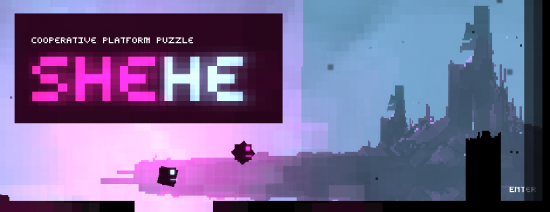
http://steamcommunity.com/sharedfiles/filedetails/?id=346407779
If any of you have tips about steam workshop integration or smth else don’t hesitate !
I’ve threatened to make a post-compo version of my game GraviFlip for a while now, and guess what? It’s done! That’s what you get for giving my game such good reviews.

Here’s a list of changes:
You can find the link to the post-compo version on the game’s LD page or you could just click here if you’re in a hurry or something.
Seriously though: Thanks to all of you who took the time to play and/or and/or give feedback on my game. I tried to address as many issues as possible, so hopefully you’ll enjoy this new version. If not, let me know why!
Hi guys and gals!
I’ve been stating that I’m going to release a Post-Compo sequel to Beat+Trak soon but have be hit hard by the level of content production required.
Because the game is a music/rhythm game, every new level needs a new song which starts to add up and I’m honestly running out of creative motivation/getting a headache from working on music.
I was wondering if I should take the easy way out and include some songs that weren’t personally made into the game?
What do you guys think? Do I risk the game’s audio reputation? Any thoughts?

Thanks, in advance!

Hello fellow Ludum Darer’s, I’m in.
Here is what I have chosen to do:
The source can be viewed here:
http://imgoingtoundefineyourface.com/technocf/mini-ld-56
Do any you have a Java “Game Engine” that you used in previous LD Challenges. If so leave a link to the engine in the comments.
I just uploaded a post compo version of my game on newgrounds.
I added a new mechanic, like 4 new levels and a “tutorial”. Also fixed a few bugs.
If you want to try it click HERE.

NOTE: So this right here turned out to be way more than I thought I’d be writing, sorry for it not being a 100% Ludum Dare topic. I will be using this language and my game library for future Ludum Dare events, though, so it applies well enough I guess.
This past Ludum Dare I got to use some very fun tools to create my game: A game library I wrote, Artifakt, with bindings to a scripting language that I also wrote, Score. Actually building something like a game using tools I’ve created, especially a whole language, is something I never thought I’d be doing. The event was fun, but not without struggle, so I’m glad I already had upgrades planned for the future.
I’ve been working most on the language, rewritten completely from scratch it’s a lot more efficient when it comes to maintaining proper control of the program and has more flexibility when it comes to the more complicated features I’ve wanted. While the new Score lacks it’s own proper class system like the old one had, the current functionality is actually far greater. Functions, for example, are much more useful and manageable than before.
Here’s a quick example of some of the fun things Score can do, because why not.

This might be a little confusing at first glance, so I’ll go ahead and walk through it.
in to a new Java Scanner object in the table.Input to a lambda function, more on that in a second.So more on that lambda, there. For reference that could just as easily be written as a standard function, putting Input right before the parameter list. Anyway, there’s a lot going on there.
First of it’s defined with the keyword “func” and followed by a list of variables in brackets. This first list is optional and defines specific return values for this function. If no return list is given any number of any type of object may be returned. If a list is given with no names for the values then only values of those types can be returned. here we have types and names, so the state of those variables is what gets returned whenever the function terminates. In this case the function terminates at the end with no early break. These return types, if given names, can have default values. Those work how you’d think they do, they’re initialized to that value rather than null or a type-specific default value (i.e.zero for an int.)
After the return type list comes the parameters, which functions just about how any other parameter list would. You define values separated by commas and have the option of giving them defaults. What’s good to note is that Score will automatically default parameter values if no argument is passed for them, so default assignments have no restrictions on where they can be used.
After the parameters we have the function body. A neat thing that Score allows is that for single line functions the curly braces are optional: func PrintValue(var value) println value; is valid syntax. Functions can also use a fat-arrow to bypass the return statement: func Add(int a, int b) => a + b; will return the sum of a and b. Moving on from things not in the example, this function will first print the given message (or “Input: ” if no message is specified) and then request input through Java’s Scanner class and assign that input to the res return value. When the function returns after that, the value of res and code are returned.
Notice how in is a part of the table but Input can access it without having to reference the same table. In Score, when a function is assigned to an object (or a part of a class, but we don’t have classes yet…) that function has access to it’s container through a this parameter. Access to this is also delegated automatically as if its contents were local variables. Because of this the Input function has direct access to in.
RAGE: DESTROYER OF WORLDS
—————
Simple project with arena combat, that expands to gain some depth and variation with elemental abilities you can equip your left and right mouse attacks individually after defeating Mini bosses, and 4 stat options to choose from after each boss is defeated across the 5 worlds you battle upon. Mini bosses and Bosses also have progressively stronger elemental abilities you should look out for.
http://gamejolt.com/games/action/rage-destroyer-of-worlds/44502/
This was a small game developed for LD30 that got cut significantly short of what I wanted it to be for submission, and was my first completed project since changing from Unity to Unreal Engine 4. I spent time expanding the gameplay afterwards but its release was delayed for a long time because of an engine bug spanning 2 versions that wouldn’t allow me to compile the project, however now it is complete and ready to play.
Hope you get to have fun playing this :), I’ve spent countless hours playtesting it as I developed it and though it’s relatively small scale compared to most arena games I’ve continued to enjoy my time with it. Though it’s extra reading I’d recommend looking at the element descriptions in-game to better understand what each does and how they may have advantages with each stat item you may pickup to get the most out of the game.
This will be my first Ludum entry, hopefully I can make something acceptable 😀
Definitely going with the fishing theme I think with very few mechanics, possible only one. And I will try to limit the colours to four.
Finally, I managed to remove most of the bugs in my LD31 game and have released it on itch.io, check it out. Its not perfect, but its my first finished game so im proud of it.
This is the initial post for my profile. Hopefully I get to participate in a few more of these
This is the initial post to my profile. I hope I get to participate more in Ludum Dare in the future. Fingers crossed
Sadly, I wasn’t able to participate in the last Ludum Dare. But that’s not an excuse to not make a game so here’s one I recently finished, Snow Fort Defense.

Hope you enjoy it and feedback is welcome. Also, I’ll be participating in this month’s MiniLD.
I’ve been reading this blog for few months and now I looked at Unity. This is the result http://nachtgold.itch.io/chase-the-moles

I hope you enjoy it
We’ll I just started in here and there are 100 days to start ludum dare 32. I know that you can use libraries like Haxe, OpenGL, Lwjgl, Slick2d, and stuff. You can also use Unity too. But can you use blender? I guess I’m ok with java itself, and I’m still trying to learn LWJGL, but CAN YOU USE BLENDER? I mean like, can you use it to make a game for ludum dare?
Thanks!
 I created simple game for Android that’s Special Time-Killer!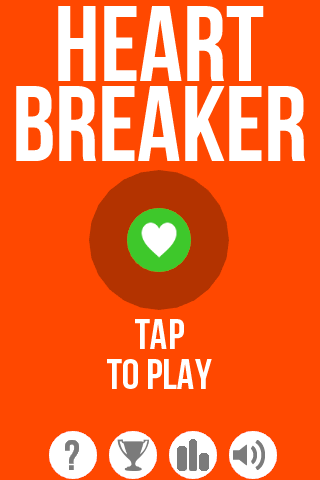
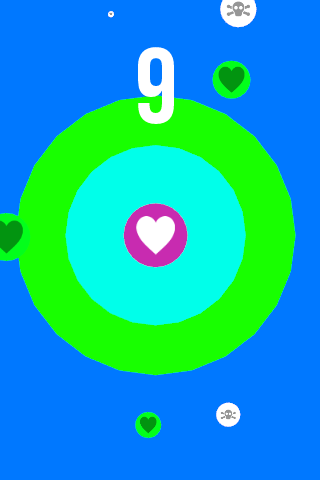 THIS GUY PLAYED HEART BREAKER
 Your life will be changed after this
Google play Download link
Your life will be changed after this
Google play Download link
I finally uploaded a post-compo version of Snow Day Tiles for One Game a Month (December, so it was posted a couple of weeks ago).

It has the following changes/upgrades:
– Many more pieces (patterns), almost 70 in total.
– All 6 colors are used and interchanged from the early levels for some variety.
– 14, more balanced (tested) levels. The Ludum Dare version had levels that were thrown together at the last minute (unfortunately). As a result, they were too easy (you could “throw away” tiles around the pattern with no penalty) or too hard/impossible. I spent quite a bit of time (as did my PATIENT testers) looking at each pattern and figuring out which pieces would provide a challenge while still being possible.
– ALMOST every piece that is possible in each level has a place where it can be placed with no effect (or only effecting one tile). This ups the strategy and lets you not get forced backwards too much as you approach the end of a level. The no-effect placements are not always that obvious 
– Math in bottom right corner was removed and replaced with bonus/penalty fly-outs from the tiles on the board. One of the comments on the game was that it was distracting to have to look way down at the bottom of the screen to see what point you got for a piece.
– A ring around the play area shows the “target color” for the level. This was another spot where I found that having the info “off to the right” ended up hurting the game. While testing I found myself getting to the end of a level and realized I had filled it with the color from the LAST level!
– Simple on-screen instructions (since it is not accompanied by the Ludum Dare page)
– Added a reference to the current level and how many more are left. My intention was to balance this to give an hour of gameplay (since there is not a save).
I hope all who have some time to try it out have fun!